2-Pyrrolidinone #CAS616-45-5
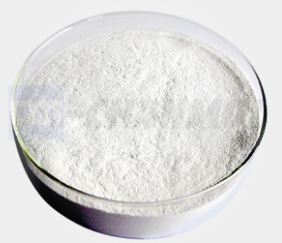
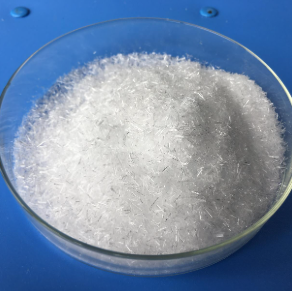
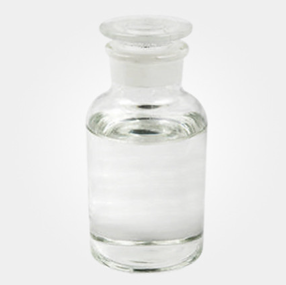
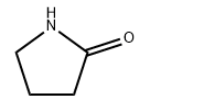
2-Pyrrolidinone, also known as 2-pyrrolidone, has the CAS number 616-45-5, chemical formula C4H7NO, and molecular weight 85.104. It appears as a colorless liquid or crystals, with a density of approximately 1.103 g/cm³, a melting point of approximately 25℃, a boiling point of 245-250℃, and a flash point of approximately 129-138℃. It is miscible with water, alcohols, ethers, and many other solvents.
This compound is a high-boiling-point polar solvent and organic synthesis intermediate used in the manufacture of nylon 4 and vinylpyrrolidone, and industrially as a solvent for plasticizers, polymerizers, and pesticides. It is classified as a Class 6.1 hazardous substance; it is flammable, toxic, and irritating. Handling requires a closed system with local exhaust ventilation, and personnel must wear protective equipment.
Application of 2-Pyrrolidinone
2-Pyrrolidinone is a widely used organic polar solvent for various applications. 2-Pyrrolidinone is also an intermediate in the manufacture of polymers.
2-pyrrolidone widely exists in various physiologically active natural products in nature. For example, it is the main structural unit of gonadotropin releasing hormone. At the same time, 2-pyrrolidone is an important raw material and intermediate of medicine, pesticide, dye, peptide and other chemicals. If it is used as the end chain of peptide, it also plays a stable role in the conformation of the compound. Many polysubstituted 2-pyrrolidones have been used in the synthesis and production of a variety of drugs and applied for patents.
2-Pyrrolidone is used as an intermediate for synthesis of l-vinyl-2-pyrrolidone and various TV-methylol derivatives used as textile-finishing agents; as a solvent for various polymers, chlordane and DDT, d-sorbitol, glycerin, and sugars; and as a decolorizing agent for kerosene, fatty oils, and rosins. N-methyl-2-pyrrolidone and 2-pyrrolidone are utilized in petroleum refining to selectively extract aromatics from paraffinic hydrocarbons. 2-Pyrrolidone is used as a plasticizer and coalescing agent for acrylic latices and acrylic/styrene copolymers in emulsion coatings, i.e. floor waxes. A linear high molecular weight polyamide polymer of 2-pyrrolidone, nylon-4, is used as a textile fiber, injection molding compound, and film-forming polymer (Anon. 1975; Hort and Anderson 1978).
| 2-Pyrrolidinone Chemical Properties |
| Melting point | 23-25 °C (lit.) |
| Boiling point | 245 °C (lit.) |
| density | 1.12 g/mL at 25 °C (lit.) |
| vapor density | 2.9 (vs air) |
| vapor pressure | 0.04 hPa (20 °C) |
| FEMA | 4829 | 2-PYRROLIDONE |
| refractive index | n |
| Fp | >230 °F |
| storage temp. | 2-8°C |
| solubility | H2O: miscible (completely) |
| form | Liquid |
| pka | 16.62±0.20(Predicted) |
| color | Clear colorless to pale yellow |
| PH | 9-11 (100g/l, H2O, 20℃) |
| explosive limit | 1.8-16.6%(V) |
| biological source | synthetic |
| Water Solubility | miscible |
| Sensitive | Hygroscopic |
| Merck | 14,8016 |
| BRN | 105241 |
| Henry's Law Constant | 9.3×10³ mol/(m3Pa) at 25℃, Duchowicz et al. (2020) |
| Stability: | Hygroscopic |
| InChI | 1S/C4H7NO/c6-4-2-1-3-5-4/h1-3H2,(H,5,6) |
| InChIKey | HNJBEVLQSNELDL-UHFFFAOYSA-N |
| SMILES | O=C1CCCN1 |
| LogP | -0.71 at 20℃ |
| Surface tension | 46.31mN/m at 293.15K |
| CAS DataBase Reference | 616-45-5(CAS DataBase Reference) |
| NIST Chemistry Reference | 2-Pyrrolidinone(616-45-5) |
| EPA Substance Registry System | 2-Pyrrolidinone (616-45-5) |
| Safety Information |
| Risk Statements | 22 |
| Safety Statements | 24/25 |
| RIDADR | 2810 |
| WGK Germany | 1 |
| RTECS | UY5715000 |
| Autoignition Temperature | 395 °C |
| TSCA | TSCA listed |
| HazardClass | 6.1(b) |
| PackingGroup | III |
| HS Code | 29339980 |
| Storage Class | 6.1C - Combustible acute toxic Cat.3 toxic compounds or compounds which causing chronic effects |
| Hazard Classifications | Eye Irrit. 2 Repr. 1B |
| Hazardous Substances Data | 616-45-5(Hazardous Substances Data) |
| Toxicity | LD50 orally in Rabbit: > 3200 mg/kg |
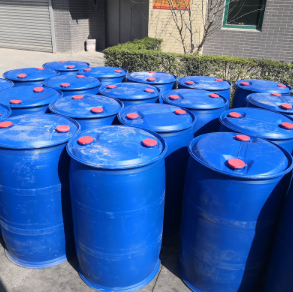
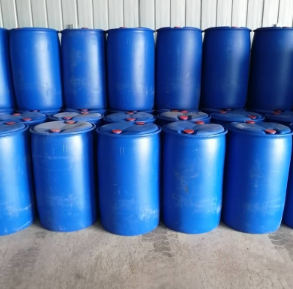
Fact Factory and Equipment Show