
Aluminum oxide #CAS1344-28-1
CAS Number: 1344-28-1
Chemical Formula: Al2O3
Synonyms:
Aluminum Oxide, Basic, Brockmann Activity Grade I
Aluminum Oxide, Neutral-H15152;Alumina B, Active
Alumina B, Activity: Super I
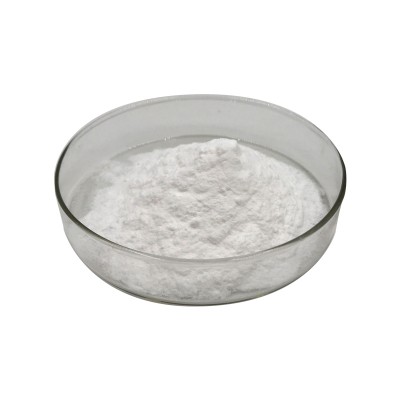
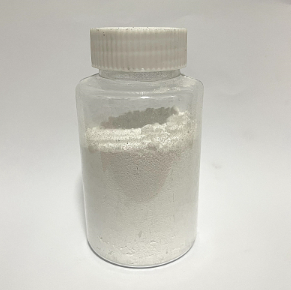
Appearance:White to Pink Powder
MOQ (Minimum Order Quantity): 1 FCL (Full Container Load)
Aluminum oxide #CAS1344-28-1
The oxide of aluminum is Al2O3. The natural crystalline mineral is called corundum, but the synthetic crystals used for abrasives are designated usually as aluminum oxide or marketed under trade names. For other uses and as a powder, it is generally called alumina. It is widely distributed in nature in combination with silica and other minerals and is an important constituent of the clays for making porcelain, bricks, pottery, and refractories.
The crushed and graded crystals of alumina when pure are nearly colorless, but the fine powder is white. Off colors are due to impurities. American aluminum oxide used for abrasives is at least 99.5% pure, in nearly colorless crystals melting at 2050°C. The chief uses for alumina are for the production of aluminum metal and for abrasives, but it is also used for ceramics, refractories, pigments, catalyst carriers, and in chemicals.
Aluminum oxide crystals are normally hexagonal and are minute in size. For abrasives, the grain sizes are usually from 100 to 600 mesh. The larger grain sizes are made up of many crystals, unlike the single-crystal large grains of SiC. The specific gravity is about 3.95, and a hardness is up to 2000 Knoop.
There are two kinds of ultrafine alumina abrasive powder. Type A is alpha alumina with hexagonal crystals with particle size of 0.3 μm, density 4.0, and hardness 9 Mohs, and type B is gamma alumina with cubic crystals with particle size under 0.1 μm, specific gravity of 3.6, and a hardness 8. Type A cuts faster, but type B gives a finer finish. At high temperatures, gamma alumina transforms to the alpha crystal. The aluminum oxide most frequently used for refractories is the beta alumina and hexagonal crystals heat-stabilized with sodium.
Activated alumina is partly dehydrated alumina trihydrate, which has a strong affinity for moisture or gases and is used for dehydrating organic solvents, and hydrated alumina is alumina trihydrate.
Aluminum(III) oxide is also called aluminum oxide. In mineral form it is called corundum and is referred to as alumina in conjunction with mining and aluminum industries. Alumina exists in hydrated forms as alumina monohydrate, Al2O3H2O and alumina trihydrate Al2O33H2O. The geologic source of aluminum is the rock bauxite, which has a high percentage of hydrated aluminum oxide. The main minerals in bauxite are gibbsite (Al(OH)3), diaspore (AlO(OH)), and boehmite (AlO(OH).
Aluminum oxide occurs as a white crystalline powder. Aluminum oxide occurs as two crystalline forms: α-aluminum oxide is composed of colorless hexagonal crystals, and γ-aluminum oxide is composed of minute colorless cubic crystals that are transformed to the α-form at high temperatures.
Application of Aluminum oxide
As adsorbent, desiccant, abrasive,thickening and anti-caking agent;
As filler for paints and varnishes;
In manufacture of alloys,refractories, ceramic materials, electrical insulators and resistors, dental cements, glass, steel, artificial gems; in coatings for metals, etc.;
As catalyst for organic reactions.
As an insoluble carrier for mineral pigment, and is frequently mixed into mineral powder makeup. Because of its abrasive texture, many use these crystals to exfoliate and resurface the skin-particularly with Microdermabrasion.
As a chromotagraphic matrix; originally called Brockmann aluminum oxide when used for this purpose.
The minerals corundum (hardness = 9) and Alundum (obtained by fusing bauxite in an electric furnace) are used as abrasives and polishes;
In manufacture of cosmetic products like blush, powder foundation, lipstick and facial cleanser.
As adsorbent, desiccant, abrasive,thickening and anti-caking agent;
As filler for paints and varnishes;
In manufacture of alloys,refractories, ceramic materials, electrical insulators and resistors, dental cements, glass, steel, artificial gems; in coatings for metals, etc.;
As catalyst for organic reactions.
As an insoluble carrier for mineral pigment, and is frequently mixed into mineral powder makeup. Because of its abrasive texture, many use these crystals to exfoliate and resurface the skin-particularly with Microdermabrasion.
As a chromotagraphic matrix; originally called Brockmann aluminum oxide when used for this purpose.
The minerals corundum (hardness = 9) and Alundum (obtained by fusing bauxite in an electric furnace) are used as abrasives and polishes;
In manufacture of cosmetic products like blush, powder foundation, lipstick and facial cleanser.
| Aluminum oxide Chemical Properties |
| Melting point | 2040 °C(lit.) |
| Boiling point | 2980°C |
| bulk density | 950-1100g/L |
| density | 3.97 |
| vapor pressure | 17 mm Hg ( 20 °C) |
| refractive index | 1.765 |
| Fp | 2980°C |
| storage temp. | Sealed in dry,Room Temperature |
| solubility | Miscible with ethanol. |
| form | powder |
| color | White to pink |
| Specific Gravity | 3.97 |
| Odor | Odorless |
| PH | 7.0±0.5 ( in H2O) |
| PH Range | 3.5 - 4.5 |
| Water Solubility | INSOLUBLE |
| semiconductor properties | <0001> |
| Crystal Structure | Trigonal |
| crystal system | Three sides |
| Merck | 14,356 |
| Space group | R3c |
| Lattice constant | a/nmb/nmc/nmα/oβ/oγ/oV/nm30.475890.475891.299190901200.2548 |
| Exposure limits | ACGIH: TWA 1 mg/m3 OSHA: TWA 15 mg/m3; TWA 5 mg/m3 |
| Dielectric constant | 4.5(Ambient) |
| Cosmetics Ingredients Functions | OPACIFYING ANTICAKING ABRASIVE VISCOSITY CONTROLLING BULKING ABSORBENT |
| InChI | 1S/2Al.3O |
| InChIKey | PNEYBMLMFCGWSK-UHFFFAOYSA-N |
| SMILES | O=[Al]O[Al]=O |
| CAS DataBase Reference | 1344-28-1(CAS DataBase Reference) |
| NIST Chemistry Reference | Aluminum oxide(1344-28-1) |
| EPA Substance Registry System | Alumina (1344-28-1) |
| Safety Information |
| Hazard Codes | Xi,F |
| Risk Statements | 36/37/38-67-36/38-11-36 |
| Safety Statements | 26-24/25-16-7-36 |
| WGK Germany | - |
| RTECS | BD1200000 |
| F | 3 |
| TSCA | TSCA listed |
| HazardClass | 8 |
| HS Code | 28181010 |
| Storage Class | 11 - Combustible Solids |
| Hazardous Substances Data | 1344-28-1(Hazardous Substances Data) |
| Toxicity | Chronic inhalation of Al2O3 dusts may cause lung damage. |
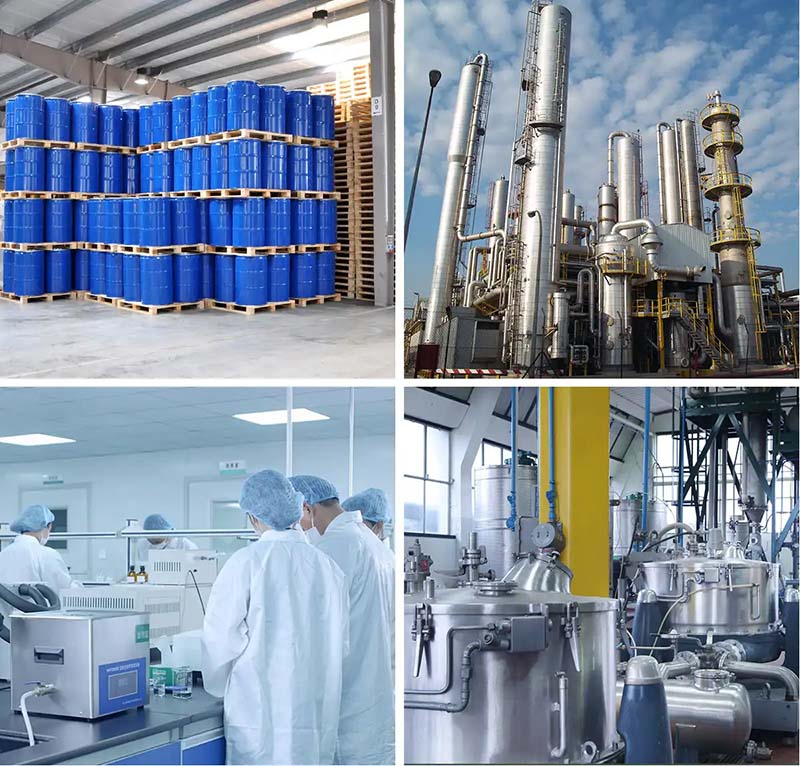
Fact Factory and Equipment Show