18-Crown-6 #CAS17455-13-9
CAS Number:17455-13-9
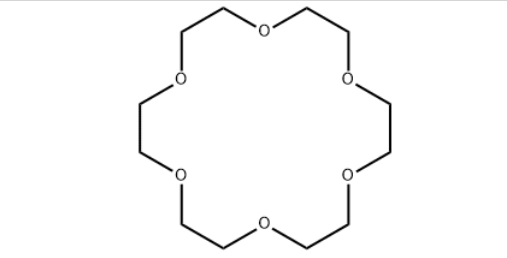
Chemical Formula:C12H24O6
Synonyms:
18-CROWN-6
18-Crown-6 >=99.0%
18 and crown ether
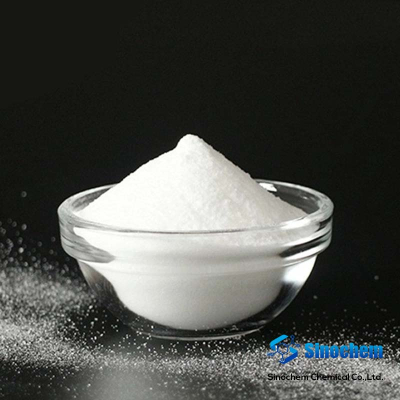
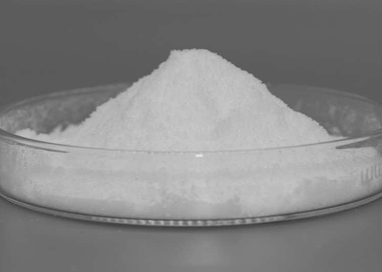
Appearance:High purity: White crystalline powder or colorless needle crystals; General purity: White to off-white crystalline lumps. Melting point 36-45°C, may be semi-solid/waxy at room temperature; Highly hygroscopic and easily deliquescent; Slightly soluble in water, readily soluble in organic solvents such as methanol, ethanol, acetone and dichloromethane
MOQ (Minimum Order Quantity): 1 FCL (Full Container Load)
18-Crown-6 #CAS17455-13-9
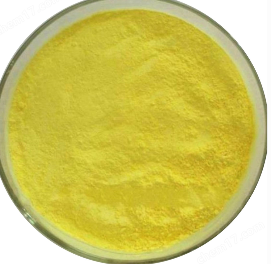
18-Crown-6 is a slightly yellow solid, it has a high affinity for the hydronium ion H3O+, as it can fit inside the crown ether. Thus, reaction of 18-crown-6 with strong acids gives the cation [H3O·18-crown-6]+.
18-Crown-6 is the simplest crown ether that can be prepared by reacting triethylene glycol with triethylene glycol dichloride in the presence of potassium hydroxide as a base. 18-Crown-6 can solubilize metal salts, particularly potassium salts, in nonpolar and dipolar aprotic solvents. Thus, it is widely used as a phase transfer catalyst. It can also be used as a metal complexing agent to prepare a variety of molecular complexes.
Recrystallise it from acetonitrile and dry it in a vacuum. Purify it also by precipitating the 18-crown-6/nitromethane 1:2 complex with Et2O/nitromethane (10:1 mixture). The complex is decomposed in vacuum whereby 18-crown-6 distils off under the reduced pressure. [Beilstein 19/12 V 601.]
Application of 18-Crown-6
18-Crown-6 may be used to catalyze the N-alkylation of heterocyclic compounds and allylation of functionalized aldehydes.
A useful phase transfer catalyst.
18-Crown-6 is used as an efficient phase transfer catalyst and as a complexing agent with a variety of small cation. It is involved in the synthesis of diaryl ethers, diaryl thioethers, and diarylamines mediated by potassium fluoride-alumina and 18-crown-6. It facilitates the solubility of potassium permanganate in benzene, which is used for oxidizing the organic compounds. It is used to accelerate various substitution reactions as well as enhances the power of nucleophiles such as potassium acetate. It is utilized in the alkylation reactions in the presence of potassium carbonate, N-alkylation of glutarimide and succinimide with dimethylcarbonate. The complex formed by its reaction with potassium cyanide acts as a catalyst in the cyanosilylation of aldehydes, ketones and quinines with trimethylsilyl cyanide (TMSCN).
| 18-Crown-6 Chemical Properties |
| Melting point | 42-45 °C(lit.) |
| Boiling point | 116°C 0,2mm |
| density | 1,175 g/cm3 |
| refractive index | 1.4580 (estimate) |
| Fp | >230 °F |
| storage temp. | Store below +30°C. |
| solubility | Chloroform (Slightly), Methanol (Very Slightly) |
| form | Crystals or Crystalline Mass or Liquid |
| color | White or clear colorless |
| Water Solubility | SOLUBLE |
| Sensitive | Hygroscopic |
| Merck | 14,2602 |
| BRN | 1619616 |
| Stability: | Stable. Incompatible with strong acids, strong oxidizing agents. |
| Cosmetics Ingredients Functions | NOT REPORTED |
| InChI | 1S/C12H24O6/c1-2-14-5-6-16-9-10-18-12-11-17-8-7-15-4-3-13-1/h1-12H2 |
| InChIKey | XEZNGIUYQVAUSS-UHFFFAOYSA-N |
| SMILES | O1CCOCCOCCOCCOCCOCC1 |
| CAS DataBase Reference | 17455-13-9(CAS DataBase Reference) |
| NIST Chemistry Reference | 1,4,7,10,13,16-Hexaoxacyclooctadecane(17455-13-9) |
| EPA Substance Registry System | 1,4,7,10,13,16-Hexaoxacyclooctadecane (17455-13-9) |
| Safety Information |
| Hazard Codes | Xn,Xi |
| Risk Statements | 22-36/37/38-36-20/22-20/21/22 |
| Safety Statements | 26-36-39 |
| RIDADR | 2811 |
| WGK Germany | 3 |
| RTECS | MP4500000 |
| F | 10 |
| TSCA | TSCA listed |
| HazardClass | 6.1(b) |
| PackingGroup | III |
| HS Code | 29329995 |
| Storage Class | 11 - Combustible Solids |
| Hazard Classifications | Acute Tox. 4 Oral |
| Toxicity | LD50 orally in Rabbit: 525 mg/kg LD50 dermal Rabbit 3888 mg/kg |
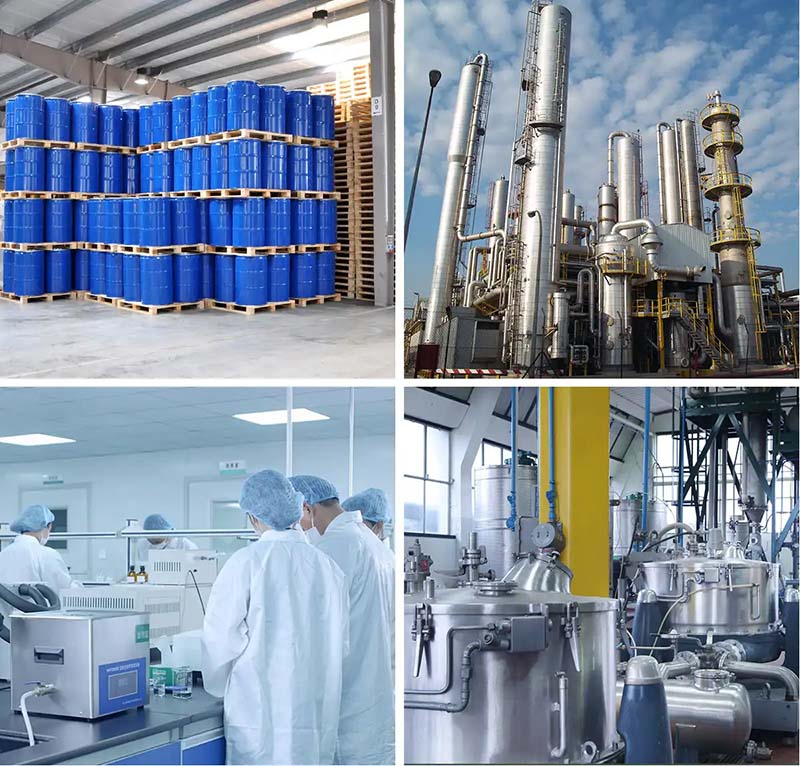
Fact Factory and Equipment Show