![1,5,7-Triazabicyclo[4.4.0]dec-5-ene #CAS5807-14-7](https://futiancdn.huazhi.cloud/cdn/ff/BZ99oCJ7RlVTT3eTlKJrULO3rL4dWUF9onk8rHQbwcU/1780555644/public/2026-06/ScreenShot_2026-06-04_144653_731.png)
![1,5,7-Triazabicyclo[4.4.0]dec-5-ene #CAS5807-14-7](https://futiancdn.huazhi.cloud/cdn/ff/vWxDLBG_FL2ostKt2jdYjng7hQ8eDr9D9AtHxE_I2d8/1780555644/public/2026-06/ScreenShot_2026-06-04_144633_699.png)
![1,5,7-Triazabicyclo[4.4.0]dec-5-ene #CAS5807-14-7](https://futiancdn.huazhi.cloud/cdn/ff/vSP5lxQZ41BIVFsoV02FWIkrm4RZ1gvnzk7QKCTA1yg/1780555644/public/2026-06/ScreenShot_2026-06-04_144706_130.png)
![1,5,7-Triazabicyclo[4.4.0]dec-5-ene #CAS5807-14-7](https://futiancdn.huazhi.cloud/cdn/ff/xiHJ1rKylFVFaJwkUi9WyT1Sv74RSgtqKzftpJibdX0/1780555644/public/2026-06/ScreenShot_2026-06-04_144712_394.png)
1,5,7-Triazabicyclo[4.4.0]dec-5-ene #CAS5807-14-7
CAS Number:5807-14-7
Chemical Formula:C7H13N3
Synonyms:
Hhpp, TBD, 1,3,4,6,7,8-Hexahydro-2H-pyrimido[1,2-a]pyrimidine
LABOTEST-BB LT00847641
1,5,7-Triazabicylo[4.4.0]dec-5-ene
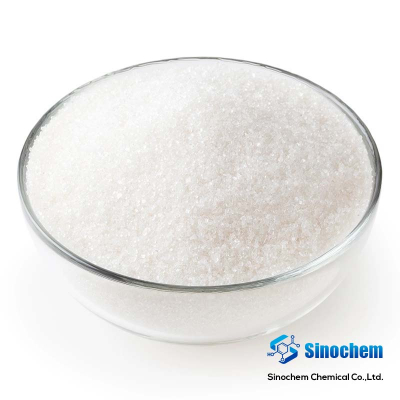
Appearance:White to off-white crystalline powder, odorless, soluble in water, acetonitrile, ethanol and other polar organic solvents; melting point 125-133°C, hygroscopic, easily deliquescent in air
MOQ (Minimum Order Quantity): 1 FCL (Full Container Load)
1,5,7-Triazabicyclo[4.4.0]dec-5-ene #CAS5807-14-7
1,5,7-Triazabicyclo[4.4.0]dec-5-ene (TBD) is a bicyclic guanidine that has found extensive application in organic chemistry, notably as a powerful catalyst for polymer synthesis and recycling, CO2 utilization, and carboxylic acid derivative synthesis. Bearing both a nucleophilic nitrogen and an electrophilic NH group, TBD is a multifunctional reagent. It can serve as an organic superbase, an acyl transfer reagent, and a hydrogen bonding activator. It is an excellent catalyst for Michael and Michael-type reactions. The readily available organocatalyst 1,5,7-triazabicyclo[4.4.0]dec-5-ene (TBD) was used for the rapid synthesis of 3-hydroxyisoindolin-1-ones from 3-alkylidenephthalides[1-2].
To a 100 mL autoclave equipped with a reflux condenser and an electric stirrer, 20 mL of aqueous GHC (6.0 mmol/mL) and 20 mL (5.0 mmol/mL) of APA solution in homotrimethylbenzene were added, as well as 0.578 g of pretreated atmospheric anion-exchange resin (D201).The reaction was carried out under argon gas protection for 9 h at 120°C. The reaction was completed by filtration. Upon completion of the reaction, the D201 resin in the reaction mixture was first recovered by filtration (the washed and dried recovered resin was used to repeat the synthesis experiments). Subsequently, the oil-water system was filtered, and the homotrimethylbenzene in the oil phase was separated and recovered using a partition funnel. The aqueous phase was distilled to yield a pale yellow viscous liquid, which was extracted with 30 mL of dichloromethane. Dichloromethane was recovered by distillation through rotary evaporator. The resulting colorless oily liquid was placed in a freezer at 12°C for 12 hours and then allowed to stand at room temperature (15 to 25°C), gradually converting to a pale yellow solid. Finally, it was dried under vacuum at 40°C for 40 h to afford 1,5,7-triazabicyclo[4.4.0]decen-5-ene (TBD) 7.66 g in 55% yield.
1,5,7-Triazabicyclo[4.4.0]dec-5-ene crystallises from Et2O but readily forms white crystals of the carbonate. It is a strong base (see pK, i.e. about 100 times more basic than tetramethylguanidine). The picrate has m 220.5-222o (from EtOH). It forms the 5-nitro derivative m 14.5-160o that gives a 5-nitro nitrate salt m 100-101o (from EtOH/Et2O) and a 5-nitro picrate m 144-145o (from H2O) [McKay & Kreling Can J Chem 35 1438 1957, Schwesinger Chimia 39 369 1985, Hilpert et al. J Chem Soc, Chem Commun 1401 1983, Kamfen & Eschenmoser Helv Chim Acta 72 185 1989]. [Beilstein 26 III/IV 60.]
Application of 1,5,7-Triazabicyclo[4.4.0]dec-5-ene
1,5,7-Triazabicyclo[4.4.0]dec-5-ene may be used as organocatalyst for aminolysis of esters. It may be used as catalyst for direct addition of P(O)-H bonds (dialkyl phosphites and diphenyl phosphonite) across various activated alkenes. Polymer supported 1,5,7-triazabicyclo[4.4.0]dec-5-ene (PTBD) was used as a base and a reagent scavenger for the synthesis of aryl ethers from phenols and alkyl or aryl halides.
| 1,5,7-Triazabicyclo[4.4.0]dec-5-ene Chemical Properties |
| Melting point | 125-130 °C(lit.) |
| Boiling point | 222.3±23.0 °C(Predicted) |
| density | 1.28±0.1 g/cm3(Predicted) |
| storage temp. | under inert gas (nitrogen or Argon) at 2–8 °C |
| solubility | toluene: soluble1 g/15 mL |
| pka | 14.47±0.20(Predicted) |
| form | powder to crystal |
| color | White to Almost white |
| Water Solubility | acetonitrile: soluble ethanol: soluble organic solvents: soluble water: soluble |
| BRN | 3242 |
| InChI | InChI=1S/C7H13N3/c1-3-8-7-9-4-2-6-10(7)5-1/h1-6H2,(H,8,9) |
| InChIKey | FVKFHMNJTHKMRX-UHFFFAOYSA-N |
| SMILES | C12=NCCCN1CCCN2 |
| CAS DataBase Reference | 5807-14-7(CAS DataBase Reference) |
| Safety Information |
| Hazard Codes | C |
| Risk Statements | 34 |
| Safety Statements | 26-36/37/39-45-27 |
| RIDADR | UN 1759 8/PG 2 |
| WGK Germany | 3 |
| F | 9-21-34 |
| TSCA | TSCA listed |
| HazardClass | 8 |
| PackingGroup | III |
| HS Code | 29335990 |
| Storage Class | 8A - Combustible corrosive hazardous materials |
| Hazard Classifications | Skin Corr. 1B |
Fact Factory and Equipment Show