
Hydriodic acid #CAS10034-85-2
CAS Number:10034-85-2
Chemical Formula: HI
Synonyms:
HYDRIODIC ACID(AMPULE)
Hydriodic acid 57 wt. % in H2O, distilled, stabilized, 99.95%
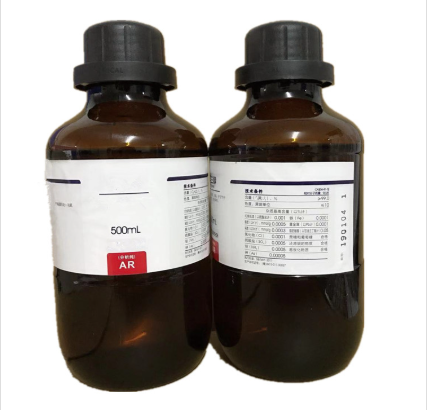
Hydriodic acid4x500ml
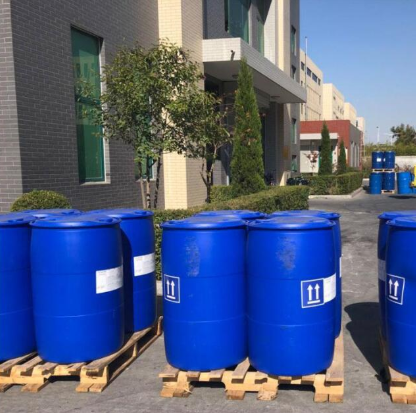
MOQ (Minimum Order Quantity): 1 FCL (Full Container Load)
Appearance:Colourless or Yellow Liquid
Hydriodic acid #CAS10034-85-2
Hydrogen iodide in aqueous solution is called hydroiodic acid, a strong acid. Its chemical formula is HI. Its molecular weight is 127.91. It is a colorless gas, pale yellow liquid, or solid clumps. It has a strong, pungent odor. Its melting point is -50.8℃, boiling point is -35.38℃, relative density is 5.660 (gas), 2.85-4.7 (liquid), and refractive index is 1.46616. In air, it reacts with water vapor to form a white acidic fumes. It is extremely soluble in water, releasin a large amount of heat to form hydroiodic acid. It is slightly soluble in ethanol. It is unstable and decomposes into iodine and hydrogen gas upon heating and exposure to light. It decomposes significantly above 300℃. Its azeotropic solution is a colorless or pale yellow fuming liquid with a boiling point of 127℃ and a relative density of 1.7015. It is a strong acid (the degree of dissociation in a 0.1 mol·L⁻¹ hydroiodic acid solution can reach 95%). Hydrogen iodide is much less soluble in organic solvents than in water, exhibiting characteristics of a non-electrolyte or a weak electrolyte. Its ionization constant in pyridine is 3 × 10⁻³. It readily decomposes into iodine and hydrogen in air. It has strong reducing properties, being the most potent reducing agent among hydrohalic acids, and can be oxidized by Cl₂, Br₂, and concentrated sulfuric acid to release iodine. It is oxidized by air at room temperature and can be oxidized by concentrated nitric acid and concentrated sulfuric acid. It reacts with most metals to produce the corresponding iodides and hydrogen gas.
Application of Hydriodic acid
1. Used for producing organic iodide. As general reagents and pharmaceutical intermediates.
2. Used as the analysis reagents, also used in the preparation of the iodide.
3. Used as a reducing agent, also used in the synthesis of alkyl iodine and other alkyl iodide
4. Used for Determination of methoxy, ethoxy and selenium, dissolution of acid-insoluble inorganic substance, such as an alkaline earth metal sulfate and mercury iodide and so on. Used as a reducing agent. Used for the preparation of iodide.
5. Used for Determination of methoxy, dissolution of acid-insoluble (especially hot) inorganic substance, such as an alkaline earth metal sulfate and mercury iodide and so on. Used as a reducing agent.
| Hydriodic acid Chemical Properties |
| Melting point | -50.8° |
| Boiling point | 127 °C(lit.) |
| density | 1.96 g/mL at 20 °C |
| vapor pressure | 721.8kPa at 20℃ |
| Fp | 126-127°C |
| storage temp. | 2-8°C |
| solubility | very soluble in H2O; soluble in organic solvents |
| form | colorless or yellow gas |
| pka | -10(at 25℃) |
| color | Colorless to brown |
| Odor | Pungent odor |
| PH Range | 1 |
| PH | 3.01(1 mM solution);2.04(10 mM solution);1.08(100 mM solution) |
| Water Solubility | soluble |
| Sensitive | Hygroscopic |
| Merck | 14,4776 |
| Henry's Law Constant | 2.5×10⁻¹ mol/(m3Pa) at 25℃, Ordóñ (2012) |
| Exposure limits | ACGIH: TWA 0.01 ppm |
| Dielectric constant | 3.4(-50℃) |
| Stability: | Stable. Incompatible with bases, amines. Corrodes steel. May discolour on exposure to air and light. |
| InChI | 1S/HI/h1H |
| InChIKey | XMBWDFGMSWQBCA-UHFFFAOYSA-N |
| SMILES | I |
| CAS DataBase Reference | 10034-85-2(CAS DataBase Reference) |
| NIST Chemistry Reference | Hydrogen iodide(10034-85-2) |
| EPA Substance Registry System | Hydriodic acid (10034-85-2) |
| Safety Information |
| Hazard Codes | C |
| Risk Statements | 34-35 |
| Safety Statements | 26-36/37/39-45-9 |
| RIDADR | UN 1787 8/PG II/III (HYDRIODIC ACID) |
| RIDADR | UN 2197 2.3 (HYDROGEN IODIDE, ANHYDROUS) |
| WGK Germany | - |
| RTECS | MW3760000 |
| F | 8 |
| TSCA | TSCA listed |
| HazardClass | 8 |
| PackingGroup | II |
| HS Code | 28111990 |
| Storage Class | 8B - Non-combustible corrosive hazardous materials |
| Hazard Classifications | Aquatic Chronic 2 Eye Dam. 1 Met. Corr. 1 Skin Corr. 1B |
| Hazardous Substances Data | 10034-85-2(Hazardous Substances Data) |