Sodium citrate #CAS68-04-2
CAS Number:68-04-2
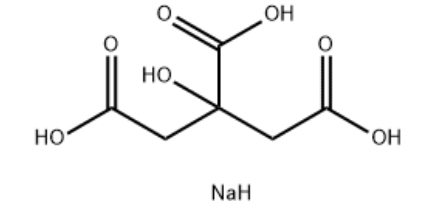
Chemical Formula: C6H9NaO7
Synonyms:
Citric acidsodiuM,anhydrous
1,2,3-Propanetricarboxylicacid, 2-hydroxy-, sodiuM salt (1:3)
CITRIC ACID TRISODIUM SALT, VETEC
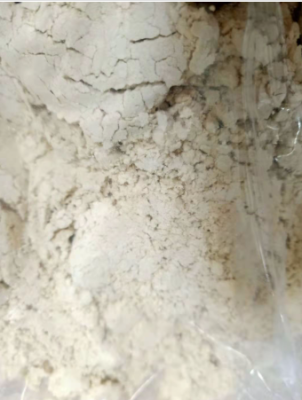
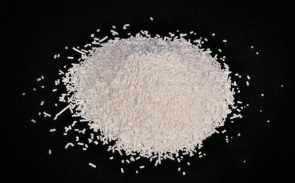
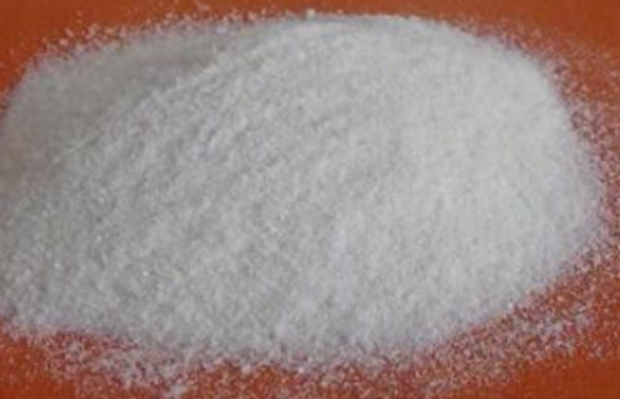
Appearance:White to Off-white Crystalline Powder
MOQ (Minimum Order Quantity): 1 FCL (Full Container Load)
Sodium citrate #CAS68-04-2
Sodium citrate may refer to any of the sodium salts of citric acid (though most commonly the third):
Mono sodium citrate
Di sodium citrate
Tri sodium citrate
As food additives, the 3 forms of the salt are also collectively known by the E number E331.Sodium citrate, also known as sodium citric acid, is a white crystalline granule or powder at room temperature. It is odorless, has a cool, salty taste, and is stable in air. Its relative density is 1.857 (23.5℃). It loses its water of crystallization at 150℃ and decomposes upon further heating. It is soluble in water, with an aqueous solution having a pH of approximately 8, and is sparingly soluble in ethanol. It is prepared by neutralizing, concentrating, and crystallizing citric acid with sodium hydroxide or sodium carbonate.
Application of Sodium citrate
Alkalizer (systemic).
Sodium citrate may be used in cosmetic formulations as an alkalizer and to bind trace metals in solutions (by means of a chelating action). It is the sodium salt of citric acid.
Sodium Citrate is a buffer and sequestrant obtained from citric acid as sodium citrate anhydrous and as sodium citrate dihydrate or sodium citrate hydrous. the crystalline products are prepared by direct crystallization from aqueous solutions. sodium citrate anhy- drous has a solubility in water of 57 g in 100 ml at 25°c, while sodium citrate dihydrate has a solubility of 65 g in 100 ml at 25°c. it is used as a buffer in carbonated beverages and to control ph in preserves. it improves the whipping properties in cream and pre- vents feathering of cream and nondairy coffee whiteners. it pro- vides emulsification and solubilizes protein in processed cheese. it prevents precipitation of solids during storage in evaporated milk. in dry soups, it improves rehydration which reduces the cooking time. it functions as a sequestrant in puddings. it functions as a complexing agent for iron, calcium, magnesium, and aluminum. typical usage levels range from 0.10 to 0.25%. it is also termed trisodium citrate.
Trisodium Citrate is a buffer and sequestrant that is the trisodium salt of citric acid. see sodium citrate.
Sodium citrate is also known as citrate of soda, the white crystals or granular powder was obtained by neutralizing citric acid with sodium carbonate. It is soluble in water but less so in alcohol. Sodium citrate was used as a preservative in albumen papers.
Food
Sodium citrate is chiefly used as a food additive E331, usually for flavor or as a preservative. Sodium citrate is employed as a flavoring agent in certain varieties of club soda. Sodium citrate is common as an ingredient in Bratwurst, and is also used in commercial ready to drink beverages and drink mixes, contributing a tart flavour.
Buffer
As a conjugate base of a weak acid, citrate can perform as a buffering agent or acidity regulator, resisting changes in pH. Sodium citrate is used to control acidity in some substances, such as gelatin desserts. It can be found in the mini milk containers used with coffee machines. The compound is the product of antacids, such as Alka- Seltzer, when they are dissolved in water.
Medical uses
In 1914, the Belgian doctor Albert Hustin and the Argentine physician and researcher Luis Agote successfully used sodium citrate as an anticoagulant in blood transfusions. It continues to be used today in blood collection tubes and for the preservation of blood in blood banks. The citrate ion chelates calcium ions in the blood by forming calcium citrate complexes, disrupting the blood clotting mechanism.
Sodium citrate is used to relieve discomfort in urinary tract infections, such as cystitis, to reduce the acidosis seen in distal renal tubular acidosis, and can also be used as an osmotic laxative. It is a major component of the WHO Oral Rehydration Solution.
| Sodium citrate Chemical Properties |
| Melting point | 300°C |
| density | 1.008 g/mL at 20 °C |
| FEMA | 3026 | SODIUM CITRATE |
| storage temp. | 2-8°C |
| solubility | Water (Slightly) |
| form | Liquid |
| color | White to off-white |
| PH | 8.59(1 mM solution);8.9(10 mM solution);9.04(100 mM solution);9.26(1000 mM solution) |
| Odor | at 100.00%. odorless |
| Water Solubility | Soluble in water. |
| Sensitive | Hygroscopic |
| λmax | λ: 260 nm Amax: ≤0.1 |
| Stability: | Hygroscopic |
| Cosmetics Ingredients Functions | CHELATING FRAGRANCE BUFFERING |
| InChI | 1S/C6H8O7.3Na/c7-3(8)1-6(13,5(11)12)2-4(9)10;;;/h13H,1-2H2,(H,7,8)(H,9,10)(H,11,12);;;/q;3*+1/p-3 |
| InChIKey | HRXKRNGNAMMEHJ-UHFFFAOYSA-K |
| SMILES | [Na+].[Na+].[Na+].OC(CC([O-])=O)(CC([O-])=O)C([O-])=O |
| LogP | -0.280 (est) |
| CAS DataBase Reference | 68-04-2(CAS DataBase Reference) |
| EPA Substance Registry System | Trisodium citrate (68-04-2) |
| Safety Information |
| Hazard Codes | Xi,C |
| Risk Statements | 22-40-48/20/22-41-37/38-36-35 |
| Safety Statements | 36-24/25-39-26-45-36/37/39 |
| WGK Germany | 2 |
| RTECS | GE8300000 |
| F | 34 |
| TSCA | TSCA listed |
| HS Code | 29181500 |
| Storage Class | 11 - Combustible Solids |
| Hazardous Substances Data | 68-04-2(Hazardous Substances Data) |
| Toxicity | LD50 in rats, mice (mmol/kg): 6.0, 5.5 i.p. (Gruber, Halbeisen) |
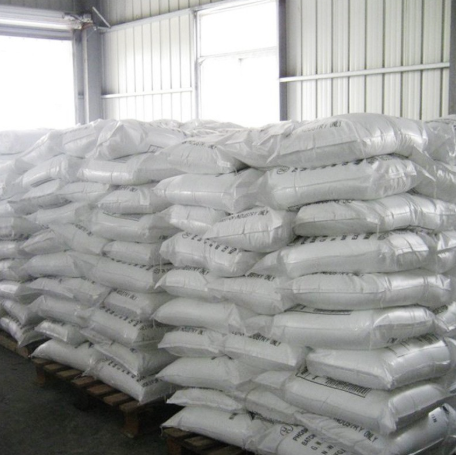
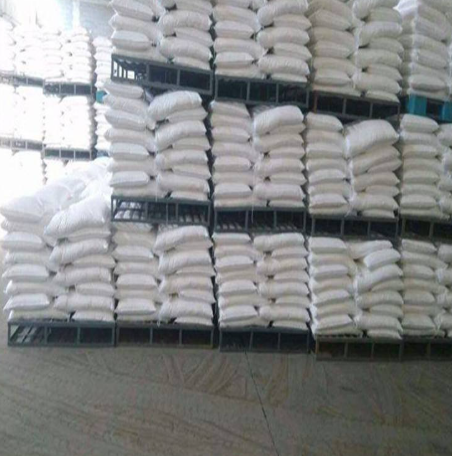
Fact Factory and Equipment Show