Coconut oil #CAS8001-31-8
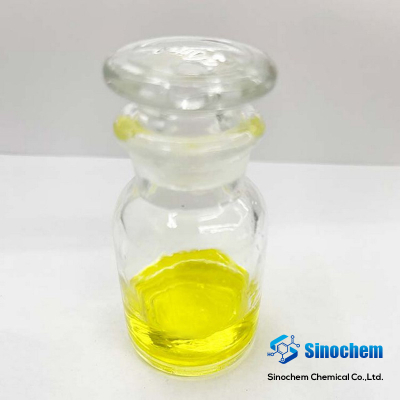
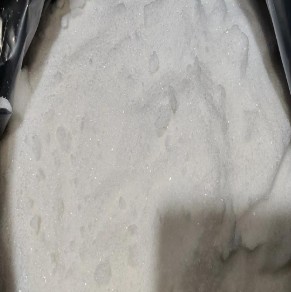
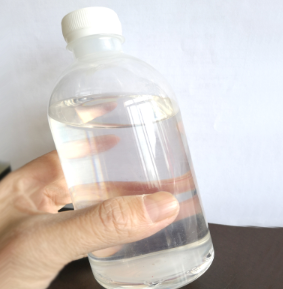
Coconut oil generally occurs as a white to light-yellow mass or colorless or light-yellow clear oil, with a slight odor characteristic of coconut and a mild taste. Refined coconut oil is a white or almost white unctuous mass.
The form that coconut oil takes depends on temperature; it occurs as a pale yellow to colorless liquid between 288℃ and 308℃, as a semisolid at 208℃ , and as a hard brittle crystalline solid below 158℃.
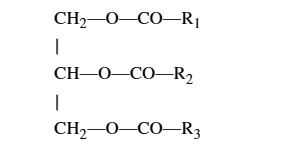
Coconut oil is used as a cream base, it is a raw material for soaps, ointments, massage creams, and in sunscreen formulations. Soft white or slightly yellow in color and semisolid in consistency, Copyright 2014 Cengage Learning. All Rights Reserved. May not be copied, scanned, or duplicated, in whole or in part. Due to electronic rights, some third party content may be suppressed from the eBook and/or eChapter(s). Editorial Review has deemed that any suppressed content does not materially affect the overall learning experience. Cengage Learning reserves the right to remove additional content at any time if subsequent rights restrictions require it. coconut oil is a grouping of primarily short-chain fatty acids bonded with glycerine and expressed from coconut kernels. It is stable when exposed to air. Coconut oil may be irritating to the skin and cause skin rashes. It is also considered comedogenic.
Coconut Oil is the oil obtained from the kernel of the nuts of the coconut palm. it has a sharp melting character (narrow plastic range) in that it changes abruptly from a hard, brittle solid to a clear oil with a temperature change of a few degrees, and the transition occurs at room temperature range. it melts at 25°c and is more com- pletely solid than butter at 10°c. these properties make it suited for the preparation of shortenings where brittleness and a large change in consistency with a small temperature change are undesirable. partially hydrogenated coconut oil has hydrogen added to part of the unsaturated carbon bonds to provide a more solid consistency. it is used in confections, baked goods, and margarine.
Coconut oil has traditionally been used in ointments where it forms a readily absorbable base. It has been used particularly in preparations intended for application to the scalp, where it could be applied as a solid but would liquefy when applied to the skin. Coconut oil is readily saponified by strong alkalis even in the cold and, as the soap produced is not readily precipitated by sodium chloride, it has been used in the making of ‘marine’ soap.
Coconut oil may be used in the formulation of a range of other preparations including emulsions and nanoemulsions, intranasal solutions, and rectal capsules and suppositories. In addition, coconut oil has been reported to have antifungal activity against a range of Candida species.
Coconut oil has been used therapeutically in a lotion for the eradication of head lice, and was included in a regime used to treat a patient who had ingested 16.8 g aluminum phosphide.
Concern has been expressed at the potential use of coconut oil as a suntan lotion as it does not afford any protection against ultraviolet light.
Application of Coconut oil
Coconut oil is the fixed oil obtained from the seeds of Cocos nucifera Linn. (Palmae). This oil is then refined to produce refined coconut oil, which is referred to in the coconut industry as RBD (refined, bleached, and deodorized) coconut oil.
Coconut oil is extracted from the dried pulp of coconuts and usually contains around 63% to 70% oil. It is usually semi-solid when kept at room temperature, with a white or light-yellow to orange appearance and a distinct coconut aroma. The main components of coconut oil are glycerides of lauric acid, myristic acid, and oleic acid. Its melting point ranges from 23 to 28 degrees Celsius, and its relative density falls between 0.917 to 0.919 at 25/25°C. Coconut oil has a saponification value ranging from 250 to 264, with an iodine value of 8 to 12 and an acid value that does not exceed 6. It is soluble in alcohol, chloroform, ether, and carbon disulfide, but insoluble in water. When exposed to air, it is prone to rancidity. Coconut oil can be saponified at room temperature with a caustic soda solution. It has many uses, including the production of soap, edible fat, chocolate, candy, and many others.
Coconut oil react with acids to liberate heat. Heat is also generated by interaction with caustic solutions. Strong oxidizing acids may cause a vigorous reaction that is sufficiently exothermic to ignite the reaction products. Flammable hydrogen is generated by mixing with alkali metals and hydrides. Reacts slowly with air to become rancid.
Coconut oil remains edible, and mild in taste and odor, for several years under ordinary storage conditions. However, on exposure to air, the oil readily oxidizes and becomes rancid, acquiring an unpleasant odor and strong acid taste.
Store in a tight, well-filled container, protected from light at a temperature not exceeding 258℃. Coconut oil may be combustible at high temperature, and may spontaneously heat and ignite if stored under hot and wet conditions.
| Coconut oil Basic information |
| Product Name: | Coconut oil |
| Synonyms: | Coconut Oil, AR;Coconut Oil – RBD;Koline;Coconut oil,pure,refined;Coconut oil, refined, pure 100GR;Acidulatedcoconutsoapstock;Coconutacidulatedsoapstock;coconutbutter |
| CAS: | 8001-31-8 |
| MF: | N/A |
| MW: | 0 |
| EINECS: | 232-282-8 |
| Product Categories: | cosmetic |
| Mol File: | Mol File |
| Coconut oil Chemical Properties |
| Melting point | 20-28 °C(lit.) |
| Boiling point | >232 °C |
| density | 0.903 g/mL at 25 °C |
| refractive index | 1.445 |
| Fp | 113 °C |
| storage temp. | 2-8°C |
| solubility | Practically insoluble in water, freely soluble in methylene chloride and in light petroleum (bp: 65-70 °C), very slightly soluble in ethanol (96 per cent). |
| form | low-melting solid |
| color | White or almost white |
| Odor | at 100.00 %. fresh fatty fruity nutty |
| Odor Type | fatty |
| biological source | Cocos nucifera |
| Water Solubility | insoluble |
| Dielectric constant | 2.9(Ambient) |
| Cosmetics Ingredients Functions | HUMECTANT PERFUMING SKIN CONDITIONING - EMOLLIENT FRAGRANCE HAIR CONDITIONING SKIN CONDITIONING ABRASIVE BULKING |
| Cosmetic Ingredient Review (CIR) | Coconut oil (8001-31-8) |
| EPA Substance Registry System | Coconut oil (8001-31-8) |
Fact Factory and Equipment Show