Aluminum phosphide #CAS20859-73-8
Aluminum phosphide, is a binary salt, one of the NCHP acronyms (see Chapter 2). These salts have the specific hazard of giving off poisonous and pyrophoric phosphine gas when in contact with moist air, water, or steam. They will also ignite spontaneously upon contact with air. This compound is composed of gray or dark yellow crystals and is a dangerous fire risk. Aluminum phosphide decomposes upon contact with water and has a specific gravity of 2.85, which is heavier than water. The four-digit UN identification number is 1397. The NFPA 704 designation is health 4, flammability 4, and reactivity 2. The white section at the bottom of the diamond has a W with a slash through it, indicating water reactivity. Aluminum phosphide is used in insecticides, fumigants, and semiconductor technology.
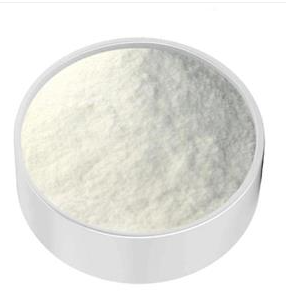
Aluminum phosphide is a dark gray or dry, yellow, crystalline solid. Aluminum phosphide reacts with moisture to give phosphine, a flammable and poisonous gas. Normally, phosphine will spontaneously ignite upon contact with air. If there is an excess of water, the phosphine fire will not normally ignite any surrounding combustible material.
Application of Aluminum phosphide
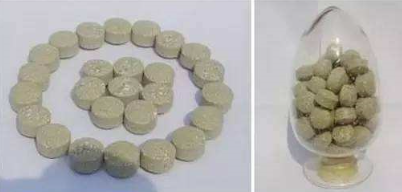
The primary use for AlP is as a fumigant to control insects and rodents in both food and nonfood crops in indoor environments. It is also used in the control of rodents outdoors via application to their burrows or in grain storage areas. Due to the extremelycommonuse of this compound for protecting rice, it is also called rice tablet in some countries. AlP is formulated in solid form and is available for use as a tablet, pellet, or dust. It is marketed as dark gray 3-g tablets consisting of AlP (56%) and carbamate (44%), under brand names such as Celphos, Alphos, Quickphos, Phosfume, Phostoxin, Talunex, Degesch, Synfume, Chemfume, Phostek, and Delicia in porous hags or blister packs.
Source of phosphine; in semiconductor research; as fumigant.
Fumigant, Fungicide, Rodenticide, Insecticide: Used as an insecticidal fumigant for grain, peanuts, processed food, animal feed, leaf tobacco, cottonseed, and as space fumigant for flour mills, warehouses and railcars. It is also used in baits for rodent and mole control in crops. Used as a source of phosphine; in semiconductor research. Zinc phosphide is often mixed with bait food such as cornmeal, which can be a danger to pets and children. When phosphides are ingested or exposed to moisture, they release phosphine gas. A U.S. EPA restricted Use Pesticide (RUP). Metallic phosphides on clothes, skin, or hair can react with water or moisture to generate phosphine gas.
| Aluminum phosphide Chemical Properties |
| Melting point | 2000℃ |
| density | 2.42 |
| solubility | reacts with H2O |
| form | green or yellow cubic crystals |
| color | Green or yellow |
| Water Solubility | reacts with H2O to produce phosphine [MER06] |
| Crystal Structure | Cubic, Sphalerite Structure - Space Group F(-4)3m |
| Stability: | Flammable solid. Contact with acids liberates highly toxic gas (phosphine). Incompatible with acids, moisture, oxidizing agents. |
| InChI | InChI=1S/Al.P |
| InChIKey | PPNXXZIBFHTHDM-UHFFFAOYSA-N |
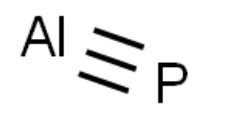
| SMILES | [Al]#P |
| Hardness, Mohs | 5.5 5.5 |
| CAS DataBase Reference | 20859-73-8(CAS DataBase Reference) |
| NIST Chemistry Reference | Aluminum monophosphide(20859-73-8) |
| EPA Substance Registry System | Aluminum phosphide (20859-73-8) |
| Safety Information |
| Hazard Codes | F,T+,N |
| Risk Statements | 15/29-28-32-50 |
| Safety Statements | 3/9/14-30-36/37-45-61 |
| RIDADR | UN 1397 |
| TSCA | TSCA listed |
| HazardClass | 4.3 |
| PackingGroup | I |
| Hazardous Substances Data | 20859-73-8(Hazardous Substances Data) |