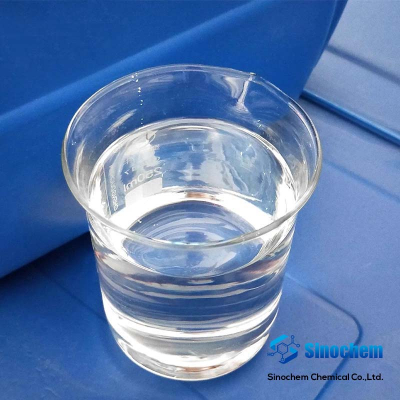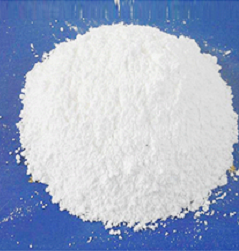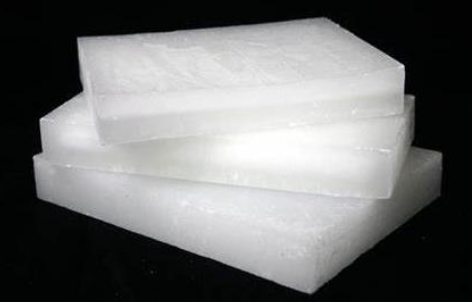
Paraffin wax #CAS8002-74-2
Paraffin wax #CAS8002-74-2
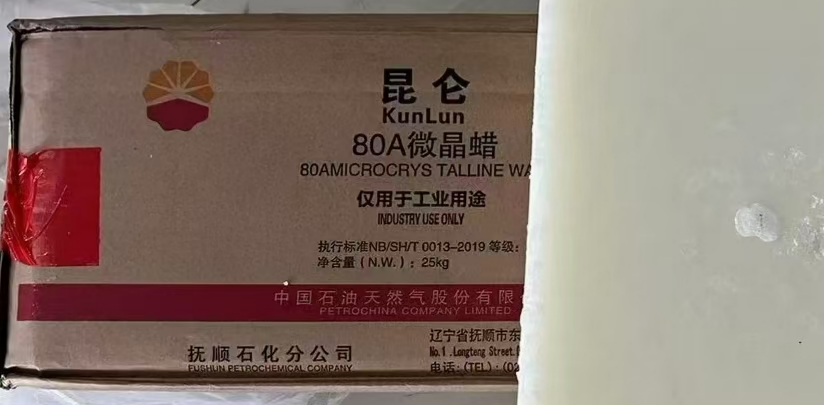
Paraffin wax is mostly found as a white, odorless, tasteless, waxy solid, with a typical melting point between about 46 and 68°C (115 and 154°F) and a density of approximately 900, is insoluble in water, but soluble in ether, benzene, and certain esters. Paraffin wax is often classed as a stable chemical since it is unaffected by most common chemical reagents but burns readily.
Paraffin wax is the common name for the mixture of solid higher alkanes, the molecular formula is CnH2n+2, where n=20-40. The excess oil residue in the wax is removed through the process of petroleum refining. It is then deoiled and separated by vacuum distillation. The main component of refined paraffin is saturated normal alkanes with carbon number of about 20-40, containing a small amount of isomers and alkanes.
Paraffin wax is mostly found as a white, odorless, tasteless, waxy solid, with a typical melting point between about 46 and 68°C (115 and 154°F) and a density of approximately 900, is insoluble in water, but soluble in ether, benzene, and certain esters. Paraffin wax is often classed as a stable chemical since it is unaffected by most common chemical reagents but burns readily.
Paraffin wax is the common name for the mixture of solid higher alkanes, the molecular formula is CnH2n+2, where n=20-40. The excess oil residue in the wax is removed through the process of petroleum refining. It is then deoiled and separated by vacuum distillation. The main component of refined paraffin is saturated normal alkanes with carbon number of about 20-40, containing a small amount of isomers and alkanes.
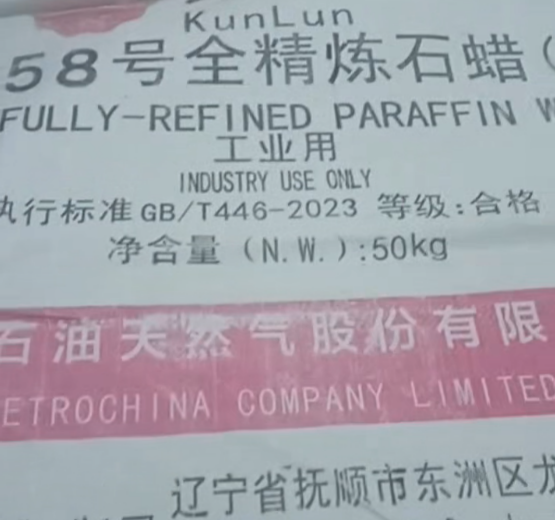
Fully refined paraffin waxes are a hard, white crystalline material derived from petroleum. Paraffin waxes are predominately composed of normal, straight-chain hydrocarbons. The water-repellent and thermoplastic properties of paraffin waxes make them ideal for many applications. Typical end uses include cereal, delicatessen, and household wrap, corrugated containers, candles, cheese and vegetable coatings, and hot melt adhesives.
Application of Paraffin wax
Used in the production of candles, crayons, wax paper, rubber, wires, cables, plates, waterproof materials, electrical insulation, food packaging, precision casting, general telecommunications equipment, textiles, printing, metal rust prevention, and other chemicals required by various industrial sectors raw material.Paraffin wax can also be used for oxidation to generate synthetic fatty acids. Paraffin wax can also be made into detergents, emulsifiers, dispersants, plasticizers, greases, etc.As a kind of latent heat storage material, paraffin wax has the advantages of large latent heat of phase change, small volume change during solid-liquid phase change, good thermal stability, no supercooling phenomenon, and low price. It is used in aviation, aerospace, microelectronics, etc. Various fields such as scientific and technological systems and house energy saving have been widely used.
Paraffin wax can be made into flake or needle crystals obtained by solvent dewaxing or freezing crystallization of wax, pressing dewaxing to obtain wax paste, and then solvent deoiling and refining. Used to make higher fatty acids, higher alcohols, matches, candles, waterproofing agents, ointments, electrical insulating materials, etc.
Paraffin wax is divided into food grade (food grade and packaging grade, the former is excellent) and industrial grade. Food grade is non-toxic and industrial grade is not edible.
Because of its high oil content, crude paraffin is mainly used to make matches, fiberboards, tarpaulins, etc. After adding polyolefin additives to paraffin wax, its melting point increases, adhesion and flexibility increase, and it is widely used in moisture-proof and waterproof packaging paper, cardboard, surface coating of certain textiles and candle production.
After immersing the paper in paraffin wax, various wax papers with good waterproof performance can be prepared, which can be used in food, medicine and other packaging, metal rust prevention and printing industries; after paraffin wax is added to cotton yarn, the textiles can be soft, smooth and smooth. It is elastic; paraffin wax can also be used to make detergents, emulsifiers, dispersants, plasticizers, greases, etc.
Fully refined paraffin and semi-refined paraffin have a wide range of uses. They are mainly used as components and packaging materials for food, oral medicines and certain commodities (such as wax paper, crayons, candles, carbon paper), coating materials for baking containers, and Fruit preservation, insulation of electrical components, improvement of rubber aging resistance and flexibility, etc.
| Paraffin wax Chemical Properties |
| Melting point | 58-62 °C ((ASTM D 87)) |
| Boiling point | 322 °C |
| density | 0.82 g/mL at 20 °C |
| vapor pressure | <0.1 hPa ( 20 °C) |
| refractive index | n |
| FEMA | 3216 | PARAFFIN WAX |
| Fp | 113 °C |
| storage temp. | Store below +30°C. |
| solubility | Soluble in chloroform, ether, volatile oils, and most warm fixed oils; slightly soluble in ethanol; practically insoluble in acetone, ethanol (95%), and water. Paraffin can be mixed with most waxes if melted and cooled. |
| form | extra-low viscosity oil |
| color | white |
| Odor | odorless |
| PH | 7 |
| Odor Type | odorless |
| explosive limit | 0.6-6.5%(V) |
| Dielectric constant | 2.1-2.5(0.0℃) |
| Cosmetics Ingredients Functions | SKIN CONDITIONING VISCOSITY CONTROLLING ABRASIVE FRAGRANCE EMULSION STABILISING BINDING PERFUMING |
| Cosmetic Ingredient Review (CIR) | Paraffin wax (8002-74-2) |
| InChIKey | JWHAUXFOSRPERK-UHFFFAOYSA-N |
| CAS DataBase Reference | 8002-74-2 |
| EPA Substance Registry System | Paraffin waxes and Hydrocarbon waxes (8002-74-2) |
| Safety Information |
| OEB | B |
| OEL | TWA: 2 mg/m3 |
| WGK Germany | - |
| RTECS | RV0350000 |
| Autoignition Temperature | >300 °C |
| TSCA | TSCA listed |
| HS Code | 27101999 |
| Storage Class | 13 - Non Combustible Solids |
| Toxicity | LD50 orally in Rabbit: > 5000 mg/kg LD50 dermal Rabbit > 3600 mg/kg |
Fact Factory and Equipment Show