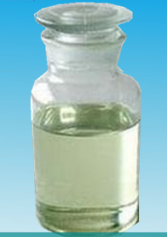
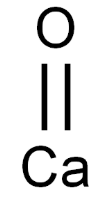
Calcium oxide #CAS1305-78-8
Calcium oxide #CAS1305-78-8
Calcium Oxide is a solid with a very high affinity for water - it will react with water in the air, or in your skin or anywhere it can and form calcium hydroxide. This reaction is exothermic so it releases a lot of heat while it is reacting - there fore as well as being corrosive and causing significant skin irritation, calcium oxide's reaction with water can also cause burns. Calcium hydroxide is basically hydrated calcium oxide. It is alkali so can be corrosive. In solution it makes limewater.
CaO is not found pure in nature but rather is contained in various abundant minerals (i.e. calcite, aragonite, limestone, marble) but vary greatly in their purity (impurities usually include magnesia, iron, alumina, silica, sulfur). Of these iron and sulfur are most troublesome (i.e. where clarity is important in glass). Lime minerals vary in the degree of crystallization and cohesion of the crystalline mass and the homogeneity of the matrix.
Calcium oxide is the principle flux in medium and high temperature glazes, beginning its action (within the glaze) around 1100C. It must be used with care in high-fire bodies because its active fluxing action can produce a body that is too volatile (melting if slightly overfired).Calcium oxide is a white caustic crystalline alkali substance that goes by the common name lime. The term lime is used both generically for several calcium compounds and with adjectives to qualify different forms of lime. This entry equates lime, also called quicklime or burnt lime, with the compound calcium oxide. Hydrated lime, made by combining lime with water, is calcium hydroxide and is often referred to as slaked lime (Ca(OH)2). Dolomite limes contain magnesium as well as calcium. Limestone is the compound calcium carbonate. The term lime comes from the Old English word lm for a sticky substance and denotes lime’s traditional use to produce mortar. Calx was the Latin word for lime and was used to name the element calcium.
Application Of Calcium oxide
1. Calcium oxide can be used in the manufacture of calcium carbide, soda ash, bleaching powder, used as building materials, refractoriness’, desiccant and soil conditioner and calcium fertilizer
2. It can be used as an analysis reagent and flux agent for manufacturing fluorescence powder.
3. It can be used in the manufacture of calcium carbide, soda ash, bleaching powder, also used for leather, waste water purification
4. Calcium oxide can be used as building materials, metallurgical flux agent and the major raw materials for the manufacturing of calcium hydroxide and a variety of calcium compounds. It is also the inexpensive alkali in the chemical industry. It is widely used in pesticides, paper, food, petrochemical, leather, waste water purification and so on. It can also be used for the drying of the laboratory ammonia and alcohol dehydration.
5. Use as drug carriers.
6. Uses as analysis reagents; Calcium oxide can be applied to steel, pesticides, pharmaceuticals, non-ferrous metals, fertilizers, leather and manufacturing of calcium hydroxide, drying of laboratory ammonia, carbon dioxide absorbent and alcohol dehydration.
The major uses of lime are metallurgy, flue gas desulfurization, construction, mining, papermaking, and water treatment. About one third of calcium oxide production in the United States is used for metallurgical processes, principally in the iron and steel industry. Calcium oxide is used to remove impurities during the refining of iron ore. Calcium oxide combines with compounds such as silicates, phosphates, and sulfates contained in iron ores to form slag. Lime is also used for purification in other metal refining and to control pH in mining processes such as leaching and precipitation. The calcium oxide is also used in remediation of mine wastes to recover cyanides and to neutralize acid mine drainage.Calcium Oxide is a general food additive consisting of white granules or powder of poor water solubility. it is obtained by heating limestone (calcium carbonate) in a furnace. it is also termed lime or quicklime. it is used as an anticaking agent, firming agent, and nutritive supple- ment in applications such as grain products and soft candy.In bricks, plaster, mortar, stucco and other building and construction materials; manufacture of steel, aluminum, magnesium, and flotation of non-ferrous ores; manufacture of glass, paper, Na2CO3 (Solvay process), Ca salts and many other industrial chemicals; dehairing hides; clarification of cane and beet sugar juices; in fungicides, insecticides, drilling fluids, lubricants; water and sewage treatment; in laboratory to absorb CO2 .
| Calcium oxide Chemical Properties |
| Melting point | 2570 °C |
| Boiling point | 2850 °C (lit.) |
| density | 3.3 g/mL at 25 °C (lit.) |
| bulk density | 800-1200kg/m3 |
| refractive index | 1.83 |
| Fp | 2850°C |
| storage temp. | no restrictions. |
| solubility | 1.65g/l Risk of violent reaction. |
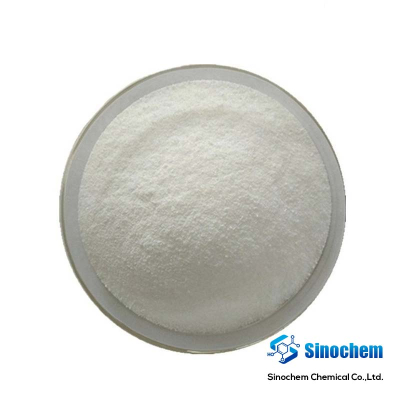
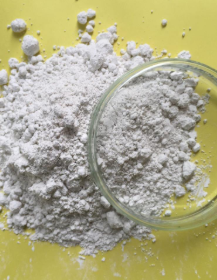
| form | powder |
| color | White to yellow-very slightly beige |
| Specific Gravity | 3.3 |
| PH | 12.6 (H2O, 20℃)(saturated solution) |
| Odor | wh. or gray cryst. or powd., odorless |
| Water Solubility | REACTS |
| Thermal Conductivity | 0.318 W/(m·K) |
| Specific Heat Capacity | Cp(crystal): 0.75 J/(g·K), at 25℃ |
| Crystal Structure | Cubic |
| Sensitive | Air & Moisture Sensitive |
| Merck | 14,1686 |
| crystal system | Cube |
| Space group | Fm3m |
| Lattice constant | a/nmb/nmc/nmα/oβ/oγ/oV/nm30.47760.47760.47769090900.1089 |
| Dielectric constant | 2.2(Ambient) |
| Exposure limits | ACGIH:TLV-TWA 2 mg/m3 OSHA:PEL-TWA 5 mg/m3 NIOSH:REL-TWA 2 mg/m3 |
| Stability: | Stability Stable, but absorbs carbon dioxide from the air. Incompatible with water, moisture, fluorine, strong acids. |
| Cosmetics Ingredients Functions | BUFFERING |
| InChI | 1S/Ca.O |
| InChIKey | ODINCKMPIJJUCX-UHFFFAOYSA-N |
| SMILES | O=[Ca] |
| CAS DataBase Reference | 1305-78-8(CAS DataBase Reference) |
| NIST Chemistry Reference | Calcium monoxide(1305-78-8) |
| EPA Substance Registry System | Calcium oxide (1305-78-8) |
| Safety Information |
| Hazard Codes | C,Xi |
| Risk Statements | 34-41-37/38 |
| Safety Statements | 26-36/37/39-45-25-39 |
| OEB | B |
| OEL | TWA: 2 mg/m3 |
| RIDADR | UN 1910 |
| WGK Germany | 1 |
| RTECS | EW3100000 |
| F | 10-21-34 |
| TSCA | TSCA listed |
| HazardClass | 8 |
| PackingGroup | III |
| HS Code | 28259019 |
| Storage Class | 13 - Non Combustible Solids |
| Hazard Classifications | Eye Dam. 1 Skin Irrit. 2 STOT SE 3 |
| Hazardous Substances Data | 1305-78-8(Hazardous Substances Data) |
| IDLH | 25 mg/m3 |
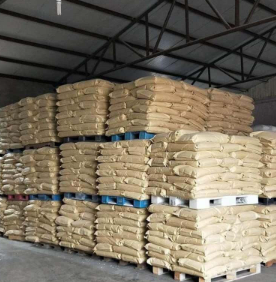
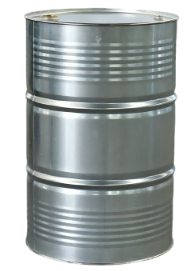
Fact Factory and Equipment Show