Benzaldehyde #CAS100-52-7
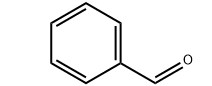
Benzaldehyde is an organic compound, and is synthetized by the way that the hydrogen of benzene is substituted by aldehyde. It is the most simple, and also the most commonly used industrial aromatic aldehyde. It is a colorless liquid at room temperature and has a special almond odor. Benzaldehyde is a compound that aldehyde is directly linked to the phenyl group, because it has a similar bitter almond flavor. Benzaldehyde widely exists in plant, especially in the Rosaceae plants. It is mainly in the form of glycosides in plant stem bark, leaves or seeds, such as amygdalin, bitter almond, cherry, laurel, peach. Benzaldehyde is naturally in bitter almond oil, patchouli oil, hyacinth oil, cananga oil. The compound is also in the nutlets and nuts, and exists in the form of Amygdalin, which is combination of glycosides. The chemical properties of Benzaldehyde is similar to that of aliphatic aldehydes, but It is also different. Benzaldehyde cannot reduce fehling reagent. When the reducing fat is used to reduce the benzaldehyde, the main products are benzene methanol, four substituted for the ortho-glycol and two-phenyl ethylene glycol. In the presence of potassium cyanide, two molecules of benzaldehyde form benzoin by acceptance the hydrogen atom. The substitution reaction in aromatic nucleus of benzaldehyde is mainly the meta-position product. For example, the main product is the m-nitrobenzaldehyde , when benzaldehyde is nitrated.
Application of Benzaldehyde
Benzaldehyde is an important raw material for medicine, dyestuff, perfume and resin industry. It also can be used as solvent, plasticizer and low temperature lubricant. In essence, it is mainly used for the deployment of food flavor. A small amount of benzaldehyde is daily use in flavor and flavor of tobacco. In spite of being widely used as commercial food condiment and industrial solvents, the main use of benzyl alcohol is still used to synthesize a variety of other compounds from pharmaceuticals to plastic additives. Benzyl alcohol is an important intermediate product in the production of perfumes, spices, and some aniline dyes.
It is mainly used for the preparation of flavors, such as almond, cherry, peach, nuts, etc., the amount is up to 40%. As aromatizing agent canned cherry syrup, adding amount is sugar 3mL/kg.
Pharmaceutical, dyestuff, spice intermediates. For the production of oxygen based benzene formaldehyde, lauric acid, lauric aldehyde, malachite, benzyl benzoate, benzyl aniline and benzylidene acetone etc.. Used to tune the soap flavor, edible essence, etc.
As the head of the special aroma, it is used trace formula for fragrance, such as lilac, white, violet, jasmine, acacia, sunflower, sweet plum, orange flower, Tofu pudding etc.. Also it is used in soap. Also it can be used as edible spices for almond, coconut cream, berries, cherries, apricots, peaches, plums, walnuts, and vanilla bean, spicy flavor. Wine with flavors such as rum, brandy, etc.
Benzaldehyde is an intermediate of herbicide resistance, plant growth regulator, and anti-amine.
Used as a reagent for the determination of ozone, phenol, alkaloid and methylene. Used in the preparation of spices.
| Benzaldehyde Chemical Properties |
| Melting point | -26 °C (lit.) |
| Boiling point | 178-179 °C (lit.) |
| density | 1.044 g/cm3 at 20 °C (lit.) |
| vapor density | 3.7 (vs air) |
| vapor pressure | 4 mm Hg ( 45 °C) |
| refractive index | n |
| FEMA | 2127 | BENZALDEHYDE |
| Fp | 145 °F |
| storage temp. | Store below +30°C. |
| solubility | H2O: soluble100mg/mL |
| pka | 14.90(at 25℃) |
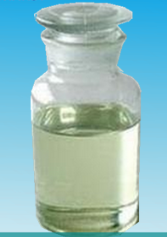
| form | liquid |
| color | Pale yellow |
| PH Range | 5.9 |
| PH | 5.9 (1g/l, H2O) |
| Odor | Like almonds. |
| explosive limit | 1.4-8.5%(V) |
| biological source | synthetic |
| Odor Type | fruity |
| Water Solubility | <0.01 g/100 mL at 19.5 ºC |
| FreezingPoint | -56℃ |
| Thermal Conductivity | 0.153 W/(m·K) at 25 ℃ |
| Sensitive | Air Sensitive |
| Merck | 14,1058 |
| JECFA Number | 22 |
| BRN | 471223 |
| Henry's Law Constant | 4.0×10⁻¹ mol/(m3Pa) at 25℃, Brockbank (2013) |
| Dielectric constant | 17.8(20℃) |
| Stability: | Stable. Combustible. Incompatible with strong oxidizing agents, strong acids, reducing agents, steam. Air, light and moisture-sensitive. |
| Cosmetics Ingredients Functions | FRAGRANCE DENATURANT PERFUMING FLAVOURING |
| Cosmetic Ingredient Review (CIR) | Benzaldehyde (100-52-7) |
| InChI | 1S/C7H6O/c8-6-7-4-2-1-3-5-7/h1-6H |
| InChIKey | HUMNYLRZRPPJDN-UHFFFAOYSA-N |
| SMILES | O=Cc1ccccc1 |
| LogP | 1.4 at 25℃ |
| CAS DataBase Reference | 100-52-7(CAS DataBase Reference) |
| NIST Chemistry Reference | Benzaldehyde(100-52-7) |
| EPA Substance Registry System | Benzaldehyde (100-52-7) |
| CAS Number Unlabeled | 100-52-7 |
| Safety Information |
| Hazard Codes | Xn |
| Risk Statements | 22 |
| Safety Statements | 24 |
| RIDADR | UN 1990 |
| WGK Germany | 1 |
| RTECS | CU4375000 |
| F | 8 |
| Autoignition Temperature | 374 °F |
| TSCA | TSCA listed |
| HS Code | 2912 21 00 |
| HazardClass | 9 |
| PackingGroup | III |
| Storage Class | 6.1C - Combustible acute toxic Cat.3 toxic compounds or compounds which causing chronic effects |
| Hazard Classifications | Acute Tox. 4 Inhalation Acute Tox. 4 Oral Aquatic Chronic 2 Eye Irrit. 2 Repr. 1B Skin Irrit. 2 STOT SE 3 |
| Hazardous Substances Data | 100-52-7(Hazardous Substances Data) |
| Toxicity | LD50 in rats, guinea pigs (mg/kg): 1300, 1000 orally (Jenner) |
Fact Factory and Equipment Show