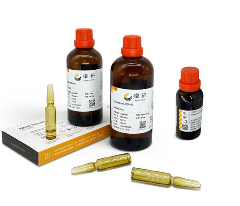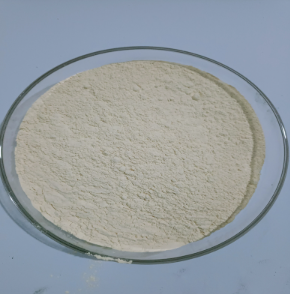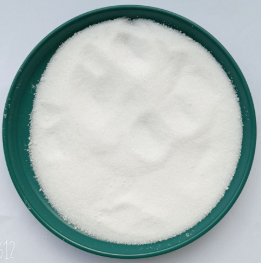
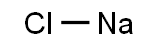
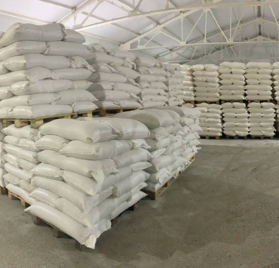
Sodium chloride #CAS7647-14-5
CAS Number:7647-14-5
Chemical Formula: ClNa
CAFFEINE USP GRADE
BICINE HIGH PURITY GRADE
BORIC ACID SODIUM DECAHYDRATE NF GRADE
Appearance:Colorless and transparent cubic crystals
MOQ (Minimum Order Quantity): 1 FCL (Full Container Load)
Sodium chloride #CAS7647-14-5
Sodium chloride (NaCl), also known as common salt or halite, is a white crystalline powder or colorless crystal with a saline taste. Its crystal lattice has a face-centered cubic structure. Although solid sodium chloride is typically anhydrous, it may crystallize as a dihydrate below 0 °C. It is soluble in water, slightly soluble in alcohol, and melts at 804 °C (1480 °F). Sodium chloride is the most important sodium compound and occurs naturally in seawater, underground deposits, and brine wells. It serves as a basic raw material for producing chlorine, sodium hypochlorite, sodium bisulfate, soda ash, and hydrogen chloride. Additionally, it is used in food preparation, fertilizers, and for de-icing roads.
Sodium chloride is the familiar compound commonly referred to as salt or table salt. Its mineral form, called halite, is found in natural deposits worldwide and constitutes approximately 2.7% by weight of the dissolved minerals in seawater. As an ionic compound, it exists as a white crystalline solid with a cubic structure composed of alternating sodium and chloride ions. Sodium chloride is essential for life, with the average adult requiring an intake of about 1 to 2 grams per day. It supplies sodium, which performs numerous vital functions, including maintaining cellular water balance, facilitating nerve signal transmission, and enabling muscle contraction.
Application Of Sodium chloride
The most important applications of sodium chloride in the chemical industry are in making a number of important industrial chemicals such as hydrochloric acid, sodium hydroxide, sodium carbonate, and metallic sodium. It is the starting material in manufacturing these substances. Other uses are in dyeing and printing fabrics, glazing pottery, in making soap, and for curing hides. Sodium chloride is a component of many freezing mixtures.
Natural salt is the source of chlorine and of sodium as well as of all, or practically all, their Compounds, e.g., hydrochloric acid, chlorates, sodium carbonate, hydroxide, etc.; for preserving foods; manufacture of soap, to salt out dyes; in freezing mixtures; for dyeing and printing fabrics, glazing pottery, curing hides; metallurgy of tin and other metals.
Sodium chloride Commonly known as table salt, sodium chloride is found as the mineral halite and in brines and seawater. Sodium chloride is soluble in water but less so in alcohol. It was the first halide to be combined with silver nitrate and was also used by L. J. M. Daguerre and W. H. F. Talbot as a stabilizer before fi xing with hypo was adopted.
sodium chloride (table salt) is used as a preservative, astringent, and anti-septic to treat inflamed lesions. It can also be used to mask odor, reduce product density, and control viscosity. Diluted solutions are not considered irritating.
| Sodium chloride Chemical Properties |
| Melting point | 801 °C (lit.) |
| Boiling point | 1465 °C/1 atm (lit.) |
| density | 1.199 g/mL at 20 °C |
| bulk density | 1140kg/m3 |
| vapor pressure | 1 mm Hg ( 865 °C) |
| refractive index | n |
| Fp | 1413°C |
| storage temp. | +15C to +30C |
| solubility | H2O: soluble |
| form | tablets |
| color | White |
| Specific Gravity | 2.165 |
| Flame Color | Orange |
| PH | 5.5-6.5(1 tablet in 100 mL purified water) |
| Water Solubility | 360 g/L (20 ºC) |
| Thermal Conductivity | 8.159 W/(m·K) (crystal) |
| Specific Heat Capacity | Cp(crystal): 0.86 J/(g·K), at 25℃ |
| λmax | λ: 260 nm Amax: 0.02 λ: 280 nm Amax: 0.01 |
| Crystal Structure | NaCl type |
| Sensitive | Hygroscopic |
| Merck | 14,8599 |
| crystal system | Cube |
| Space group | Fm3m |
| BRN | 3534976 |
| Lattice constant | a/nmb/nmc/nmα/oβ/oγ/oV/nm30.5640.5640.5649090900.17942 |
| Dielectric constant | 5.9(Ambient) |
| BCS Class | 1 |
| Stability: | Stable. Incompatible with strong oxidizing agents. |
| Cosmetics Ingredients Functions | ORAL CARE HUMECTANT BULKING ABRASIVE VISCOSITY CONTROLLING FRAGRANCE SKIN CONDITIONING |
| InChI | 1S/ClH.Na/h1H;/q;+1/p-1 |
| InChIKey | FAPWRFPIFSIZLT-UHFFFAOYSA-M |
| SMILES | [Na+].[Cl-] |
| CAS DataBase Reference | 7647-14-5(CAS DataBase Reference) |
| NIST Chemistry Reference | Sodium chloride(7647-14-5) |
| EPA Substance Registry System | Sodium chloride (7647-14-5) |
| Absorption | ≤0.01 at 260 ≤0.01 at 280 in H2O at 1M |
| Safety Information |
| Hazard Codes | Xi |
| Risk Statements | 36-36/37/38-22 |
| Safety Statements | 24/25-26-36 |
| WGK Germany | 1 |
| RTECS | VZ4725000 |
| F | 3-10 |
| TSCA | TSCA listed |
| HS Code | 38220000 |
| Storage Class | 13 - Non Combustible Solids |
| Hazardous Substances Data | 7647-14-5(Hazardous Substances Data) |
| Toxicity | LD50 orally in rats: 3.75 ±0.43 g/kg (Boyd, Shanas) |
Fact Factory and Equipment Show