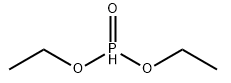


Diethyl phosphite #CAS762-04-9
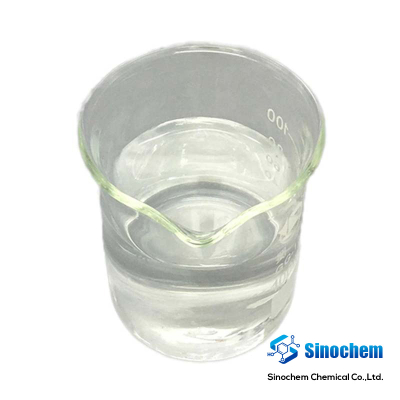
This product is a colorless oily liquid, flammable. Its boiling point is 187 - 188℃. Its specific gravity at 20℃ is 1.4080. Its relative density is 1.072. It is insoluble in water and decomposes in hot water. It is soluble in organic solvents such as alcohols and ethers.
It is a highly reactive organic phosphorus nucleophilic/ electrophilic reagent that possesses both ester bond activity and special interconformational characteristics. In terms of chemical properties, there is a significant "keto-enol-like" potential interconformation within its structure (i.e., phosphorothioate and phosphoester coexist) at room temperature. Due to the extreme balance favoring the phosphoester structure containing phosphorus-oxygen double bonds and phosphorus-hydrogen bonds, it exhibits unique strong nucleophilic activity and free radical reaction characteristics. The most core chemical feature of this compound lies in the fact that the P-H bond in its structure is highly susceptible to activation. Under alkaline catalysts (such as sodium alcohol, triethylamine) or transition metal catalysis, it can undergo in situ deprotonation to generate a strong nucleophilic diethyl phosphorothioate anion, thereby efficiently undergoing the well-known Pudovik reaction (nucleophilic addition to aldehydes and ketones) and the Kabachnik-Fields reaction (tricomponent condensation), respectively, directing the synthesis of α-hydroxyphosphonates and α-amino phosphonates. At the same time, it can also undergo free radical addition with alkenes and alkynes under the action of initiators to form carbon-phosphorus bonds. Moreover, the ethoxy group within the molecule retains the general characteristics of aliphatic esters. It will gradually hydrolyze into phosphorothioic monethyl ester or phosphorothioic in strong acid, strong base, or hot aqueous solution, and this reagent is hygroscopic and sensitive to high heat and open flames. It is prone to intense reactions when encountering strong oxidants. Daily storage requires sealing in a cool, dry, ventilated environment away from oxygen and strong alkalis to prevent exposure.
Application Of Diethyl phosphite
Diethyl phosphite (DEPI) is a versatile reactive intermediate used in the production of various phosphorus based substances. It may be used to prepare the nickel chloride-diethyl phosphite system, efficient catalyst for the cross-coupling reaction between various functionalized arylzinc halides and aryl bromides, triflates and activated chlorides.
It may be used:
in the stereoselective synthesis of β-fluorinated alkylphosphonates
Used in synthesis of homoallylic bromide
Used in synthesis of series of carbazole-based α-aminophosphonates
used as an extraction agent and phosphate intermediate.
Used in synthesis of pesticides kitazine and phosethyl-Al as well as synthetic O, O-diethyl phosphoryl chloride.
used for the synthesis of plasticizers, flame retardants, etc.
Diethyl phosphite is reported to be chemical warfare agent (CWA) simulant, simulant for nerve agents sarin, soman, tabun, and VX.
Diethyl phosphite is precursor used for the synthesis of various organophosphorus compounds. used to prepare the nickel chloride-diethyl phosphite system, efficient catalyst for the cross-coupling reaction between various functionalized arylzinc halides and aryl bromides, triflates and activated chlorides.
| Diethyl phosphite Chemical Properties |
| Melting point | -70 °C |
| Boiling point | 50-51 °C/2 mmHg (lit.) |
| density | 1.072 g/mL at 25 °C (lit.) |
| vapor pressure | 7hPa at 20℃ |
| refractive index | n |
| Fp | 180 °F |
| form | Liquid |
| Specific Gravity | 1.072 |
| color | Colorless |
| Water Solubility | miscible (hydrolysis) |
| Sensitive | Moisture Sensitive |
| Hydrolytic Sensitivity | 7: reacts slowly with moisture/water |
| BRN | 605759 |
| Henry's Law Constant | 1.7×100 mol/(m3Pa) at 25℃, HSDB (2015) |
| Stability: | Stable. Incompatible with strong oxidizing agents, strong acids, acid chlorides, strong bases. May decompose on exposure to moisture. Combustible. |
| InChI | 1S/C4H11O3P/c1-3-6-8(5)7-4-2/h8H,3-4H2,1-2H3 |
| InChIKey | MJUJXFBTEFXVKU-UHFFFAOYSA-N |
| SMILES | [H]P(=O)(OCC)OCC |
| LogP | -0.15 |
| CAS DataBase Reference | 762-04-9(CAS DataBase Reference) |
| NIST Chemistry Reference | Phosphonic acid, diethyl ester(762-04-9) |
| EPA Substance Registry System | Diethyl phosphite (762-04-9) |
| Safety Information |
| Hazard Codes | Xi |
| Risk Statements | 36/37/38-43 |
| Safety Statements | 26-36/37/39-37/39-28-27 |
| WGK Germany | 1 |
| RTECS | TG7875000 |
| F | 10-13-21 |
| TSCA | TSCA listed |
| HS Code | 29209014 |
| Storage Class | 10 - Combustible liquids |
| Hazard Classifications | Eye Dam. 1 Skin Sens. 1B |
| Hazardous Substances Data | 762-04-9(Hazardous Substances Data) |
Fact Factory and Equipment Show