
Trifluoroacetic acid #CAS76-05-1
CAS Number:76-05-1
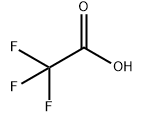
Chemical Formula: C2HF3O2
Synonyms:
R3, TRIFLUOROACETIC ACID
TRIFLUOROACETLC ACID
WASH BUFFER
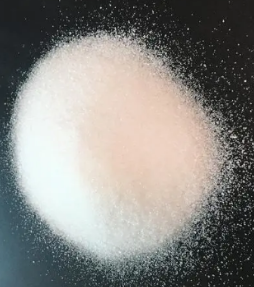
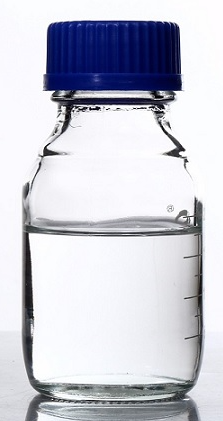
Appearance:The colorless liquid has a sharp and pungent odor.
MOQ (Minimum Order Quantity): 1 FCL (Full Container Load)
Trifluoroacetic acid #CAS76-05-1
Trifluoroacetic acid (TFA, molecular formula: CF3COOH) is a kind of colorless, volatile and fuming liquid with a similar odor as acetic acid. It is hygroscopic and has irritating odor. It has strong acidic property due to being affected by the electron-attracting trifluoromethyl group with its acidicity being 100000 higher than acetic acid. It has a melting point being-15.2 ℃, boiling point being 72.4 ℃, and the density being 1.5351g/cm3 (1℃). It is miscible with water, fluorinated hydrocarbons, methanol, ethanol, ethyl ether, acetone, benzene, carbon tetrachloride, and hexane; it is partially soluble in carbon disulfide and alkane containing more than six carbons. It is an excellent solvent of protein and polyester.Trifluoroacetic acid is also a good solvent for the organic reaction which allows obtaining certain results which are difficult in the cases of application of common solvents. For example, when quinolone is being catalyzed for hydrogenation in a common solvent, the pyridine ring is preferentially hydrogenated; in contrast, the benzene ring will be preferentially hydrogenated in the presence of trifluoroacetic acid as the solvent. Trifluoroacetic acid is decomposed into carbon dioxide and fluorine in the presence of aniline. It can be reduced by sodium borohydride or lithium aluminum hydride into trifluoroacetic acetaldehyde and trifluoro-ethanol. It is stable at temperature higher than 205 ℃ stable. But its ester and amides derivatives are easily subject to hydrolysis which allows them to prepare carbohydrate, amino acids, and peptide derivative in the form of acid or anhydride. It is easily to be dehydrated under action of phosphorus pentoxide and be converted to trifluoroacetic anhydride.
Trifluoroacetic acid is a kind of important intermediates of fat fluorine. Owing to the special structure of trifluoromethyl, it has a different property from other alcohols and can participate in a variety of organic reactions, especially being used in the field of the synthesis of fluorine-containing pharmaceutical, pesticides and dyes. Its domestic and foreign demand is increasing and has become one of the important intermediates for fluorine-containing fine chemicals.
Application Of Trifluoroacetic acid
Trifluoroacetic acid is mainly for the production of new pesticide, medicine and dyes, and also has great potential of application and development in the fields of materials and solvents. Trifluoroacetic acid is mainly used for the synthesis of various kinds of trifluoromethyl group or heterocyclic containing herbicides. It is currently available for synthesizing various kinds of novel herbicide containing pyridyl and qunoilyl; acting as a strong proton acid, it is widely applied as the catalyst for alkylation, acylation, and olefin polymerization of aromatic compound; as a solvent, trifluoroacetic acid is a kind of excellent solvent for fluorination, nitration and halogenations. In particular, the excellent protective effect of its trifluoroacetyl derivatives on hydroxy and amino group has very important application in the synthesis of amino acid and poly-peptide synthesis, for example, the compound can be used as the protection agent of tert-butoxycarbonyl (t-boc) which is used for removing amino acids during the synthesis of poly-peptide. Trifluoroacetic acid, as the raw material and modifier for the preparation of the ion membrane, can largely improve the current efficiency of soda industry and significantly extend the working life of the membrane; trifluoroacetic acid can also be used for synthesizing trifluoro-ethanol, trifluoroacetic acetaldehyde and trifluoroacetic anhydride. At room temperature, the mercury trifluoroacetic acid can have mercury-fluorophenyl be able to have mercuration reaction (electrophilic substitution), and can also convert hydrazone to diazo compound. The lead salt of this acid can convert arene to phenol.
In the experiment of reverse phase chromatography for isolation of peptides and proteins, using trifluoroacetic acid (TFA) as the ion-pairing reagents is a common approach. Trifluoroacetic acid in the mobile phase can improve the peak shape and overcome the problem of the peak broadening and trailing issue through interaction with hydrophobic bonded phase and residual polar surface in a variety of models. Trifluoroacetic acid has an advantage over other ion modifier due to that it is volatile and can be easily removed from the sample preparation. On the other hand, the maximum UV absorption peak of trifluoroacetic acid is less than 200 nm, and thus having very small interference on the detection of polypeptides at low wavelengths.
| Trifluoroacetic acid Chemical Properties |
| Melting point | -15.4 °C (lit.) |
| Boiling point | 72.4 °C (lit.) |
| density | 1.489 g/mL at 20 °C (lit.) |
| vapor density | 3.9 (vs air) |
| vapor pressure | 97.5 mm Hg ( 20 °C) |
| refractive index | n |
| Fp | None |
| storage temp. | Store at +15°C to +25°C. |
| solubility | Miscible with ether, acetone, ethanol, benzene, hexane, and CCl<sub>4</sub> |
| pka | -0.3(at 25℃) |
| form | Liquid |
| Specific Gravity | 1.480 |
| color | Colorless |
| PH | 1 (10g/l, H2O) |
| Odor | Sharp, pungent odor |
| PH Range | 1 |
| Water Solubility | miscible |
| Sensitive | Hygroscopic |
| λmax | λ: 260 nm Amax: 0.9 λ: 270 nm Amax: 0.10 λ: 280 nm Amax: 0.05 λ: 290 nm Amax: 0.04 λ: 300 nm Amax: 0.03 λ: 320 nm Amax: 0.025 |
| Merck | 14,9681 |
| BRN | 742035 |
| Henry's Law Constant | 5.7×101 mol/(m3Pa) at 25℃, Burkholder et al. (2019) |
| Dielectric constant | 23.7(20℃) |
| Stability: | Stable. Incompatible with combustible material, strong bases, water, strong oxidizing agents. Non-combustible. Hygroscopic. May react violently with bases. |
| Major Application | food and beverages |
| Cosmetics Ingredients Functions | pH ADJUSTERS |
| InChI | 1S/C2HF3O2/c3-2(4,5)1(6)7/h(H,6,7) |
| InChIKey | DTQVDTLACAAQTR-UHFFFAOYSA-N |
| SMILES | OC(C(F)(F)F)=O |
| CAS DataBase Reference | 76-05-1(CAS DataBase Reference) |
| NIST Chemistry Reference | Acetic acid, trifluoro-(76-05-1) |
| EPA Substance Registry System | Acetic acid, 2,2,2-trifluoro- (76-05-1) |
| Safety Information |
| Hazard Codes | C,T,Xi |
| Risk Statements | 20-35-52/53-34 |
| Safety Statements | 9-26-27-28-45-61-28A-36/37/39 |
| RIDADR | UN 2699 |
| WGK Germany | 2 |
| RTECS | AJ9625000 |
| F | 3 |
| Hazard Note | Toxic/Corrosive |
| TSCA | TSCA listed |
| HazardClass | 8 |
| PackingGroup | I |
| HS Code | 29159080 |
| Storage Class | 8A - Combustible corrosive hazardous materials |
| Hazard Classifications | Acute Tox. 4 Inhalation Aquatic Chronic 3 Eye Dam. 1 Skin Corr. 1A |
| Hazardous Substances Data | 76-05-1(Hazardous Substances Data) |
| Toxicity | LD50 i.v. in mice: 1200 mg/kg (Airaksinen, Tammisto) |
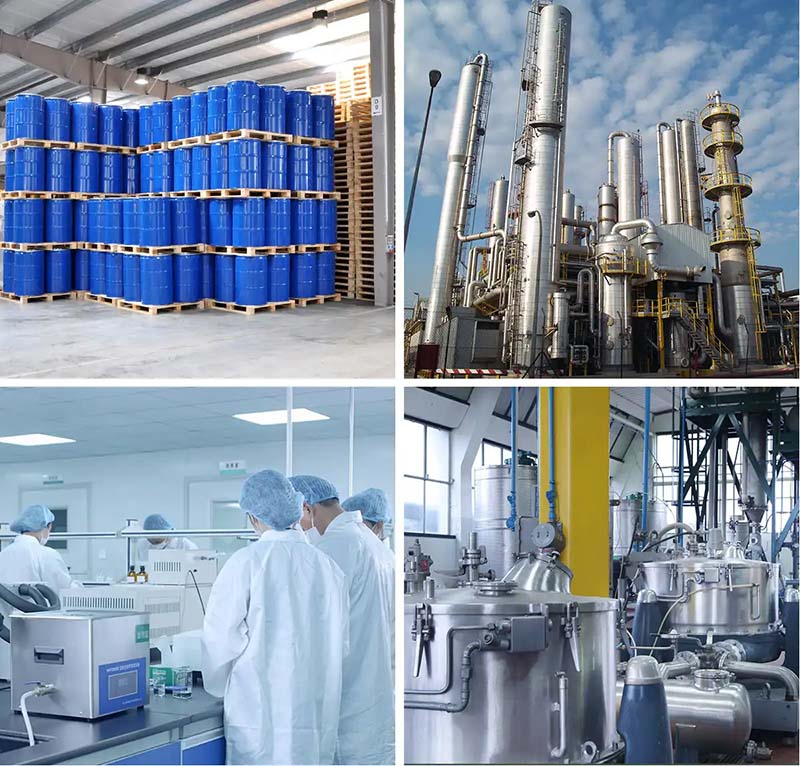
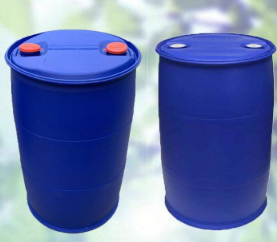
Fact Factory and Equipment Show