Cupric hydroxide #CAS20427-59-2
CAS Number:20427-59-2
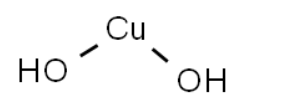
Chemical Formula: CuH2O2
Synonyms:
Copper hydroxide (ic)
comacparasol
Copper hydrate, hydrated cupric oxide
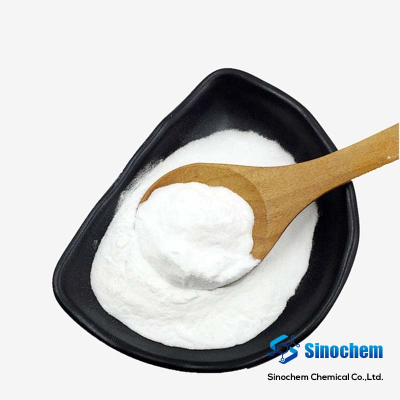
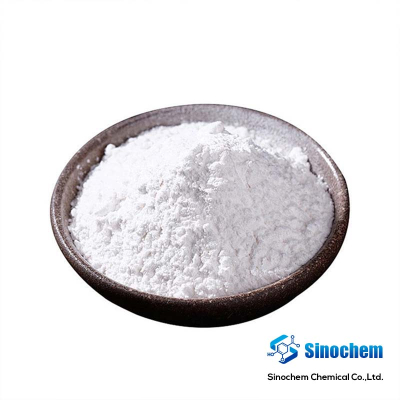
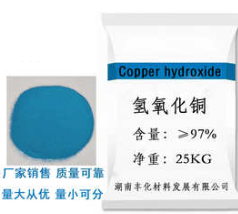
Appearance:Blue to pale blue-green crystalline powder or gel-like solid, odorless, sparingly soluble in water, soluble in dilute acids, ammonia and potassium cyanide solutions; darkens at 60-80°C and decomposes to black copper oxide at 200°C
MOQ (Minimum Order Quantity): 1 FCL (Full Container Load)
Cupric hydroxide #CAS20427-59-2
Cupric hydroxide appears as a blue powder and it is not stable. Cupric hydroxide is used as a mordant and pigment, in the manufacture of many copper salts, and for staining paper. It is used as a fungicide/bactericide on fruits, vegetables, and ornamentals. It can be used as catalyst, feed additive, and a cuprammonium rayon process reagent to make the first semi-synthetic fiber product, Rayon.
Copper(II) hydroxide, Cu(OH)2, is thermodynamically unstable with respect to decomposition to the oxide. Copper(II) hydroxide prepared by the addition of sodium hydroxide to a salt of copper decomposes at temperatures above 100°C, and in the presence of excess alkali, it decomposes at temperatures above 50°C. It is virtually insoluble in water and decomposes in hot water to the more stable copper(II) oxide and water. Copper(II) hydroxide dissolves quickly in mineral acids and ammonia solution. It is mildly amphoteric, and in concentrated alkali, it forms [Cu(OH)3]- or [Cu(OH)4]2- ions. Copper(II) hydroxides can be produced in a kinetically stabilized form depending on the method of precipitation and choice of additives.
[1] Michael Ash, Handbook of Preservatives, 2004
[2] Günter Joseph and Konrad J. A. Kundig, Copper: Its Trade, Manufacture, Use, and Environmental Status, 1999
[4] Bo Liu, Bin Liu, Yongbo Zhou and Wanzhi Chen, Copper(II) Hydroxide Complexes of N-Heterocyclic Carbenes and Catalytic Oxidative Amination of Arylboronic Acids, Organnometallics, 2010, vol. 29, 1457-1464
[5] George B. Kauffman, Rayon: The first semi-synthetic fiber product, Journal of Chemical Education, 1993, vol. 70, 887
Application of Cupric hydroxide
Copper(II) hydroxide has been used as an alternative to the Bordeaux mixture, a fungicide and nematicide.
The orthorhombic nature of copper hydroxide crystals was determined by X ray diffraction. Copper hydroxide can act as a heterogeneous catalyst in the selective oxidative cross coupling of terminal alkynes to yield their corresponding ynamides.
Copper(II) hydroxide is also occasionally used as ceramic colorant. Used as an active precursor in the production of copper(II) compounds. Ammonia-processed copper(II) hydroxide is used in the production of copper(II) naphthenate, copper(II) 2-ethylhexanoate, and copper soaps. Ammonia-processed copper(II) hydroxide is also used in the production of rayon (Schweiter's reagent) and in the stabilization of nylon; as a feed additive, a catalyst in the vulcanization of polysulfide rubber, and an antifouling pigment.
Copper hydroxide based monoliths can be used in the synthesis of copper hydroxide-based monolithic xerogels. Potential applications of this metal organic frameworks (MOFs) include gas storage, separation, drug delivery, and biomedicine. Supported Cu(OH)x can be used as a catalyst for the aerobic cross dehydrogenative coupling of benzenethiols and cyclic amides to yield N-acylsulfenamides.
| Cupric hydroxide Chemical Properties |
| density | 3.4 |
| vapor pressure | 0Pa at 25℃ |
| storage temp. | Inert atmosphere,2-8°C |
| solubility | H2O: insoluble(lit.) |
| form | Powder |
| color | Blue |
| PH | 7.69(1 mM solution);7.69(10 mM solution);7.69(100 mM solution) |
| Water Solubility | Slightly soluble in waterSoluble in acids, ammonium hydroxide, dilute hydrochloric acid, concentrated alkali and potassium cyanide. Insoluble in water, ethanol, and acetone. |
| Sensitive | Hygroscopic |
| Merck | 14,2642 |
| Solubility Product Constant (Ksp) | pKsp: 19.66 |
| Exposure limits | ACGIH: TWA 1 mg/m3 NIOSH: IDLH 100 mg/m3; TWA 1 mg/m3 |
| Stability: | Stable, but hygroscopic. Store in dry conditions. |
| InChI | 1S/Cu.2H2O/h;2*1H2/q+2;;/p-2 |
| InChIKey | JJLJMEJHUUYSSY-UHFFFAOYSA-L |
| SMILES | O[Cu]O |
| CAS DataBase Reference | 20427-59-2(CAS DataBase Reference) |
| NIST Chemistry Reference | Copper hydroxide(20427-59-2) |
| EPA Substance Registry System | Cupric hydroxide (20427-59-2) |
| Safety Information |
| Hazard Codes | Xn,N,T |
| Risk Statements | 22-37/38-41-50/53-23 |
| Safety Statements | 26-36-39 |
| RIDADR | 3262 |
| WGK Germany | 3 |
| RTECS | GL7600000 |
| TSCA | TSCA listed |
| HS Code | 28255000 |
| Storage Class | 6.1B - Non-combustible acute toxic Cat. 1 and 2 very toxic hazardous materials |
| Hazard Classifications | Acute Tox. 2 Inhalation Acute Tox. 4 Oral Aquatic Acute 1 Aquatic Chronic 1 Eye Dam. 1 |
| Hazardous Substances Data | 20427-59-2(Hazardous Substances Data) |
Fact Factory and Equipment Show