Bis(2-ethylhexyl) phthalate #CAS117-81-7
CAS Number:117-81-7
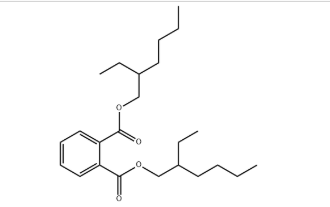
Chemical Formula:C24H38O4
Synonyms:
1,2-Benzenedicarboxylic acid, bis(2-ethylhexyl) ester
1,2-Benzenedicarboxylic acid, bis(ethylhexyl) ester
1,2-benzenedicarboxylicacid,bis(2-ethylhexyl)ester
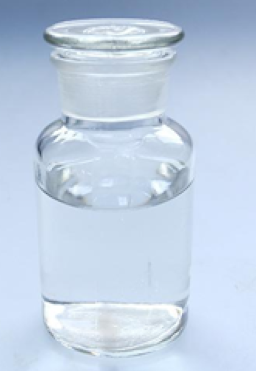
Appearance: APHA: ≤10 Liquid
MOQ (Minimum Order Quantity): 1 FCL (Full Container Load)
Bis(2-ethylhexyl) phthalate #CAS117-81-7
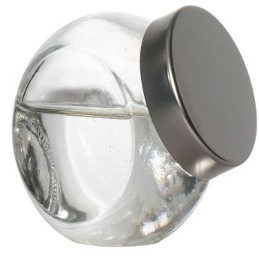
Di(2-ethylhexyl)phthalate is a colorless oilyliquid with almost no odor. Molecular weight=390.56;Specific gravity (H2O:1)=0.99; Boiling point=385℃;Freezing/Melting point=-50℃; Vapor pressure=,0.01% mmHg at 20℃; Flash point=195℃;Autoignition temperature=348℃. Explosive limits:LEL=0.1%; UEL 2 0.2%. Hazard Identification (based onNFPA-704 M Rating System): Health 1, Flammability 1,Reactivity 0. Slightly soluble in water;solubility=0.00003% at 25℃.
Application of Bis(2-ethylhexyl) phthalate
Bis(2-ethylhexyl) phthalate, known by a variety of other names and usually abbreviated DEHP, was patented in 1950 and first used as vacuum pump oil. But since then, it has become the most widely used plasticizer for poly(vinyl chloride) (PVC) and other plastics. Recently, relatively high levels of DEHP have been found in foods, especially foods high in oils and fats. The U.S. Food and Drug Administration now restricts its use in packaging materials to water-based foods. The European Commission has banned the use of DEHP and other phthalates in PVC toys.
Di(2-ethylhexyl)phthalate (DEHP) is a benzenedicarboxilate ester which is the most widely used plasticizer to soften resins. DEHP is hydrolyzed into what many believe to be its toxic metabolite, mono(2-ethylhexyl)phthalate (MEHP), by lipase enzymes in the gastrointestinal tract.
Bis(2-ethylhexyl) phthalate is commonly used plasticizing agent for PVCs, which as such is a component of blood bank bags, surgical tubing, and other products including food wrappers and children’s toys.
| Bis(2-ethylhexyl) phthalate Chemical Properties |
| Melting point | -50 °C |
| Boiling point | 386 °C (lit.) |
| density | 0.985 g/mL at 20 °C (lit.) |
| vapor density | >16 (vs air) |
| Pour Point | -46 |
| vapor pressure | 1.2 mm Hg ( 93 °C) |
| refractive index | n |
| Fp | 405 °F |
| storage temp. | 2-8°C |
| solubility | Miscible with mineral oil and hexane (U.S. EPA, 1985) |
| form | Liquid |
| color | APHA: ≤10 |
| Odor | Very slight, characteristic. |
| Water Solubility | Negligible |
| FreezingPoint | <-60℃ |
| Merck | 14,2864 |
| BRN | 1890696 |
| Henry's Law Constant | (x 10-5 atmm3/mol): 1.1 at 25 °C (calculated, Howard, 1989) |
| Exposure limits | ACGIH:TLV-TWA 0.1 mg/m3 OSHA:PEL-TWA 5 mg/m3 NIOSH:REL-TWA 5 mg/m3; REL-STEL 10 mg/m3 |
| Dielectric constant | 5.1(24℃) |
| Cosmetics Ingredients Functions | PLASTICISER PERFUMING SOLVENT FRAGRANCE |
| InChI | 1S/C24H38O4/c1-5-9-13-19(7-3)17-27-23(25)21-15-11-12-16-22(21)24(26)28-18-20(8-4)14-10-6-2/h11-12,15-16,19-20H,5-10,13-14,17-18H2,1-4H3 |
| InChIKey | BJQHLKABXJIVAM-UHFFFAOYSA-N |
| SMILES | CCCCC(CC)COC(=O)c1ccccc1C(=O)OCC(CC)CCCC |
| LogP | 7.5 at 20℃ |
| CAS DataBase Reference | 117-81-7(CAS DataBase Reference) |
| NIST Chemistry Reference | Bis(2-ethylhexyl)phthalate(117-81-7) |
| IARC | 2B (Vol. Sup 7, 77, 101) 2013 |
| EPA Substance Registry System | Di(2-ethylhexyl) phthalate (117-81-7) |
| Safety Information |
| Hazard Codes | T,F |
| Risk Statements | 60-61-39/23/24/25-23/24/25-11 |
| Safety Statements | 53-45-36/37-16 |
| RIDADR | UN 1230 3/PG 2 |
| OEB | B |
| OEL | TWA: 5 mg/m3, STEL: 10 mg/m3 |
| WGK Germany | 1 |
| RTECS | TI0350000 |
| Autoignition Temperature | 734 °F |
| TSCA | TSCA listed |
| HazardClass | 9 |
| PackingGroup | III |
| HS Code | 29173400 |
| Storage Class | 6.1C - Combustible acute toxic Cat.3 toxic compounds or compounds which causing chronic effects |
| Hazard Classifications | Repr. 1B |
| Hazardous Substances Data | 117-81-7(Hazardous Substances Data) |
| Toxicity | Acute oral LD50 for guinea pigs 26 gm/kg, mice 30 gm/kg, rats 30,600 mg/kg, rabbits 34 gm/kg (quoted, RTECS, 1985). |
| IDLH | 5,000 mg/m3 |
Fact Factory and Equipment Show