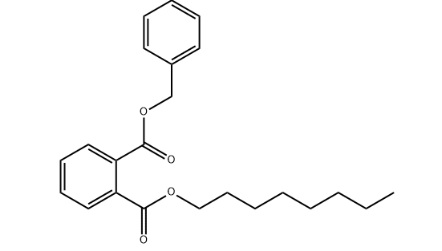
benzyl octyl phthalate #CAS1248-43-7
CAS Number:1248-43-7
Chemical Formula:C23H28O4
Synonyms:
Phthalic acid 1-octyl 2-phenylmethyl ester
1,2-Benzenedicarboxylic acid, 1-octyl 2-(phenylmethyl) ester
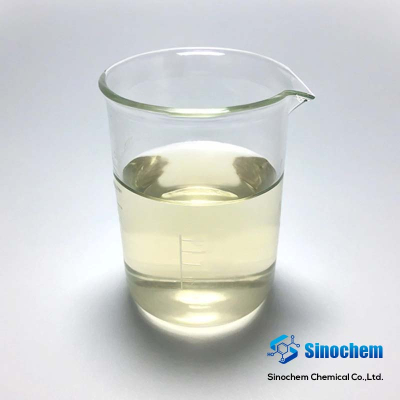
Appearance:Colorless to pale yellow clear oily liquid at ambient temperature, nearly odorless; Density:1.079g/cm³@20℃, freezing point -45℃, flash point 222.6℃; practically insoluble in water, soluble in alcohols, esters, aromatic solvents; stable at normal temperature, low volatility & anti-migration property, primary plasticizer for PVC resin。
MOQ (Minimum Order Quantity): 1 FCL (Full Container Load)
benzyl octyl phthalate #CAS1248-43-7
Phthalate derivative, aryl-alkyl composite plasticizer, rubber & plastic auxiliary, coating raw material, fine organic ester chemical
Non-dangerous goods, no UN number; GHS hazard: chronic aquatic toxicity, no flammable/corrosive risk, common cargo storage & transport
HS Code 29173400, other phthalic acid esters
Colorless to pale yellow clear oily liquid at ambient temperature, nearly odorless; Density:1.079g/cm³@20℃, freezing point -45℃, flash point 222.6℃; practically insoluble in water, soluble in alcohols, esters, aromatic solvents; stable at normal temperature, low volatility & anti-migration property, primary plasticizer for PVC resin。
Preparation Method
(1) Place the four-necked flask in an oil bath and equip it with a stirrer, thermometer, and reflux condenser. Add phthalic anhydride, n-octanol, and sulfuric acid to the flask. Slowly raise the temperature to 138-140℃ while stirring continuously, until the phthalic anhydride is completely melted into a transparent liquid. Then raise the temperature to 100-110℃ and react for 2 hours. Monooctyl phthalate is generated.
(2) Cool the reactants generated in step (1) to 60-80℃ and add sodium hydroxide solution dropwise while stirring continuously. The addition is completed in about 30 minutes. Then adjust the pH of the reactants to 8.0-8.5 with sodium carbonate solution.
(3) Raise the reactants from step (2) to 80-90℃, add the catalyst tributylamine, and add benzyl chloride dropwise, controlling the dropping rate. The addition is completed in about 20 minutes. Then raise the temperature to 100-105℃ and reflux for 2-3 hours. (4) After the reaction is complete, cool to room temperature, pour the reactants into a separatory funnel and let them stand to separate into layers, separating the lower aqueous phase. Wash the upper oil phase with 200 ml of water three times until neutral. After separating the aqueous layer, the crude ester is obtained. (5) The crude ester obtained in step (4) is steam distilled to remove low-boiling-point substances, and then subjected to vacuum distillation to remove water. Finally, a pale yellow transparent oily liquid is obtained, which is the finished product.
Application of benzyl octyl phthalate
benzyl octyl phthalate is used as a plasticizer in the synthesis of rubber materials and PVC material.
Octyl Benzyl Phthalate is used as a plasticizer in the synthesis of rubber materials and PVC material.
| benzyl octyl phthalate Chemical Properties |
| storage temp. | Refrigerator |
| solubility | Chloroform (Slightly), Ethyl Acetate (Slightly), Methanol (Slightly) |
| form | Oil |
| color | Colourless to Pale Yellow |
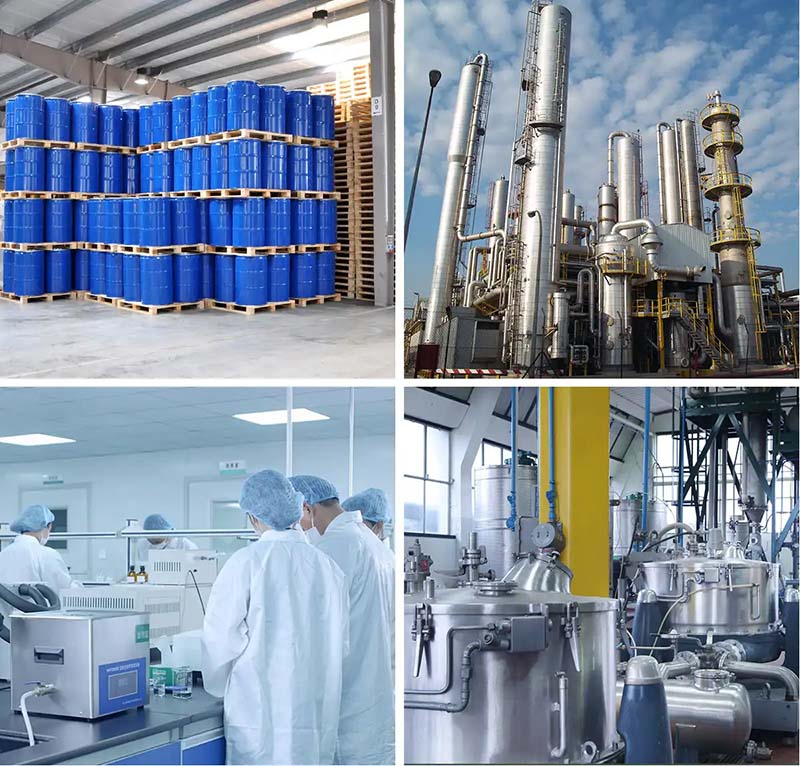
Fact Factory and Equipment Show