Acrylic acid #CAS79-10-7
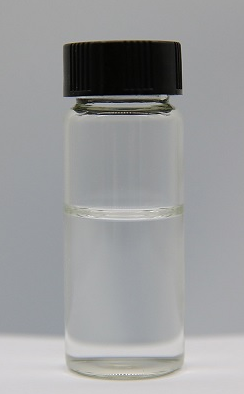
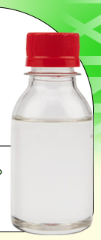
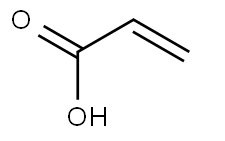
Acrylic acid (IUPAC: prop-2-enoic acid) is an organic compound with the formula CH2=CHCO2H. It is the simplest unsaturated carboxylic acid, consisting of a vinyl group connected directly to a carboxylic acid terminus. This colorless liquid has a characteristic acrid or tart smell. It is miscible with water, alcohols, ethers, and chloroform. More than one billion kilograms are produced annually.
Application of Acrylic acid
Acrylic acid undergoes the typical reactions of a carboxylic acid and, when reacted with an alcohol, it will form the corresponding ester. The esters and salts of acrylic acid are collectively known as acrylates (or propenoates). The most common alkyl esters of acrylic acid are methyl-, butyl-, ethyl-, and 2-ethylhexyl-acrylate.
Acrylic acid and its esters readily combine with themselves (to form polyacrylic acid) or other monomers (e.g. acrylamides, acrylonitrile, vinyl, styrene, and butadiene) by reacting at their double bond, forming homopolymers or copolymers which are used in the manufacture of various plastics, coatings, adhesives, elastomers, as well as floor polishes, and paints.
Acrylic acid is produced by oxidation of acrolein or hydrolysis of acrylonitrile. It is used in the manufacture of plastics; in paints, polishes, and adhesives; and as coatings for leather.
Usually used in preparing monodispersed poly (N-isopropylacryamide) (PNIPAM)/AAc microgels.And also used primarily as an intermediate in the production of acrylates.
| Acrylic acid Chemical Properties |
| Melting point | 13 °C (lit.) |
| Boiling point | 139 °C (lit.) |
| density | 1.051 g/mL at 25 °C (lit.) |
| vapor density | 2.5 (vs air) |
| vapor pressure | 4 mm Hg ( 20 °C) |
| refractive index | n |
| Fp | 130 °F |
| storage temp. | Store at +15°C to +25°C. |
| solubility | 1000g/l |
| form | Liquid |
| pka | 4.25(at 25℃) |
| color | Clear |
| Odor | Acrid odor |
| PH Range | 1 - 2 |
| PH | 3.68(1 mM solution);3.14(10 mM solution);2.63(100 mM solution); |
| explosive limit | 3.9-19.8%(V) |
| Water Solubility | MISCIBLE |
| Sensitive | Air Sensitive |
| λmax | 231nm(lit.) |
| Merck | 14,130 |
| BRN | 635743 |
| Henry's Law Constant | 2.7×101 mol/(m3Pa) at 25℃, Duchowicz et al. (2020) |
| Exposure limits | PC-TWA:6 mg/m3 |
| Stability: | Stability Unstable - may contain p-methoxyphenol as an inhibitor. Prone to hazardous polymerization. Combustible. Incompatible with strong oxidizing agents, strong bases, amines. Contact with oxidizers may cause fire. Light and air sensitive. Hygroscopic. |
| Cosmetics Ingredients Functions | NAIL CONDITIONING |
| InChI | 1S/C3H4O2/c1-2-3(4)5/h2H,1H2,(H,4,5) |
| InChIKey | NIXOWILDQLNWCW-UHFFFAOYSA-N |
| SMILES | OC(=O)C=C |
| LogP | 0.46 at 25℃ |
| CAS DataBase Reference | 79-10-7(CAS DataBase Reference) |
| NIST Chemistry Reference | 2-Propenoic acid(79-10-7) |
| IARC | 3 (Vol. 19, Sup 7, 71) 1999 |
| EPA Substance Registry System | Acrylic acid (79-10-7) |
| ECETOC JACC REPORT | Acrylic acid (79-10-7) |
| Safety Information |
| Hazard Codes | C,N |
| Risk Statements | 10-20/21/22-35-50 |
| Safety Statements | 26-36/37/39-45-61 |
| OEB | B |
| OEL | TWA: 2 ppm (6 mg/m3) [skin] |
| RIDADR | UN 2218 |
| WGK Germany | 1 |
| RTECS | AS4375000 |
| F | 8-13 |
| Autoignition Temperature | 744 °F |
| TSCA | TSCA listed |
| HazardClass | 8 |
| PackingGroup | II |
| HS Code | 29161110 |
| Storage Class | 3 - Flammable liquids |
| Hazard Classifications | Acute Tox. 4 Dermal Acute Tox. 4 Inhalation Acute Tox. 4 Oral Aquatic Acute 1 Aquatic Chronic 2 Eye Dam. 1 Flam. Liq. 3 Skin Corr. 1A STOT SE 3 |
| Hazardous Substances Data | 79-10-7(Hazardous Substances Data) |
| Toxicity | LD50 orally in rats: 2.59 g/kg (Smyth) |
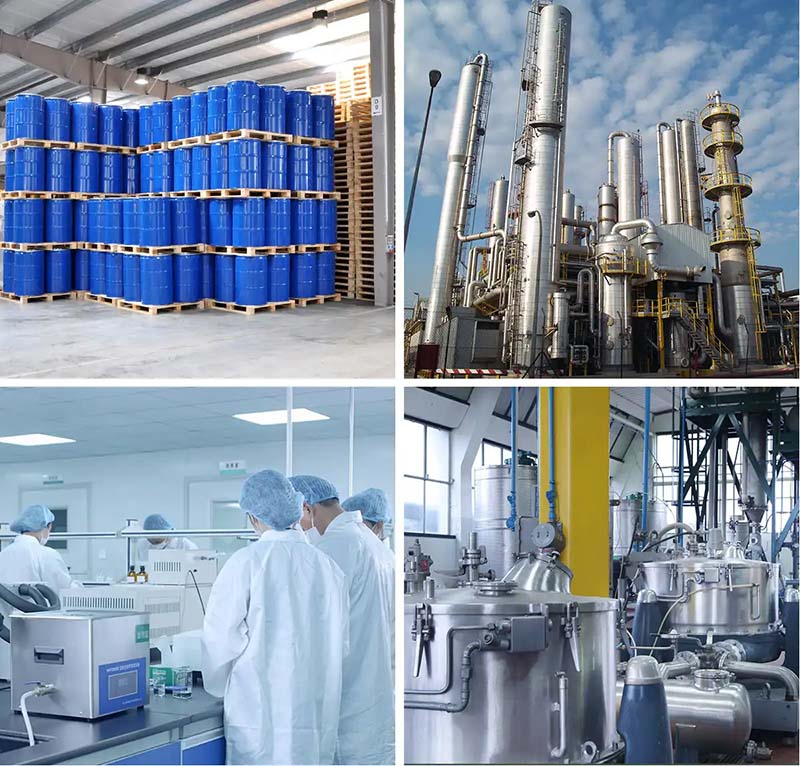
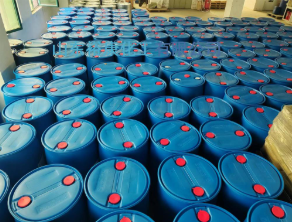
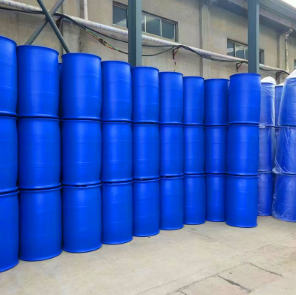
Fact Factory and Equipment Show