o-Anisaldehyde #CAS135-02-4
CAS Number:135-02-4
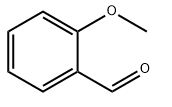
Chemical Formula: C8H8O2
Synonyms:
2-Methoxybenzaldehyde
o-Anisaldehyde, 98% 100GR
2-Methoxybenzaldehyde Salicylaldehyde Methyl Ether
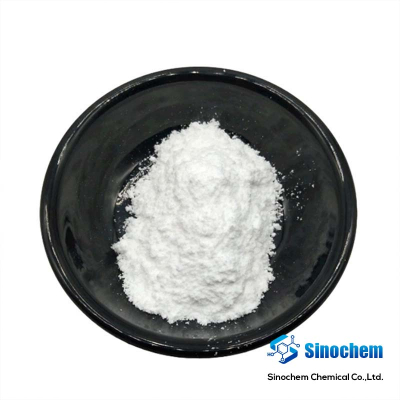
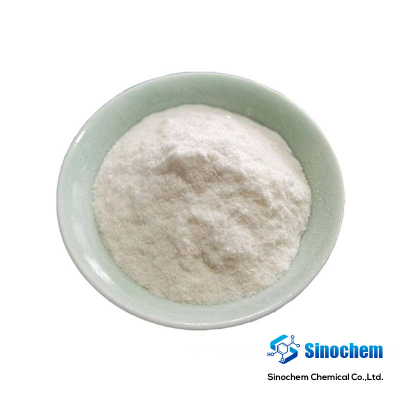
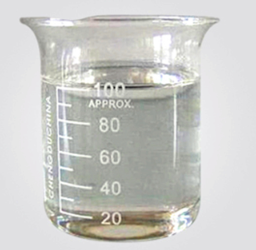
Appearance:At room temperature, it is a colorless to light yellow clear liquid with a distinctive fragrant odor. When cooled at low temperatures or when of high purity, it can exist in a crystalline solid state.
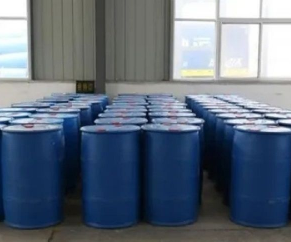
MOQ (Minimum Order Quantity): 1 FCL (Full Container Load)
o-Anisaldehyde #CAS135-02-4
O-Anisaldehyde (also 2-methoxybenzaldehyde) is found in cassia oil, cinnamon bark, and cinnamon bark oil. It is a clear colorless liquid with a strong aroma.
o-Methoxybenzaldehyde has a faint, sweet, floral odor. It blends well with cassia. It has a spice-like flavor, quite bitter above 30 - 40 ppm. May be prepared from salicylaldehyde and dimethyl sulfate in weak alkaline solution.
Colorless to cream amber crystalline powder; sweet powdery hawthorn guaiacol vanilla acetophenone almond aroma.light yellow to pale brown.
Its melting point ranges from 34 to 40 ℃. It tends to solidify into crystalline solids at low temperatures or under high purity conditions. Its boiling point is approximately 243 ℃. It has a density greater than that of water and is insoluble in water. However, it can be miscible with most organic solvents such as ethanol, ether, and dichloromethane. In terms of chemical activity, the aldehyde group in its structure is extremely reactive. It not only easily undergoes slow oxidation by oxygen in the air to form p-methoxybenzoic acid, but also can efficiently undergo oxidation-reduction, nucleophilic addition (such as reactions with Grignard reagents or amines), and Wittig condensation reactions. The methoxy group on the benzene ring has a strong electron-donating effect, making the ortho and para positions of the benzene ring exhibit higher catalytic activity for electrophilic substitution reactions (such as halogenation and nitration), and is a very core electrophilic building block in the synthesis of flavor essences, pharmaceutical intermediates, and fine chemicals.
Application Of o-Anisaldehyde
O-Anisaldehyde is used as a flavor agent in foods including nonalcoholic/alcoholic beverages, baked goods, chewing gum, confections, frozen dairy, fruit ices, hard/soft candy, instant coffee, tea, Jams, jellies, and milk products. O-Anisaldehyde has been used to examine the acaricidal activity of Periploca sepium oil and its active component against Tyrophagus and to obtain good enantioselectivities using Cu(OAc)(2)-bis(oxazolines) via hydrogen bonding in asymmetric Henry reaction.
2-Methoxybenzaldehyde has been used to examine the acaricidal activity of Periploca sepium oil and its active component against Tyrophagus. It has also been used to obtain good enantioselectivities using Cu(OAc)(2)-bis(oxazolines) via hydrogen bonding in asymmetric Henry reaction.
2-Methoxybenzaldehyde has been used to obtain good enantioselectivities using Cu(OAc)(2)-bis(oxazolines) via hydrogen bonding in asymmetric Henry reaction.
The o-methoxybenzaldehyde is utilized in the synthesis of stilbene and dihydrostilbene derivatives, serving as a potential anti-cancer drug. It is also employed in the synthesis of highly functionalized pyrrolidine as an effective angiotensin-converting enzyme inhibitor. As an organic synthetic intermediate, it is used in the production of fragrances and medicines. The o-methoxybenzaldehyde can be used for production. The o-methoxybenzaldehyde can be used for the production of sympathomimetic drug Salbutamol. It is used as an intermediate for fragrances, medicines and fluorescent whitening agents. It is a main intermediate for synthesizing fluorescent whitening agent CBS, triphenylmethane dyes and insect repellent N.
| o-Anisaldehyde Chemical Properties |
| Melting point | 34-40 °C(lit.) |
| Boiling point | 238 °C(lit.) |
| density | 1.127 g/mL at 25 °C(lit.) |
| refractive index | 1.5608 |
| FEMA | 4077 | O-ANISALDEHYDE |
| Fp | 244 °F |
| storage temp. | 2-8°C |
| solubility | Solubility Slightly soluble in water; soluble in ethanol |
| form | Low Melting Crystalline Mass |
| color | Light yellow to pale brown |
| Specific Gravity | 1.127 |
| PH Range | Non1 uorescence (3.1) to green 1 uorescence (4.4) |
| Odor | at 10.00 % in propylene glycol. sweet powdery hawthorn guaiacol vanilla acetophenone almond |
| Odor Type | anisic |
| biological source | synthetic |
| Water Solubility | insoluble |
| Sensitive | Air Sensitive |
| JECFA Number | 2062 |
| BRN | 606301 |
| Henry's Law Constant | 1.0×101 mol/(m3Pa) at 25℃, Ji et al. (2008) |
| Major Application | Battery, hair dyes, bird repellents, cosmetics, antibacterial, antipyretic |
| Cosmetics Ingredients Functions | PERFUMING |
| InChI | 1S/C8H8O2/c1-10-8-5-3-2-4-7(8)6-9/h2-6H,1H3 |
| InChIKey | PKZJLOCLABXVMC-UHFFFAOYSA-N |
| SMILES | [H]C(=O)c1ccccc1OC |
| LogP | 1.72 |
| CAS DataBase Reference | 135-02-4(CAS DataBase Reference) |
| NIST Chemistry Reference | Benzaldehyde, 2-methoxy-(135-02-4) |
| EPA Substance Registry System | Benzaldehyde, 2-methoxy- (135-02-4) |
| Safety Information |
| Hazard Codes | Xi |
| Risk Statements | 36/37/38-36/38 |
| Safety Statements | 26-36-37/39 |
| WGK Germany | 2 |
| RTECS | BZ2610000 |
| F | 9-23 |
| TSCA | TSCA listed |
| HS Code | 29124900 |
| Storage Class | 11 - Combustible Solids |
| Hazard Classifications | Eye Irrit. 2 Skin Irrit. 2 STOT SE 3 |
| Toxicity | LD50 orally in Rabbit: 2500 mg/kg LD50 dermal Rabbit > 5000 mg/kg |
Fact Factory and Equipment Show