Silicon carbide #CAS409-21-2
CAS Number:409-21-2
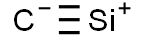
Chemical Formula: CSi
Synonyms:
Silicon carbide -400 Mesh particle size, >=97.5%
CARBORUNDUM BOILING CHIPS 14 MESH
CARBORUNDUM BOILING CHIPS 20 MESH
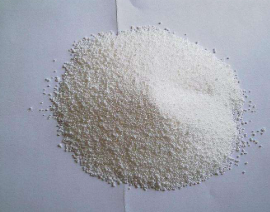
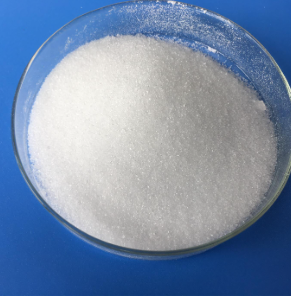
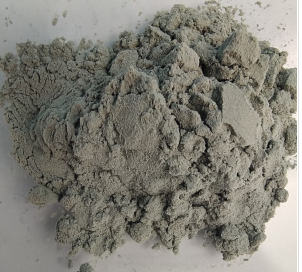
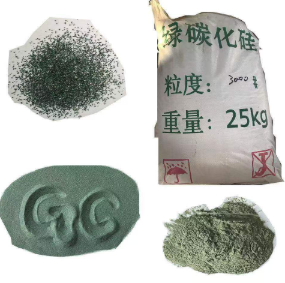
Appearance:It is usually presented as powdery, granular or hard block-like solids, with colors mostly being greenish-black, black or dark green, and having a shiny metallic luster.
MOQ (Minimum Order Quantity): 1 FCL (Full Container Load)
Silicon carbide #CAS409-21-2
Silicon carbide is a yellow to green to bluishblack, iridescent crystalline substance. Colorless when pure.
the properties of silicon carbide are that it is a refractory material (high melting point), it has excellent thermal conductivity and low thermal expansion, consequently it displays good thermal shock resistance. In addition, the high hardness, corrosion resistance and stiffness lead to a wide range of applications where wear and corrosion resistance are primary performance requirements. Silicon carbide possesses interesting electrical properties due to its semiconductor characteristics, the resistance of different compositions varying by as much as seven orders of magnitude.
Green to bluish black, iridescent crystals. Soluble in fused alkali hydroxides. Abrasives best suited for grinding low-tensilestrength materials such as cast iron, brass, bronze, marble, concrete, stone and glass, optical structural, and wear-resistant components. Corroded by molten metals such as Na, Mg, Al, Zn, Fe, Sn, Rb, and Bi. Resistant to oxidation in air up to 1650°C. Maximum operating temperature of 2000°C in reducing or inert atmosphere.
Silicon carbide is a premium-priced unit which is employed in lining work for its uniformity, abrasion resistance and dimensional stability. It is resistant to most organics, inorganic acids, alkalis and salts in a variety of concentrations except to hydrofluoric acid and acid fluorides. The permeable units have the lowest resistance.
Application Of Silicon carbide
Silicon carbide (SiC), nearly as hard as diamonds, is used as an abrasive in grinding wheels and metal-cutting tools, for lining furnaces, and as a refractory in producing nonferrous metals.
Silicon carbide is widely used as an abrasive in grinding and cutting glasses; in polishing glass and sharpening stones. It is used in the manufacture of porcelain, refractory brick, furnace linings, and emery paper. The compound also is used in semiconductor technology.
Manufacture of abrasives and refractories, brake linings, heating elements, and thermistors.
Silicon carbide products possess special properties such as high temperature resistance, wear resistance, thermal shock resistance, chemical corrosion resistance, radiation resistance, and good electrical conductivity and thermal conductivity. Therefore, they have wide applications in various sectors of the national economy. In China, green silicon carbide is mainly used as abrasive materials. Black silicon carbide is used to manufacture grinding tools, which are mainly used for cutting and grinding materials with low tensile strength, such as glass, ceramics, stone, and refractory materials. It is also used for grinding cast iron parts and有色金属 materials. The grinding tools made of green silicon carbide are mainly used for grinding hard alloys, titanium alloys, and optical glass, and also for honing cylinder liners and fine grinding of high-speed steel tools. Cubic silicon carbide grinding tools are specifically used for ultra-precision honing of miniature bearings. By electroplating silicon carbide powder onto the blades of water turbines, the wear resistance of the blades can be greatly improved; by mechanically pressing cubic SiC 200 grade powder and W28 powder into the cylinder walls of internal combustion engines, the service life of the cylinder can be increased by more than twice. In the electrical industry, silicon carbide can be used as valve bodies for lightning arresters, silicon carbon heating elements, and far-infrared generators, etc. In the electronic industry, for example, in industrial silicon carbide furnaces or on industrial furnaces, large complete silicon carbide single crystals can be cultivated by special methods, which can be used as substrates for light-emitting diodes (such as crystal lamps, digital tube lamps); high-purity silicon carbide crystals are excellent materials for making radiation-resistant high-temperature semiconductors. Silicon carbide is one of the few semiconductor materials with a large band gap (2.86 eV) and two types of conductive materials, P and n. In the aerospace industry, silicon carbide-made gas filter plates and combustion chamber nozzles have been used in rocket technology. The silicon carbide fibers that have been industrialized are a new type of high-strength and high-modulus material with excellent heat resistance and oxidation resistance, and good compatibility with metals and resins. The use temperature can reach 1200℃, and the strength retention rate at high temperatures can be above 80%. They can be used to make heat shielding materials, high-temperature conveyor belts, filter materials for hot gases or molten metals, and can also be combined with carbon fibers or glass fibers to be used as reinforcing materials for metals and ceramics. Low-grade silicon carbide can be used as deoxidizers in steelmaking and cast iron additives. In the carbon industry, silicon carbide is mainly used to produce bricks for iron-making blast furnaces, such as graphite silicon carbide and silicon carbide combined with silicon nitride bricks. In the production of graphite electrodes, silicon carbide is also used as the coating material for oxidation-resistant electrodes and the ingredient in the mixture for the coating of the fused material that withstands high temperatures. In the manufacture of special carbon materials - biochar, propane and trichloromethylsilane are used as gas raw materials, and through a high-temperature pyrolysis reaction, silicon-containing pyrolytic carbon coatings are deposited on the graphite matrix to increase the hardness, strength, and wear resistance of the products. The silicon carbide in the coating exists in the form of β-SiC, with a grain size of about 1 μm. The biochar products made by this method, such as silicon-containing pyrolytic carbon artificial heart valves, have excellent biocompatibility.
| Silicon carbide Chemical Properties |
| Melting point | 2700 °C (lit.) |
| density | 3.22 g/mL at 25 °C (lit.) |
| bulk density | 0.069g/cm3 |
| refractive index | 2.6500 |
| solubility | Soluble in molten sodium hydroxide, potassium hydroxide and in molten iron. |
| form | nanopowder |
| color | Green |
| Specific Gravity | 3.22 |
| Resistivity | 107–200 (ρ/μΩ.cm) |
| Water Solubility | Soluble in molten alkalis (NaOH, KOH) and molten iron. Insoluble in water. |
| Thermal Conductivity | 0.69 W/(m·K) |
| Specific Heat Capacity | Cp(crystal): 0.67 J/(g·K), at 25℃ |
| Crystal Structure | Cubic, Sphalerite Structure - Space Group F(-4)3m |
| Hydrolytic Sensitivity | 1: no significant reaction with aqueous systems |
| Merck | 14,8492 |
| Exposure limits | ACGIH:TLV-TWA 0.1 f/cc,respirable fibers* OSHA:PEL-TWA 15 mg/m3 (total dust),5 mg/m3 (respirable fraction) NIOSH:REL-TWA 10 mg/m3 (total dust),5 mg/m3 (respirable fraction) |
| Stability: | Stability |
| Cosmetics Ingredients Functions | ABRASIVE |
| InChI | 1S/CSi/c1-2 |
| InChIKey | HBMJWWWQQXIZIP-UHFFFAOYSA-N |
| SMILES | [C-]#[Si+] |
| Modulus of Elasticity | 459 - 476 GPa |
| Knoop Microhardness | 3000, at 25°C |
| Poissons Ratio | 0.14, sintered |
| Shear Modulus | 180 GPa, Calculated |
| IARC | 2A (Vol. 111) 2017 |
| NIST Chemistry Reference | Silicon monocarbide(409-21-2) |
| EPA Substance Registry System | Silicon carbide (409-21-2) |
| Safety Information |
| Hazard Codes | Xi |
| Risk Statements | 36/37/38 |
| Safety Statements | 26-36 |
| OEB | B |
| OEL | TWA: 10 mg/m3 (total) |
| WGK Germany | 3 |
| RTECS | VW0450000 |
| TSCA | TSCA listed |
| HS Code | 28492000 |
| Storage Class | 11 - Combustible Solids |
| Hazardous Substances Data | 409-21-2(Hazardous Substances Data) |
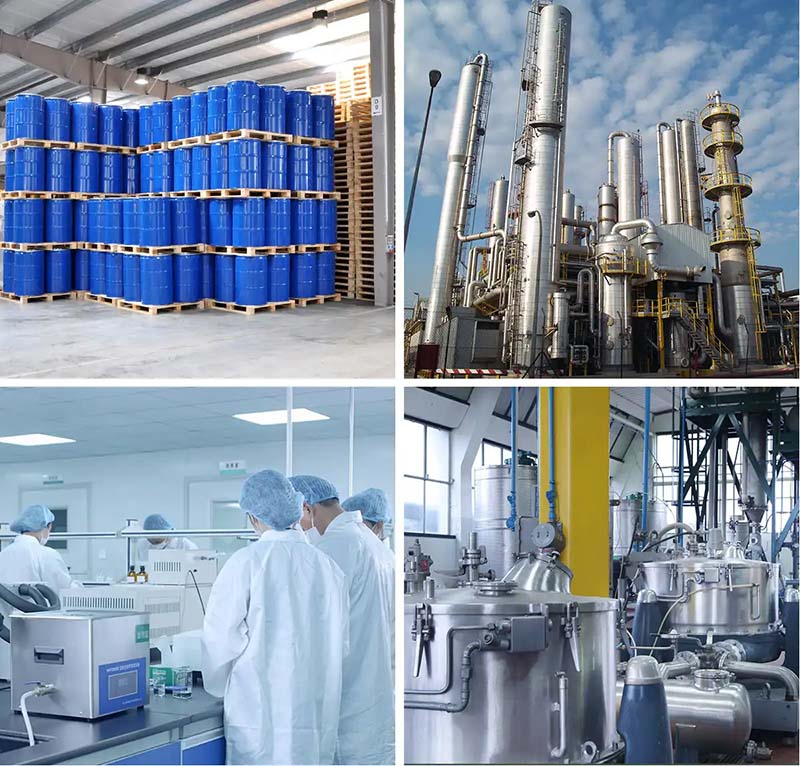
Fact Factory and Equipment Show