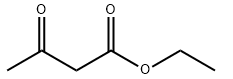
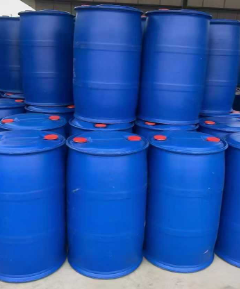
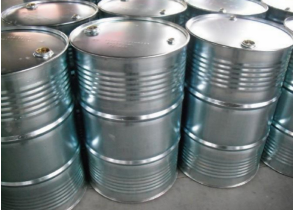
Ethyl acetoacetate #CAS141-97-9
CAS Number:141-97-9
Chemical Formula: C6H10O3
Synonyms:
Ethyl acetoacetate, 99%, pure;Ethyl acetoacetate, extra pure
Acetoacetic acid ethyl
Ethyl acetoacetate,Acetoacetic ester
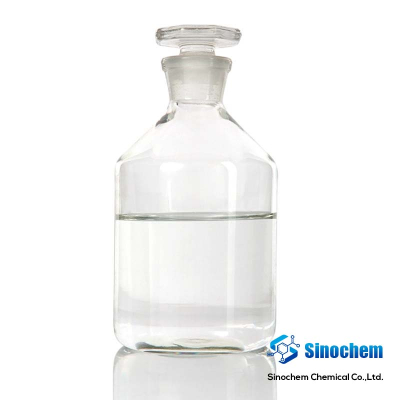
Appearance:At room temperature, it is a colorless to slightly yellow, fruit-flavored, flammable and clear liquid.
MOQ (Minimum Order Quantity): 1 FCL (Full Container Load)
Ethyl acetoacetate #CAS141-97-9
Ethyl acetoacetate has a characteristic ether-like, fruity, pleasant, refreshing odor.
Ethyl 3-Oxobutanoate is a colorless liquid with a fruity, ethereal, sweet odor reminiscent of green apples. It is used to create fresh, fruity top notes in feminine fine fragrances. Ethyl acetoacetate occurs in flavors of natural materials such as coffee, strawberries, and yellow passion fruits.
Ethyl acetoacetate is subject to Keto - enol tautomerism. Ethyl acetoacetate is often used in the acetoacetic ester synthesis similar to diethyl malonate in the malonic ester synthesis or the Knoevenagel condensation. The protons alpha to carbonyl groups are acidic, and the resulting carbanion can undergo nucleophilic substitution. A subsequent thermal decarboxylation is also possible.Similar to the behavior of acetylacetone, the enolate of ethyl acetoacetate can also serve as a bidentate ligand. For example, it forms purple coordination complexes with iron (III) salts :
Ethyl acetoacetate can also be reduced to ethyl 3-hydroxy butyrate.
Application Of Ethyl acetoacetate
The organic compound ethyl acetoacetate (EAA) is the ethyl ester of acetoacetic acid. It is mainly used as a chemical intermediate in the production of a wide variety of compounds, such as amino acids, analgesics, antibiotics, antimalarial agents, antipyrine and amino pyrine, and vitamin B1; as well as the manufacture of dyes, inks, lacquers, perfumes, plastics, and yellow paint pigments. Alone, it is used as a flavoring for food.
Ethyl acetoacetate is used as an intermediate in organic synthesis and as a co-promoter for unsaturated polyester resins. It is widely used in the production of dyes, inks, perfumes, plastics and flavoring agents. It is an important starting material for the syntheses of alpha-substituted acetoacetic esters and cyclic compounds like pyrazole, pyrimidine and coumarin derivatives. It acts as an intermediate in the synthesis of vitamins and pharmaceuticals. It finds application as a formaldehyde scavenger.
Ethyl acetoacetate can be used as a potential bio-based diluent for improving the cold flow properties of biodiesel from waste cooking oil.Ethyl acetoacetate reacts with glycosylamines to form ethyl 3-(glycosylamino)crotonate, which is further transformed into ethyl 2-methyl-4-(polyhydroxyalkyl)pyrrole-3-carboxylates under conditions that promote the Amadori rearrangement of glycosylamines. It also reacts with ketohexylamines (D-fructosylamine, L-sorbosylamine) to form ethyl 2-methyl-5-(tetrahydroxybutyl)pyrrole-3-carboxylates.
| Ethyl acetoacetate Chemical Properties |
| Melting point | −43 °C(lit.) |
| Boiling point | 181 °C(lit.) |
| density | 1.029 g/mL at 20 °C(lit.) |
| vapor density | 4.48 (vs air) |
| vapor pressure | 1 mm Hg ( 28.5 °C) |
| refractive index | n |
| FEMA | 2415 | ETHYL ACETOACETATE |
| Fp | 185 °F |
| storage temp. | Store below +30°C. |
| solubility | 116 g/L (20°C) |
| pka | 11(at 25℃) |
| form | Liquid |
| color | APHA: ≤15 |
| Specific Gravity | 1.027~1.035 (20/4℃) |
| Odor | Agreeable, fruity. |
| PH | 4.0 (110g/l, H2O, 20℃) |
| Relative polarity | 0.577 |
| explosive limit | 1.0-54%(V) |
| Odor Type | fruity |
| biological source | synthetic |
| Water Solubility | 116 g/L (20 ºC) |
| Thermal Conductivity | 0.152 W/(m·K) at 25 ℃ |
| Specific Heat Capacity | Cp(liquid): 1.91 J/(g·K), at 25℃ |
| JECFA Number | 595 |
| Merck | 14,3758 |
| BRN | 385838 |
| Henry's Law Constant | 9.0×100 mol/(m3Pa) at 25℃, Brockbank (2013) |
| Dielectric constant | 15.0(Ambient) |
| Stability: | Stable. Incompatible with acids, bases, oxidizing agents, reducing agents, alkali metals. Combustible. |
| Cosmetics Ingredients Functions | PERFUMING |
| InChI | 1S/C6H10O3/c1-3-9-6(8)4-5(2)7/h3-4H2,1-2H3 |
| InChIKey | XYIBRDXRRQCHLP-UHFFFAOYSA-N |
| SMILES | CCOC(=O)CC(C)=O |
| LogP | 0.8 at 20℃ |
| Surface tension | 31.93mN/m at 298.15K |
| CAS DataBase Reference | 141-97-9(CAS DataBase Reference) |
| NIST Chemistry Reference | Butanoic acid, 3-oxo-, ethyl ester(141-97-9) |
| EPA Substance Registry System | Ethyl acetoacetate (141-97-9) |
| Safety Information |
| Hazard Codes | Xi |
| Risk Statements | 36 |
| Safety Statements | 26-24/25 |
| RIDADR | UN 1993 |
| WGK Germany | 1 |
| RTECS | AK5250000 |
| Autoignition Temperature | 580 °F |
| TSCA | TSCA listed |
| HazardClass | 3.2 |
| PackingGroup | III |
| HS Code | 29183000 |
| Storage Class | 10 - Combustible liquids |
| Hazardous Substances Data | 141-97-9(Hazardous Substances Data) |
| Toxicity | LD50 orally in rats: 3.98 g/kg (Smyth) |
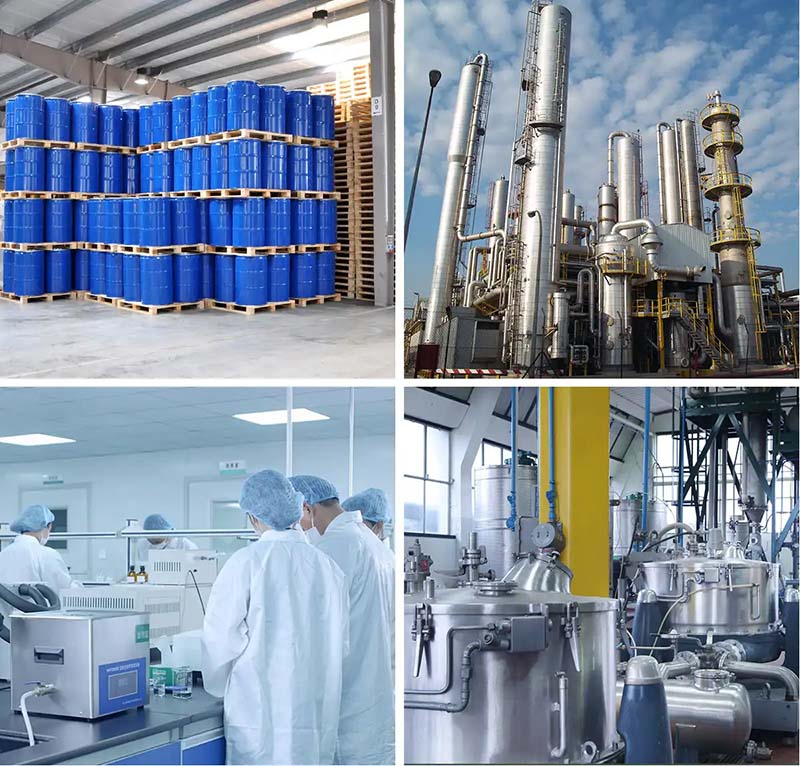
Fact Factory and Equipment Show