Hydrogen fluoride #CAS7664-39-3
Hydrogen fluoride #CAS7664-39-3
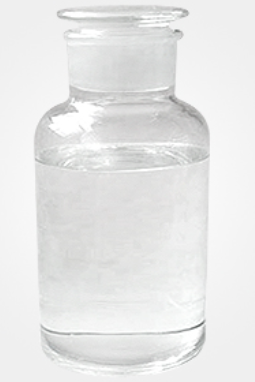
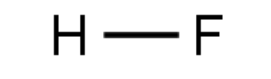
Hydrofluoric acid (HF) is an aqueous solution of hydrogen fluoride gas. At room temperature, it appears as colorless transparent to light yellow smoke liquid with pungent odor. It has a specific gravity of 0.98 which is slightly lighter than water. It has a boiling point of 19.4 °C, being highly volatile. It can release white smoke once placed in air. The aqueous solution containing less than 60% hydrogen fluoride appears as a colorless clear fuming liquid. Industrial products are usually aqueous solution containing 40 to 45% HF. It has pungent odor. It can react with sulfur trioxide or chlorosulfonic acid to generate fluoride sulfonic acid, and can react with halogenated aromatic hydrocarbons, alcohols, olefins, hydrocarbons to generate fluorine-containing organic compound. When being dissolved in water, it can produce highly corrosive acid, being medium-intensity acid. It is extremely smelly, being very toxic and is prone to cause ulceration when get touch with the skin with a severe extent being larger than any acids. If inhaled of its vapor, it can have fatal effects, thus strict attention should paid during usage.
1. Hydrofluoric acid can also react with general metals, metal oxides, and hydroxide, generating a variety of metal fluoride salts, but the effect is not as dramatic as hydrochloric acid. Gold, platinum, lead, paraffin and some plastics (polyethylene, etc.) does not react with it and thus being able to be used as containers.
2. Strong corrosiveness: it can erode glass and silicate to produce gaseous silicon tetrafluoride. The reaction is as follows: SiO2 + 4HF → H2O + SiF4 ↑, glass is a silicon compound so the hydrofluoric acid can’t be put into glass containers.
Hydrofluoric acid can form acid salt, hydrofluoric acid is a monobasic acid, but can produce a series of acid salts such as NaHF2, KHF2, NH4HF2, which are the other three kinds of halogen acid.
4. The weak acidity of hydrofluoric acid; because of the strong binding capability of hydrogen atom with fluorine atom, hydrofluoric acid can’t be completely dissociated in the water. In the hydrohalic acid, only hydrofluoric acid is weak acid (its ionization constant is 3.5 × 10 ^-4; its apparent ionization degree is about 10% at a concentration of 0.1mo1.L^-1, therefore, HF can reluctantly taken as a kind of strong acid. The ionization degree at high concentration is higher than that at low concentration. This property is different from other kinds of general weak electrolytes).
It appears as colorless fuming liquid. It is intensively exothermic when being dissolved in water and further become hydrofluoric acid.
Hydrofluoric acid is a solution of hydrogen fluoride in water. Hydrofluoric acid is highly corrosive inorganic acid. It is utilized widely in the manufacture of ceramics and graphite, in the electropolishing and pickling of metals, in the etching and frosting of glass, in the semiconductor industry as etchant and cleaning agent, in the chemical and oil-refining industries, and in cleaning solutions, laundry powder and pesticides. Hydrofluoric acid is also widely used in the preparation of many useful fluorine compounds, such as Teflon, Freon, fluorocarbons, and many medications such as fluoxetine (Prozac).
Application of Hydrogen fluoride
Hydrogen fluoride is the most important compound of fluorine. Anhydrous hydrogen fluoride is used in the production of most fluorine-containing chemicals. It is used in the production of refrigerants, herbicides, pharmaceuticals, high-octane gasoline, aluminum, plastics, electrical components, and fluorescent light bulbs. Aqueous hydrofluoric acid is used in stainless steel pickling, glass etching, metalcoatings, exotic metal extraction, and quartz purification(Hance et al. 1997).The most important use of hydrogen fluoride is in the production of fluorocarbon chemicals, including hydrofluorocarbons, hydrofluorochlorocarbons, and fluoropolymers; 60% of production is used for this purpose. Demand for hydrogen fluoride for fluorocarbons, broadly used as refrigerants, is increasing as a nonchlorinated alternative to ozone-depleting chlorofluorocarbons.(Production of fluorocarbons uses more hydrogen fluoride than production of chlorofluorocarbons.) The next most important uses of hydrogen fluoride are:chemical derivatives,18%; aluminum manufacturing,6%; stainless steel pickling,5%; petroleum alkylation catalysts, 4%; and uranium chemicals production,3%.Miscellaneous other uses include glassetching, herbicides, and rare metals(CMR 2002).Generally, the aluminum industry consumes 10-40 kg of fluoride per metric ton of aluminum produced.The AlF, used in aluminum reduction cells may be produced directly from acid-grade fluorspar or byproduct fluorosilicic acid, rather than from hydrogen fluoride. Anhydrous hydrogen fluoride is used as a catalyst in the petroleum alkylation, a process that increases the octane rating of petroleum. In uranium chemicals production, hydrogen fluoride is used to convert uranium oxide(yellow cake,U3O8) to UF4. before further fluorination to UF6.
| Hydrogen fluoride Chemical Properties |
| Melting point | -35°C |
| Boiling point | 105°C |
| density | 1.15 g/mL at 25 °C(lit.) |
| vapor density | 1.27 (vs air) |
| vapor pressure | 25 mm Hg ( 20 °C) |
| Fp | 112°C |
| storage temp. | Store at +5°C to +30°C. |
| solubility | very soluble in H2O, ethanol; soluble in ethyl ether |
| form | Liquid, Double Sub-Boiling Quartz Distillation |
| pka | 3.17(at 25℃) |
| color | APHA: ≤10 |
| Specific Gravity | 1.15 |
| Odor | Acrid, irritating odor |
| PH | 3.27(1 mM solution);2.65(10 mM solution);2.12(100 mM solution) |
| PH Range | 1 |
| Water Solubility | soluble |
| Thermal Conductivity | 2.33 W/(m·K) |
| Sensitive | Hygroscopic |
| Merck | 14,4790 |
| Henry's Law Constant | 1.3×10² mol/(m3Pa) at 25℃, Fredenhagen and Wellmann (1932) |
| Dielectric constant | 17.0(-73℃) |
| Exposure limits | Ceiling limit 3 ppm (~2.5 mg/m3) as F (ACGIH); TWA 3 ppm (MSHA and OSHA). |
| Stability: | Stable. Hygroscopic. Incompatible with glass, alkali metals, light metals, alkaline earth metals |
| InChI | 1S/FH/h1H |
| InChIKey | KRHYYFGTRYWZRS-UHFFFAOYSA-N |
| SMILES | [H+].[F-] |
| LogP | 0.1 at 20℃ |
| CAS DataBase Reference | 7664-39-3(CAS DataBase Reference) |
| NIST Chemistry Reference | Hydrogen fluoride(7664-39-3) |
| EPA Substance Registry System | Hydrofluoric acid (7664-39-3) |
| Safety Information |
| Hazard Codes | T+,C,T,Xn |
| Risk Statements | 26/27/28-35-36/37/38-20/21/22 |
| Safety Statements | 26-36/37/39-45-7/9-36/37-28-36 |
| OEB | B |
| OEL | TWA: 3 ppm (2.5 mg/m3), Ceiling: 6 ppm (5 mg/m3) [15-minute] |
| RIDADR | UN 1052 8/PG I (HYDROGEN FLUORIDE, ANHYDROUS) |
| RIDADR | UN 1790 8/PG I (HYDROFLUORIC ACID, with more than 60 % hydrogen fluoride) |
| RIDADR | UN 1790 8/PG II (HYDROFLUORIC ACID, with not more than 60 % hydrogen fluoride) |
| WGK Germany | 2 |
| RTECS | MW7875000 |
| Hazard Note | Corrosive |
| TSCA | TSCA listed |
| DOT Classification | 8, Hazard Zone C (Corrosive material) |
| HazardClass | 8 |
| PackingGroup | II |
| HS Code | 28111100 |
| Storage Class | 6.1B - Non-combustible, acute toxic Cat. 1 and 2 very toxic hazardous materials |
| Hazard Classifications | Acute Tox. 1 Dermal Acute Tox. 2 Inhalation Acute Tox. 2 Oral Eye Dam. 1 Skin Corr. 1A |
| Hazardous Substances Data | 7664-39-3(Hazardous Substances Data) |
| Toxicity | LC50 (15 min.) in rats, guinea pigs: 2689, 4327 ppm (Rosenholtz) |
| IDLA | 30 ppm |
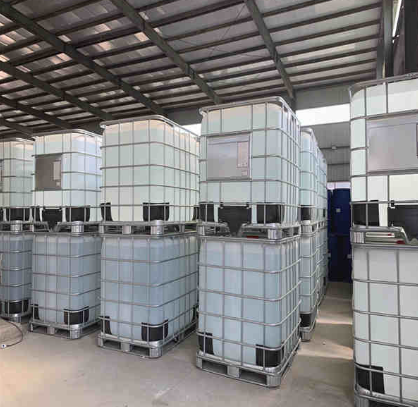
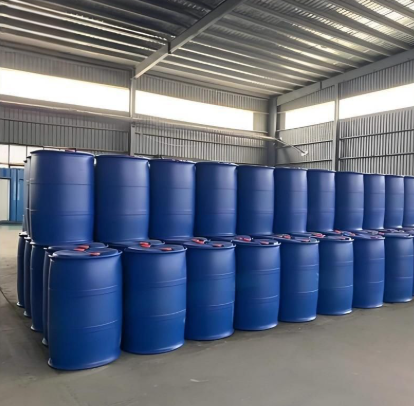
Fact Factory and Equipment Show