4-Nitroaniline #CAS100-01-6
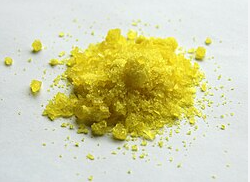
4-Nitroaniline:yellow solid with a mild odor. Sinks in water.p-Nitroaniline consists of yellow crystals with a pungent, faint ammonia-like odor.Bright yellow crystalline powder or flakes with a faint, ammonia-like, slightly pungent odor. Combustible.
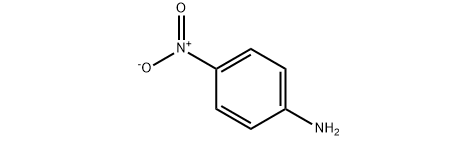
4-Nitroaniline (also known as p-nitroaniline) is an organic compound with bifunctional groups of amino and nitro groups. It appears as yellow needle-like crystals, slightly soluble in cold water, and soluble in hot water, ethanol, and benzene. It is an important intermediate in dyes, pesticides, and antioxidants, but it is highly toxic and can easily cause severe blood poisoning.
Application of 4-Nitroaniline:
Product of chromogenic reactions.
4-Nitroaniline is used in the synthesis of photorefractive polymers, as novel chromophores in analytical study. As well, due to the absorption spectrum associated with 4-Nitroaniline, it is used to de termine catechol derivatives in syntheses.
Dyestuff intermediate.
| 4-Nitroaniline Chemical Properties |
| Melting point | 147 °C |
| Boiling point | 332 °C |
| bulk density | 630kg/m3 |
| density | 1,437 g/cm3 |
| vapor density | 4.77 (vs air) |
| vapor pressure | 1.33 hPa (142 °C) |
| refractive index | 1.6465 (estimate) |
| Fp | 329 °F |
| storage temp. | Store below +30°C. |
| solubility | ethanol: soluble25mg/mL, slightly hazy, yellow to brownish-yellow |
| pka | 1(at 25℃) |
| form | crystalline |
| Colour Index | 37035 |
| color | yellow |
| Specific Gravity | 1.437 |
| Odor | Ammonia odor |
| PH Range | 7 |
| Water Solubility | 0.8 g/L (20 ºC) |
| Merck | 14,6584 |
| BRN | 508690 |
| Henry's Law Constant | 1.15 x 10⁻⁹ atmm3/mol at 25 °C (thermodynamic method-GC/UV spectrophotometry, Altschuh et al., 1999) |
| Exposure limits | NIOSH REL: TWA 3; IDLH 300; OSHA PEL: TWA 6; ACGIH TLV: TWA 3 (adopted). |
| Dielectric constant | 56.3(160.0℃) |
| Stability: | Stable. Incompatible with sodium hydroxide, strong oxidizing agents, strong reducing agents. May attack some plastics, rubber and coatings. May decompose explosively in the presence of initiators. Moisture sensitive. May be light and air-sensitive. |
| InChI | 1S/C6H6N2O2/c7-5-1-3-6(4-2-5)8(9)10/h1-4H,7H2 |
| InChIKey | TYMLOMAKGOJONV-UHFFFAOYSA-N |
| SMILES | Nc1ccc(cc1)[N+]([O-])=O |
| LogP | 1.2 at 30℃ |
| CAS DataBase Reference | 100-01-6(CAS DataBase Reference) |
| NIST Chemistry Reference | p-Nitroaniline(100-01-6) |
| EPA Substance Registry System | p-Nitroaniline (100-01-6) |
| Safety Information |
| Hazard Codes | T,F |
| Risk Statements | 23/24/25-33-52/53-39/23/24/25-11 |
| Safety Statements | 28-36/37-45-61-28A-16-1/2-7 |
| OEB | B |
| OEL | TWA: 3 mg/m3 [skin] |
| RIDADR | UN 1661 (NITROANILINES (o-, m-, p-)) |
| WGK Germany | 2 |
| RTECS | BY7000000 |
| F | 8 |
| Autoignition Temperature | 500 °C |
| Hazard Note | Toxic |
| TSCA | TSCA listed |
| HazardClass | 6.1 |
| PackingGroup | II |
| HS Code | 29214210 |
| Storage Class | 6.1A - Combustible acute toxic Cat. 1 and 2 very toxic hazardous materials |
| Hazard Classifications | Acute Tox. 3 Dermal Acute Tox. 3 Inhalation Acute Tox. 3 Oral Aquatic Chronic 3 STOT RE 2 |
| Hazardous Substances Data | 100-01-6(Hazardous Substances Data) |
| Toxicity | Acute LD50 for wild birds 75 mg/kg, guinea pigs 450 mg/kg, mice 810 mg/kg, quail 1,000 mg/kg, rats 750 mg/kg (quoted, RTECS, 1985). |
| IDLA | 300 mg/m3 |
Fact Factory and Equipment Show