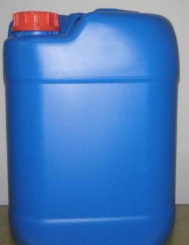
ethyl salicylate #CAS118-61-6
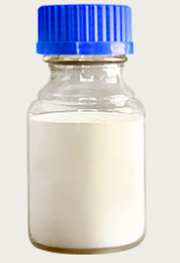
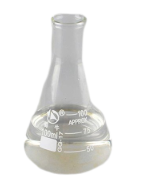
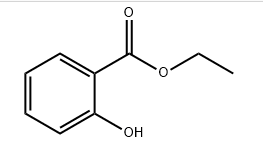
Ethyl salicylate is the ester formed by the condensation of salicylic acid and ethanol. It is a clear liquid that is sparingly soluble in water, but soluble in alcohol and ether. It has a pleasant odor resembling winter green and is used in perfumery and artificial flavors.Ethyl salicylate has a characteristic aromatic odor similar to wintergreen. It tends to darken on exposure to light and air.Colorless oily liquid with a faint spruce oil aroma. Boiling point 234℃, melting point 1.3℃. Soluble in ethanol, ether, acetic acid and most non-volatile oils, slightly soluble in water and glycerol.It is a substituted benzene compound with dual active functional groups of phenolic hydroxyl and aromatic ester. As a classic ester derivative of salicylic acid, the phenolic hydroxyl group within its molecule can form stable intramolecular hydrogen bonds with the adjacent carbonyl oxygen atom. This special spatial structure not only endows it with unique chelating ability (capable of undergoing coloration and complexation reactions with transition metals such as iron ions), but also gives it extremely strong ultraviolet absorption properties. The ester part of it can undergo hydrolysis, alcoholysis or amide hydrolysis smoothly, and is often used for the synthesis of salicylamide derivatives; while its phenolic hydroxyl group and benzene ring retain the typical activity of aromatic compounds, and can undergo alkylation, acylation and alkoxylation reactions. In addition, this substance is flammable, has relatively stable chemical properties, but is prone to intense reactions when in contact with strong oxidants, strong acids or strong bases, and will produce irritating smoke when decomposed under high heat.
Application Of ethyl salicylate
Ethyl salicylate is a non-steroidal analgesic, anti-inflammatory and antirrheumatic drug. Its complexation with β-cyclodextrin was studied using reversed-phase liquid chromatography.Ethyl salicylate may be used as an analytical standard for the determination of the analyte in biological fluids and topical formulation by chromatography-based techniques.It is used as a solvent for nitrocellulose, and is also employed in the production of fragrances and in organic synthesis. It is used for blending perfumes for daily soaps, and also for pharmaceutical purposes. Available raw materials include acacia, locust bean, ylang-ylang, gardenia and other sweet floral fragrances. They can be used in small quantities in soap perfumes, such as as a sweetener in the scent of jasmine type. In toothpaste and oral care products, they can replace or modify the methyl ester aroma and fragrance of Chemicalbook. They are also used in foreign countries as edible perfumes, such as European blackberry, black raspberry, round currant, huckleberry, strawberry and other fruit fragrances and sherbet types. They are used in organic synthesis or for preparing fragrances, and also as solvents.
It is a widely used special fine chemical and multi-functional industrial intermediate. In the fragrance and flavor industry, due to its unique mint-like herbal aroma similar to wintergreen oil, it is widely used in large quantities as a fixative and flavoring agent for food, beverages, oral hygiene products (such as toothpaste, mouthwash), as well as high-end cosmetics and personal care fragrances. In the pharmaceutical and medical device industry, it is widely used as an active ingredient in compound anti-inflammatory and analgesic ointments, creams, and sports sprays, and is also a fine intermediate for synthesizing other salicylic acid-based drugs. Moreover, due to its outstanding ultraviolet absorption and light stability properties in the molecular structure, it is often directly used as an efficient ultraviolet absorber or light stabilizer in the plastic, rubber, polymer coatings, and sunscreen cosmetics industries.
| ethyl salicylate Chemical Properties |
| Melting point | 1 °C (lit.) |
| Boiling point | 234 °C (lit.) |
| density | 1.131 g/mL at 25 °C (lit.) |
| vapor pressure | 0.05 mm Hg ( 25 °C) |
| refractive index | n |
| FEMA | 2458 | ETHYL SALICYLATE |
| Fp | 225 °F |
| storage temp. | Store below +30°C. |
| solubility | 0.25g/l |
| pka | 9.93±0.10(Predicted) |
| form | Liquid |
| color | Clear colorless to pale yellow |
| Odor | at 100.00 %. sweet wintergreen mint floral spicy balsam |
| Odor Type | minty |
| biological source | synthetic |
| explosive limit | 1.1%(V) |
| Water Solubility | slightly soluble |
| Merck | 14,3850 |
| JECFA Number | 900 |
| BRN | 907659 |
| Dielectric constant | 8.6(21℃) |
| Major Application | flavors and fragrances |
| Cosmetics Ingredients Functions | PERFUMING |
| InChI | 1S/C9H10O3/c1-2-12-9(11)7-5-3-4-6-8(7)10/h3-6,10H,2H2,1H3 |
| InChIKey | GYCKQBWUSACYIF-UHFFFAOYSA-N |
| SMILES | CCOC(=O)c1ccccc1O |
| LogP | 3.07 at 21.9℃ |
| CAS DataBase Reference | 118-61-6(CAS DataBase Reference) |
| NIST Chemistry Reference | Benzoic acid, 2-hydroxy-, ethyl ester(118-61-6) |
| EPA Substance Registry System | Ethyl salicylate (118-61-6) |
| Safety Information |
| Hazard Codes | Xn,Xi |
| Risk Statements | 22-36/38-52/53 |
| Safety Statements | 26-36 |
| WGK Germany | 1 |
| RTECS | VO3000000 |
| TSCA | TSCA listed |
| HS Code | 29182390 |
| Storage Class | 10 - Combustible liquids |
| Hazard Classifications | Acute Tox. 4 Oral |
| Toxicity | LD50 orally in Rabbit: 1320 mg/kg LD50 dermal Rabbit > 5000 mg/kg |
Fact Factory and Equipment Show