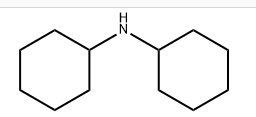
Dicyclohexylamine #CAS101-83-7
Dicyclohexylamine #CAS101-83-7
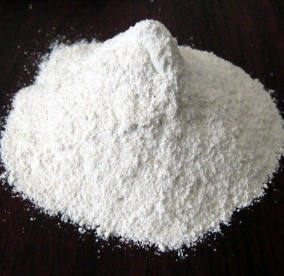
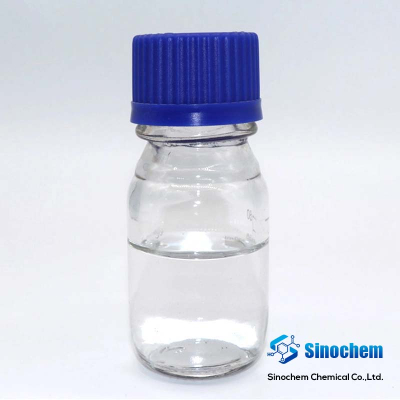
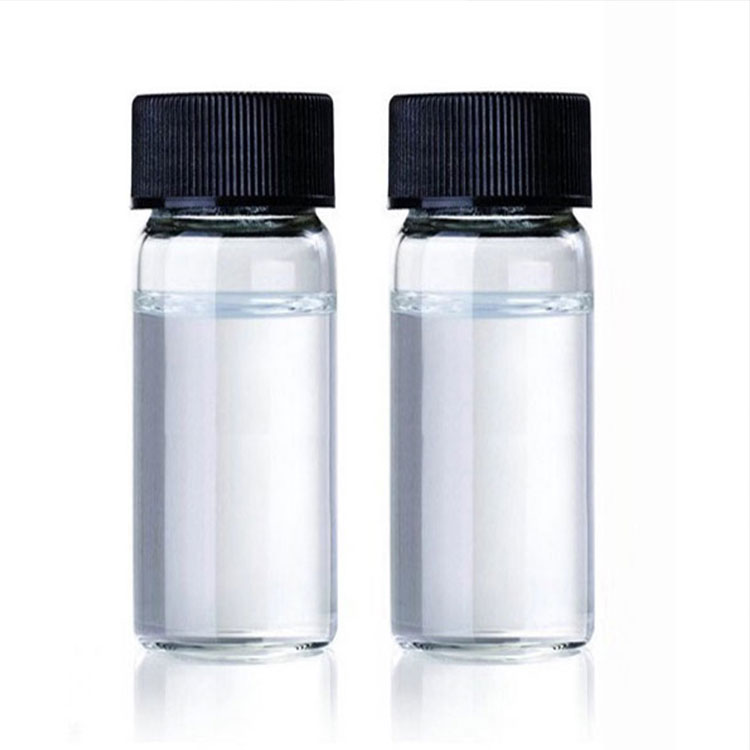
Dicyclohexylamine is a combustible, colorlessliquid with a faint amine odor. Molecular weight=181.36;Boiling point=256℃; Flash point $99℃. HazardIdentification (based on NFPA-704 M Rating System): Health3, Flammability 1, Reactivity 0. Slightly soluble in water.
Dicyclohexylamine is strongly basic with reactive amine groups which readily form TV-substituted derivatives. It also forms salts with inorganic and organic acids. Dicyclohexylamine will also form crystalline hydrates and alcoholates.
Several methods are employed for the manufacture of dicyclohexylamine. It can be manufactured by hydrogenation of equimolar amounts of cyclohexanone and cyclohexylamine. Alternatively, dicyclohexylamine can be prepared by vapor phase catalytic hydrogenation of aniline at elevated temperature and pressure. Fractionation of the crude reaction product yields cyclohexylamine, unreacted aniline, and a high boiling residue comprised of N-phenylcyclohexylamine and dicyclohexylamine (Windholz et al 1983).
Application of Dicyclohexylamine
Dicyclohexylamine is manufactured by reacting equimolar quantities of cyclohexanone and cyclohexylamine or cyclohexanone and ammonia. It is used as a solvent and in organic syntheses. It is reportedly used as a chemical intermediate for the synthesis of corrosion inhibitors, rubber vulcanization accelerators, textiles, and varnishes
DCHA reacts with oxidizing agents. Forms crystalline salts with many N-protected amino acids . Neutralizes acids in exothermic reactions to form salts plus water. May be incompatible with isocyanates, halogenated organics, peroxides, phenols (acidic), epoxides, anhydrides, and acid halides. Flammable gaseous hydrogen may be generated in combination with strong reducing agents, such as hydrides.
TOXIC; inhalation, ingestion or skin contact with material may cause severe injury or death. Contact with molten substance may cause severe burns to skin and eyes. Avoid any skin contact. Effects of contact or inhalation may be delayed. Fire may produce irritating, corrosive and/or toxic gases. Runoff from fire control or dilution water may be corrosive and/or toxic and cause pollution
| Dicyclohexylamine Chemical Properties |
| Melting point | -2 °C |
| Boiling point | 256 °C |
| density | 0.912 g/mL at 20 °C(lit.) |
| vapor density | 6 (vs air) |
| vapor pressure | 12 mm Hg ( 37.7 °C) |
| refractive index | n |
| Fp | 205 °F |
| storage temp. | Store below +30°C. |
| solubility | organic solvents: soluble |
| form | Colorless liquid |
| pka | 10.4(at 25℃) |
| color | colorless |
| Odor | amine odor |
| PH | 11 (1g/l, H2O, 20℃) |
| explosive limit | 0.8-4.6%(V) |
| Water Solubility | 0.08 g/100mL (25 ºC) |
| FreezingPoint | -2℃ |
| Sensitive | Air Sensitive |
| Merck | 14,3095 |
| BRN | 605923 |
| Henry's Law Constant | 1.8×10⁻¹ mol/(m3Pa) at 25℃, HSDB (2015) |
| Stability: | Stable. Incompatible with strong acids, strong oxidizing agents. |
| InChI | 1S/C12H23N/c1-3-7-11(8-4-1)13-12-9-5-2-6-10-12/h11-13H,1-10H2 |
| InChIKey | XBPCUCUWBYBCDP-UHFFFAOYSA-N |
| SMILES | C1CCC(CC1)NC2CCCCC2 |
| LogP | 2.724 at 25℃ |
| CAS DataBase Reference | 101-83-7(CAS DataBase Reference) |
| NIST Chemistry Reference | Cyclohexanamine, N-cyclohexyl-(101-83-7) |
| EPA Substance Registry System | Dicyclohexylamine (101-83-7) |
| Safety Information |
| Hazard Codes | C,N |
| Risk Statements | 22-34-50/53-24/25 |
| Safety Statements | 26-36/37/39-45-60-61 |
| RIDADR | UN 2565 |
| WGK Germany | 2 |
| RTECS | HY4025000 |
| F | 8-9-23 |
| Autoignition Temperature | 240 °C |
| TSCA | TSCA listed |
| HazardClass | 8 |
| PackingGroup | III |
| HS Code | 29213000 |
| Storage Class | 6.1C - Combustible acute toxic Cat.3 toxic compounds or compounds which causing chronic effects |
| Hazard Classifications | Acute Tox. 3 Dermal Acute Tox. 3 Oral Aquatic Acute 1 Aquatic Chronic 1 Skin Corr. 1B |
| Hazardous Substances Data | 101-83-7(Hazardous Substances Data) |