2-Chloro-3-pyridinamine #CAS6298-19-7
2-Chloro-3-pyridinamine #CAS6298-19-7
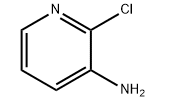
It is a highly reactive and highly regionally selective aromatic heterocyclic organic intermediate that combines a deficient electron-poor pyridine ring, a reactive adjacent halogen (chlorine at the 2-position) and a nucleophilic primary amine (amino group at the 3-position). In terms of chemical properties, due to the strong electron-withdrawing nature of the pyridine ring itself and the electron-withdrawing effect of the 2-position chlorine atom, the nucleophilicity and basicity of the 3-position amino group are significantly weakened. However, it can still smoothly undergo acylation and alkylation reactions to form amide or amine structures, and can quantitatively undergo diazotization reactions under low-temperature strong acid conditions, converting on-site into highly reactive pyridine diazonium salts. The most significant and core chemical feature of this compound lies in the fact that the 2-position chlorine atom, due to the activation of the adjacent pyridine nitrogen atom, is extremely prone to nucleophilic substitution reactions or transition metal-catalyzed coupling reactions. Under palladium catalysis (such as Buchwald-Hartwig amination, Suzuki coupling) or the action of strong nucleophilic reagents (such as sodium alcohol, thiol, alcohol amine), it can extremely efficiently and directionally convert into 2,3-difunctionalized heterocyclic derivatives, which are often used to directly synthesize complex cyclic systems such as pyridines and pyrimidines. In addition, it has good thermal stability against conventional water, oxygen, and mild acids and bases. However, it is prone to slight oxidation under strong light irradiation or long-term exposure to the air, resulting in a deepening of the appearance color. Daily storage requires sealing in a cool, dry, dark, and isolated environment from strong oxidants and strong acids.
Application Of 2-Bromobutyric acid
It is an intermediate of medicine and agricultural chemicals. It is involved in the Suzuki-Miyaura cross-coupling reactions of heteroaryl compounds.
It is mainly used as the core key industrial-grade intermediate for the synthesis of new targeted medicines, modern efficient pesticides, and high value-added complex heterocyclic fine chemicals. In the pharmaceutical industry, it relies on the synergistic effect of the adjacent double functional groups of the 2-position active chlorine atom and the 3-position amino group, and is widely used as a starting raw material or core building block for large-scale industrial synthesis of various clinical anti-tumor kinase inhibitors, antiviral drugs, anti-inflammatory drugs, and new drugs for the central nervous system. It is an indispensable precursor for efficiently constructing the complex heterocyclic drug skeletons such as pyridine-imidazole and pyridine-pyridine. In the field of agricultural chemical fine synthesis, this compound is widely used to manufacture new fluorine-containing and halogen-containing heterocyclic amide pesticides with excellent bactericidal and insecticidal activities. Moreover, in the specialty chemicals and fine chemical industries, it is also often used as a heterocyclic modification auxiliary agent for synthesizing high-performance organic pigments and photoelectric functional materials, which can significantly enhance the molecular conjugation degree and chemical stability of the end industrial materials.
| 2-Chloro-3-pyridinamine Chemical Properties |
| Melting point | 76-78 °C (lit.) |
| Boiling point | 130-134 °C (12.7517 mmHg) |
| density | 130 |
| refractive index | 1.5110 (estimate) |
| Fp | 185 °C |
| storage temp. | 2-8°C |
| solubility | 30g/l |
| pka | 2.42±0.10(Predicted) |
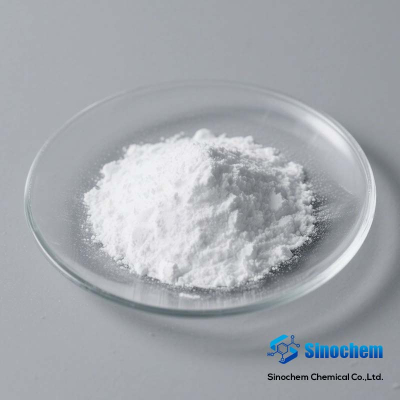
| form | Crystalline Powder, Crystals, and/or Chunks |
| color | Off-white to yellow to pink |
| PH | 7 (30g/l, H2O, 20℃) |
| Water Solubility | Soluble in methanol and water. (30 g/L). |
| BRN | 109814 |
| InChI | 1S/C5H5ClN2/c6-5-4(7)2-1-3-8-5/h1-3H,7H2 |
| InChIKey | MEQBJJUWDCYIAB-UHFFFAOYSA-N |
| SMILES | Nc1cccnc1Cl |
| CAS DataBase Reference | 6298-19-7(CAS DataBase Reference) |
| NIST Chemistry Reference | 3-Amino-2-chloropyridine(6298-19-7) |
| Safety Information |
| Hazard Codes | Xi |
| Risk Statements | 36/37/38 |
| Safety Statements | 26-36 |
| RIDADR | UN2811 |
| WGK Germany | WGK 3 |
| HazardClass | IRRITANT |
| HS Code | 29333999 |
| Storage Class | 11 - Combustible Solids |
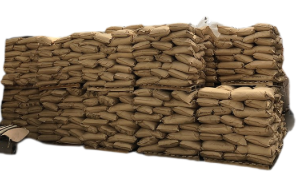
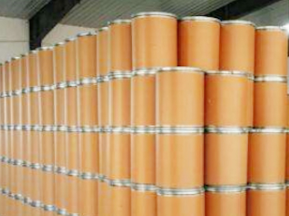
Fact Factory and Equipment Show