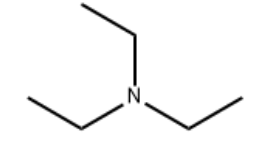
Triethylamine #CAS121-44-8
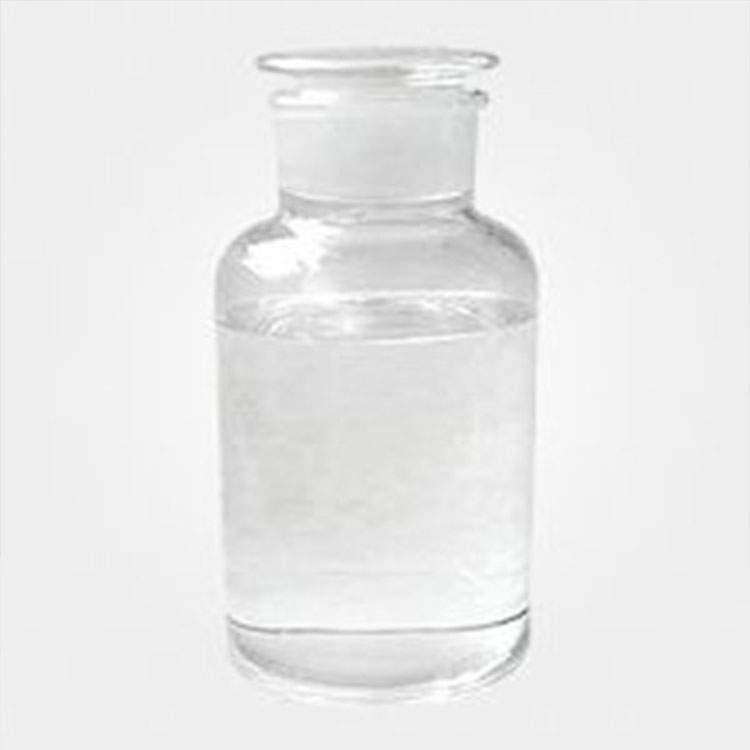
Triethylamine (formula: C6H15N), also known as N, N-diethylethanamine, is the most simple tri-substituted uniformly tertiary amine, having typical properties of tertiary amines, including salifying, oxidation, Hing Myers test (Hisberg reaction) for triethylamine does not respond. It is colorless to pale yellow transparent liquid, with a strong smell of ammonia, slightly fuming in the air. Boiling point: 89.5 ℃, relative density (water = 1): 0.70, the relative density (Air = 1): 3.48, slightly soluble in water, soluble in alcohol, ether. Aqueous solution is alkaline, flammable. Vapor and air can form explosive mixtures, the explosion limit is 1.2% to 8.0%. It is toxic, with a strong irritant.
Triethylamine is a colorless to yellowish liquid with a strong ammonia to fish-like odor. It is a base commonly used in organic chemistry to prepare esters and amides from acyl chlorides. Like other tertiary amines,it catalyzes the formation of urethane foams and epoxy resins.
Clear, colorless to light yellow flammable liquid with a strong, penetrating, ammonia-like odor. Experimentally determined detection and recognition odor threshold concentrations were <400 μg/m3 (<100 ppbv) and 1.1 mg/m3 (270 ppbv), respectively (Hellman and Small, 1974). An odor threshold concentration of 0.032 ppbv was determined by a triangular odor bag method (Nagata and Takeuchi, 1990).
Triethylamine appears as a clear colorless liquid with a strong ammonia to fish-like odor. Flash point 20°F. Vapors irritate the eyes and mucous membranes. Less dense (6.1 lb / gal) than water. Vapors heavier than air. Produces toxic oxides of nitrogen when burned.
Application of Triethylamine
Triethylamine is a clear, colorless liquid with an Ammonia or fish-like odor. It is used in making waterproofing agents, and as a catalyst, corrosion inhibitor and propellant.
It is mainly used as a base, catalyst, solvent, and raw material in organic synthesis. It is also used as a high-energy fuel, rubber vulcanization accelerator, tetrafluoroethylene polymerization inhibitor, surfactant, wetting agent, preservative, and bactericide.
Triethylamine is the simplest homodisubstituted tertiary amine, a liquid at room temperature, and is therefore widely used as a solvent and base in organic synthesis. It is generally abbreviated as Et3N, NEt3, or TEA. It is one of the most commonly used organic bases in organic synthesis, with a boiling point of around 89 degrees Celsius, and is relatively easy to remove by distillation. Its hydrochloride and hydrobromide salts are not very soluble in organic solvents such as diethyl ether, so they can sometimes be separated directly by filtration. The simpler trimethylamine is a colorless gas under normal conditions and must be stored under pressure in a gas tank or as a 40% aqueous solution, making it less convenient to use than triethylamine.
Triethylamine can be used as a basic catalyst in elimination reactions such as Swern oxidation and dehydrohalogenation, the Heck reaction, the preparation of silanol ethers, the preparation of esters and amides from acyl chlorides, and the donation of protecting groups to hydroxyl, carboxyl, and amino groups. It reacts with hydrochloric acid to give triethylamine hydrochloride, and with alkylating agents to give the corresponding quaternary ammonium salts. Triethylamine reacts with unsaturated acyl chlorides/anhydrides to form water-soluble, biotoxic conjugated complexes, particularly in the synthesis of biomaterials, where this reaction significantly affects subsequent cell experiments. Recently, this complex has been reported to cause staining effects on crosslinkable polyesters obtained by the condensation of unsaturated acyl chlorides/anhydrides with terminal hydroxyl groups of polymers. Inorganic weak bases such as potassium carbonate have been suggested to replace triethylamine as a catalyst in such reactions, a method that also simplifies product purification steps.
| Triethylamine Chemical Properties |
| Melting point | -115 °C |
| Boiling point | 90 °C |
| density | 0.728 |
| vapor density | 3.5 (vs air) |
| vapor pressure | 51.75 mm Hg ( 20 °C) |
| refractive index | n |
| FEMA | 4246 | TRIETHYLAMINE |
| Fp | 20 °F |
| storage temp. | Store below +30°C. |
| solubility | water: soluble112g/L at 20°C |
| pka | 10.75(at 25℃) |
| form | Liquid |
| Specific Gravity | 0.725 (20/4℃) |
| color | Clear |
| PH | 12.7 (100g/l, H2O, 15℃)(IUCLID) |
| Relative polarity | 1.8 |
| Odor | Strong ammonia-like odor |
| Odor Threshold | 0.0054ppm |
| Odor Type | fishy |
| explosive limit | 1.2-9.3%(V) |
| Water Solubility | 133 g/L (20 ºC) |
| Thermal Conductivity | 0.117 W/(m·K) at 25 ℃ |
| JECFA Number | 1611 |
| Merck | 14,9666 |
| BRN | 1843166 |
| Henry's Law Constant | 1.79 at 25 °C (Christie and Crisp, 1967) |
| Exposure limits | NIOSH REL: IDLH 200 ppm; OSHA PEL: TWA 25 ppm (100 mg/m3); ACGIH TLV: TWA 1 ppm, STEL 3 ppm (adopted). |
| Dielectric constant | 5.0(Ambient) |
| Stability: | Stable. Extremely flammable. Readily forms explosive mixtures with air. Note low flash point. Incompatible with strong oxidizing agents, strong acids, ketones, aldehydes, halogenated hydrocarbons. |
| Cosmetics Ingredients Functions | EMULSION STABILISING |
| InChI | 1S/C6H15N/c1-4-7(5-2)6-3/h4-6H2,1-3H3 |
| InChIKey | ZMANZCXQSJIPKH-UHFFFAOYSA-N |
| SMILES | CCN(CC)CC |
| LogP | 1.65 |
| CAS DataBase Reference | 121-44-8(CAS DataBase Reference) |
| NIST Chemistry Reference | Triethylamine(121-44-8) |
| EPA Substance Registry System | Triethylamine (121-44-8) |
| Absorption | cut-off at 278nm |
| Safety Information |
| Hazard Codes | F,C |
| Risk Statements | 11-20/21/22-35 |
| Safety Statements | 3-16-26-29-36/37/39-45-61 |
| RIDADR | UN 1296 |
| WGK Germany | 1 |
| RTECS | YE0175000 |
| F | 34 |
| Autoignition Temperature | 593 °F |
| Hazard Note | Highly Flammable/Corrosive |
| TSCA | TSCA listed |
| HazardClass | 3 |
| PackingGroup | II |
| HS Code | 29211910 |
| Storage Class | 3 - Flammable liquids |
| Hazard Classifications | Acute Tox. 3 Dermal Acute Tox. 3 Inhalation Acute Tox. 3 Oral Eye Dam. 1 Flam. Liq. 2 Skin Corr. 1A STOT SE 3 |
| Hazardous Substances Data | 121-44-8(Hazardous Substances Data) |
| Toxicity | LD50 orally in rats: 0.46 g/kg (Smyth) |
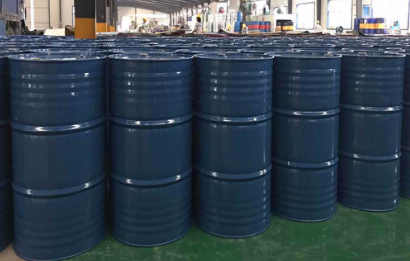
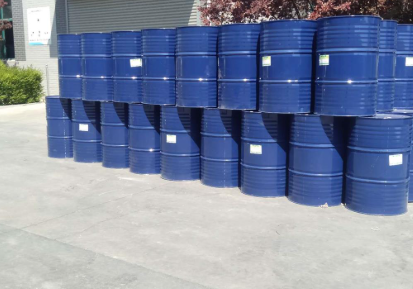
Fact Factory and Equipment Show