BARIUM SULFIDE #CAS21109-95-5
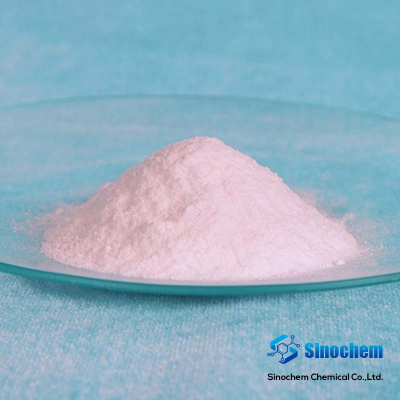
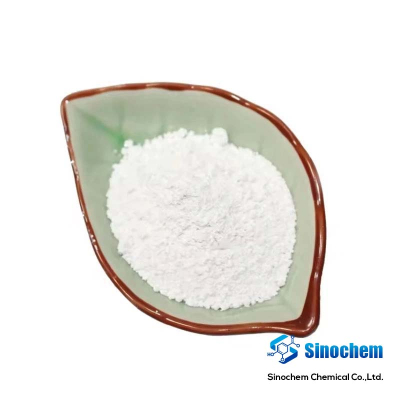
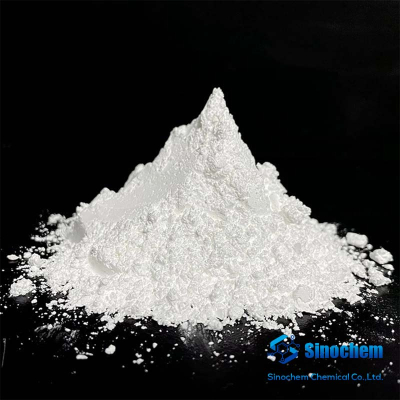
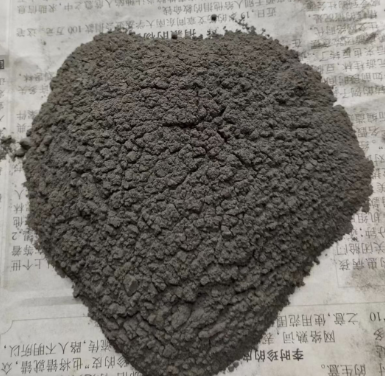
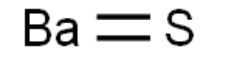
Barium sulfide (chemical formula: BaS), also known as black ash, is a sulfide of barium. It appears as white isometric cubic crystals; when impure, it is a light gray, yellowish-green, light brown, or black powder. Industrial grade is a light brown or black powder, and it also exists in lumps. Its relative density is 4.25 (15℃), and its melting point is 1200℃. It is insoluble in ethanol but soluble in water, decomposing into barium hydroxide and barium hydrosulfide. Its aqueous solution is strongly alkaline. It is corrosive, can burn skin, and cause hair loss. It reacts with water or acids to produce hydrogen sulfide; other products are barium hydroxide, barium hydrosulfide, or other barium salts. A hexahydrate (BaS·6H2O) can precipitate from a saturated solution as hexagonal plate-like crystals. Barium sulfide is toxic; ingestion can cause poisoning. It releases hydrogen sulfide upon contact with acid, and decomposes with concentrated acid upon heating to produce hydrogen sulfide and sulfur. In moist air, it hydrolyzes, releasing toxic hydrogen sulfide gas.
Barium sulfide occurs in the form of black ash, which is a gray to black impure product obtained from high temperature carbonaceous reduction of barite. It is the starting material in the manufacture of most barium compounds including barium chloride and barium carbonate. It is used in luminous paints; for dehairing hides; as a flame retardant; and for generating H2S.
Application of BARIUM SULFIDE
As depilatory; in luminous paints; manufacture of lithopone; vulcanizing rubber, generating H2S.
Barium sulfide has different characters, so it is used in a variety of ways, such as in electronics, paint pigments, dehairing hides, flame retardant, luminous paints, and generating pure hydrogen sulfide. Barium sulfide can deviate X-rays and helps to give clearly image of the soft tissue. Barium sulfide is a precursor to other barium compounds and also used as a short wavelength emitters for electronic displays.
| BARIUM SULFIDE Chemical Properties |
| Melting point | 1200°C |
| density | 4.25 g/mL at 15 °C(lit.) |
| form | Powder |
| Specific Gravity | 4.25 |
| color | Pale gray to yellow |
| Water Solubility | Soluble in water but insoluble in alcohol. |
| Crystal Structure | NaCl type |
| Sensitive | Moisture Sensitive |
| Merck | 14,995 |
| crystal system | Cube |
| Space group | Fm3m |
| Lattice constant | a/nmb/nmc/nmα/oβ/oγ/oV/nm30.63880.63880.63889090900.2607 |
| Stability: | Stable, but decomposes on heating. Incompatible with acids, oxidizing agents, water. |
| Cosmetics Ingredients Functions | DEPILATORY |
| InChI | 1S/Ba.S |
| InChIKey | OTMNKCRTGBGNPN-UHFFFAOYSA-N |
| SMILES | S=[Ba] |
| CAS DataBase Reference | 21109-95-5(CAS DataBase Reference) |
| NIST Chemistry Reference | Barium sulfide(21109-95-5) |
| EPA Substance Registry System | Barium sulfide (21109-95-5) |
| Safety Information |
| Hazard Codes | Xn,N,Xi,C |
| Risk Statements | 20/22-31-50-36/37/38-41-35 |
| Safety Statements | 28-61 |
| RIDADR | UN 2813 4.3/PG 2 |
| WGK Germany | 2 |
| TSCA | TSCA listed |
| HazardClass | 4.3 |
| PackingGroup | III |
| HS Code | 2830908500 |
| Storage Class | 4.3 - Hazardous materials which set free flammable gases upon contact with water |
| Hazard Classifications | Acute Tox. 3 Oral Acute Tox. 4 Inhalation Aquatic Acute 1 Met. Corr. 1 Skin Corr. 1A |