Sodium fluorosilicate #CAS16893-85-9
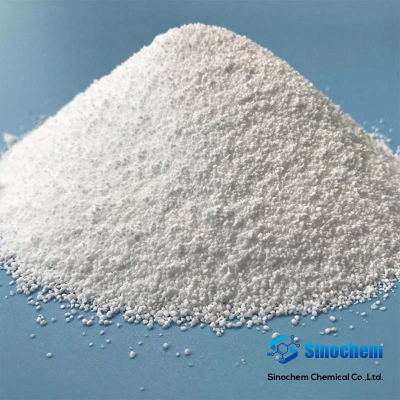
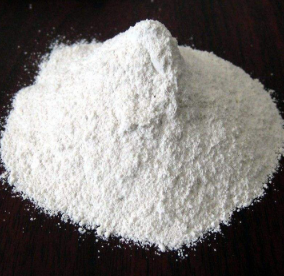
It appears as colorless hexagonal crystals. It is odorless and tasteless. It has hygroscopicity. It can be dissolved in a solvent such as ethyl ether but insoluble in alcohol with its solubility in acid is being greater than in the water.
Sodium fluorosilicate appears as white crystal, crystalline powder or colorless hexagonal crystals. It is odorless and tasteless. Its relative density is 2.68; it has moisture absorption capability. It can be dissolved in a solvent such as ethyl ether but insoluble in alcohol. The solubility in acid is greater than that in water. It can be decomposed in alkaline solution, generating sodium fluoride and silica. After searing (300 ℃), it is decomposed into sodium fluoride and silicon tetrafluoride. It is poisonous!
In 25 degrees, the sodium fluorosilicate has its water solubility being 0.78%. Upon production, addition of an excess amount of sodium sulfate or sodium chloride can increase the concentration of sodium ions in the system, thereby increasing the solubility product of fluorine silicate and sodium ions, so that sodium fluoride can be subject to more complete precipitation. Sodium fluorosilicate is the byproduct in the production of calcium phosphate or the production of fluoride salt in aluminum factory. It generally appears as a white crystalline powder with low solubility in water (being 1% or less at room temperature), and the water solubility increases slightly with increasing temperature. The aqueous solution of sodium fluorosilicate is acidic (pH3). This is due to that its hydrolysis product contains hydrofluoric acid. Reduction of the acidicity of the solution facilitates the hydrolysis of sodium fluorosilicate. When pH is lower than 3.5-3.55, the hydrolysis reaction is stabilized. When the pH is equal to 4, the hydrolysis reaction rate is significant. When the pH value is equal to 8-8.5, the sodium fluorosilicate can be completely hydrolyzed to exhibit as silica gel and precipitated out. Therefore, when sodium fluorosilicate is added to the water glass, in addition to hardening effect of precipitation of silicon dioxide gel caused by the neutralization of the sodium hydroxide in the solution of water glass, the sodium fluorosilicate itself is also a source of silica gel.
Application Of Sodium fluorosilicate
Sodium fluorosilicate can be used as the insecticide in agriculture, the milky agent of enamel, the corrosion production agent of opal glass, wood preservatives and the raw material for the production of other kinds of fluoride as well as being applied to the smelting of beryllium and aluminum and pharmaceuticals, leather and rubber industry. In the refractory material, it can be used as the coagulant as the water glass binding agent. Since sodium fluorosilicate has a low water solubility, it reaction with the water glass is slow and gradual. This can not only boost the construction but also has a high density and strength of the cured products. It is most commonly used in the inorganic material binding with the water glass.Sodium hexafluorosilicate is used as a additive for water fluoridation, opal glass raw material and in ore refining. It is also used in the preparation of other fluoride chemicals like sodium fluoride, sodium hexafluoroaluminate, potassium hexafluorosilicate, ammonium fluoride and calcium fluoride. It finds application as flotator, component for wet etching, wood preservative, brazing flux and welding compound. It is an active component of concrete.In enamels for china and porcelain; manufacture of opal glass; as insecticide, rodenticide; mothproofing of woolens. Fluoridating agent for drinking water. Intermediate in production of synthetic cryolite.Sodium fluorosilicate (Na2SiF6) is a white, isomorphous powder. Solubility in water is similar to that of NaF. In acid pH, solubility improves.
Commercially, Na2SiF6 is produced by treatment of fluorosilic acid with sodium chloride, as shown in the following reaction: H2SiF6 + 2NaCl = Na2SiF6 + 2HCl.Research showed that the sodium fluorosilicate material could potentially be used as a reliable precursor in the synthesis of fluoride and silicon based materials due to its acceptable physical properties, chemical purity and thermal behavior.
| Sodium fluorosilicate Chemical Properties |
| Melting point | melts at red heat, decomposing [MER06] |
| Boiling point | 620℃[at 101 325 Pa] |
| density | 2.68 g/mL at 25 °C(lit.) |
| vapor pressure | 0.01Pa |
| refractive index | 1.310 |
| solubility | insoluble in ethanol |
| form | Crystals |
| color | White |
| Specific Gravity | 2.68 |
| Odor | odorless |
| Water Solubility | Slightly soluble in water. Solubility increases with temperature. Insoluble in alcoholSlightly soluble in water. Insoluble in alcohol. |
| Specific Heat Capacity | Cp(crystal): 0.99 J/(g·K), at 25℃ |
| Merck | 14,8624 |
| Exposure limits | ACGIH: TWA 2.5 mg/m3 NIOSH: IDLH 250 mg/m3; TWA 2.5 mg/m3 |
| Stability: | Stable. Incompatible with oxidizing agents, water. Moisture sensitive. |
| Cosmetics Ingredients Functions | ORAL CARE ANTIPLAQUE |
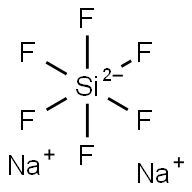
| InChI | 1S/F6Si.2Na/c1-7(2,3,4,5)6;;/q-2;2*+1 |
| InChIKey | TWGUZEUZLCYTCG-UHFFFAOYSA-N |
| SMILES | [Na+].[Na+].F[Si--](F)(F)(F)(F)F |
| LogP | 0.001 |
| CAS DataBase Reference | 16893-85-9(CAS DataBase Reference) |
| EPA Substance Registry System | Sodium fluosilicate (16893-85-9) |
| Safety Information |
| Hazard Codes | T,Xi |
| Risk Statements | 23/24/25 |
| Safety Statements | 26-45 |
| RIDADR | UN 2674 |
| WGK Germany | 2 |
| RTECS | VV8410000 |
| Hazard Note | Irritant |
| TSCA | TSCA listed |
| HazardClass | 6.1 |
| PackingGroup | III |
| HS Code | 2826908090 |
| Storage Class | 6.1D - Non-combustible acute toxic Cat.3 toxic hazardous materials or hazardous materials causing chronic effects |
| Hazard Classifications | Acute Tox. 3 Dermal Acute Tox. 3 Inhalation Acute Tox. 3 Oral |
| Hazardous Substances Data | 16893-85-9(Hazardous Substances Data) |
| Toxicity | LD in rabbits (mg F/kg): 76 intragastric; in rats (mg F/kg): 42 s.c. (Muehlberger); LD in guinea pigs (mg/kg): 250 orally, 500 s.c. (Waldbott) |
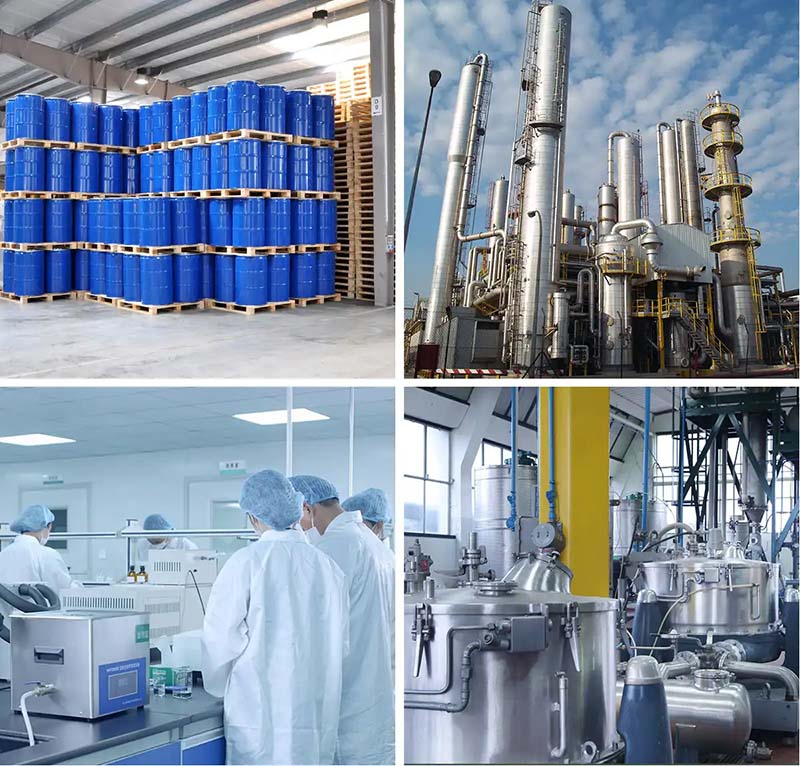
Fact Factory and Equipment Show