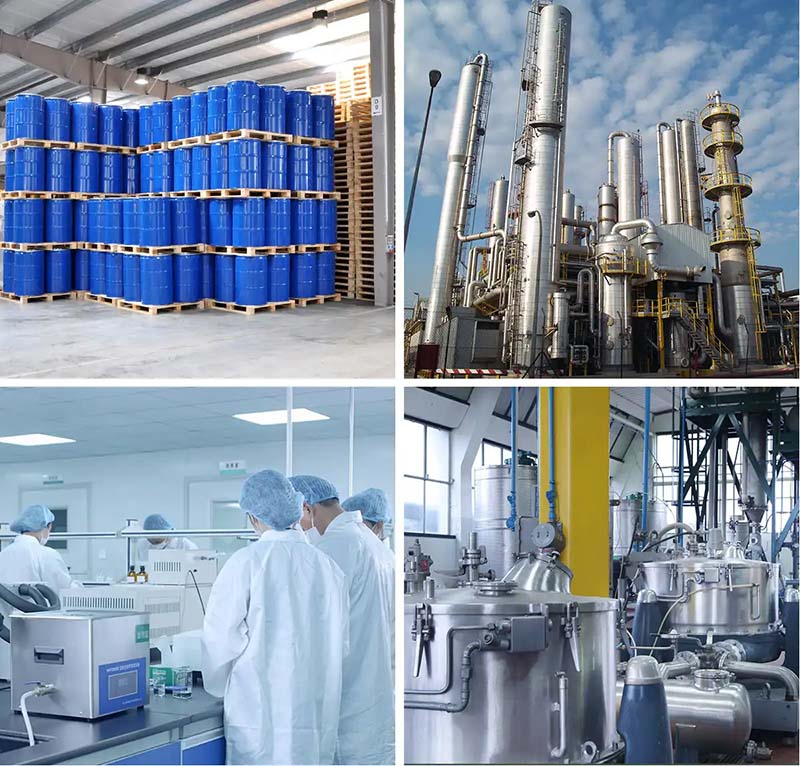
Isopropyl alcohol #CAS67-63-0
Isopropyl alcohol #CAS67-63-0
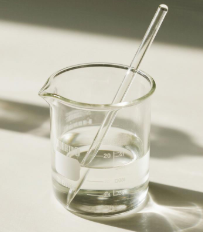
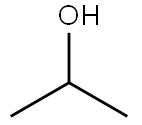
Isopropanol is also known as isopropyl alcohol. It is the simplest secondary alcohol and is one of the isomers of n-propanol. It is a kind of flammable liquid which is colorless with strong smell being similar to the smell of the mixture of ethanol and acetone. It is soluble in water, alcohol, ether, benzene, chloroform and most organic solvents and is miscible with water, alcohol, ether and can form azeotrope with water. Density (specific gravity): 0.7863g/cm3, melting point:-88.5 ℃, boiling point: 82.5 ℃, flash point: 11.7 ℃, ignition point: 460 ℃, refractive index: 1.3772. Its vapor can cause slight irritation on the eyes, nose and throat; it can be absorbed through the skin. Its vapor can form explosive mixture with air. Its explosion limit is 2.0% to 12% (by volume). It belongs to a moderate explosive hazardous material and flammable, low toxic substance. The toxicity of its vapors is twice as high as ethanol while oral administration causes the opposite toxicity.In many cases, isopropanol can substitute ethanol as the solvent and is a good solvent and chemical raw materials which can be applied to not only painting, pharmaceuticals, pesticides, cosmetics and other industries, but also the production of acetone, isopropyl ester, isopropylamine (the raw material for production of atrazine), di-isopropyl ether, isopropyl acetate and thymol crystal etc. It was the first product which is made from the petroleum raw material in the history of the development of petrochemicals.
Application Of Isopropyl alcohol
Isopropyl alcohol is an important chemical products and raw materials. It is mainly applied to various fields including pharmaceutical, cosmetics, plastics, fragrances, paint as well as being used as the dehydrating agent and cleaning agent in and electronics industry. It can also be used as the reagent for determination of barium, calcium, magnesium, nickel, potassium, sodium and strontium. It can also be used as the reference material of chromatographic analysis.
In the manufacturing industry of circuit board, it is used as a cleaning agent, and the production of PCB holes for conductivity. Many people find that it can not only clean the motherboard with excellent performance, but also get the best results. In addition, it is used for other electronic devices, including cleaning disc cartridge, floppy disk drives, magnetic tape, and the laser tip of the disc driver of CD or DVD player.
Isopropyl alcohol can also be used as the solvent of oil and gel as well as for the manufacture of fishmeal feed concentrate. Low-quality isopropanol can also be used in automotive fuels. As the raw material of production of acetone, the usage amount of isopropanol is reducing. There are several compounds which are synthesized from isopropanol, such as isopropyl ester, methyl isobutyl ketone, di-isopropylamine, di-isopropyl ether, isopropyl acetate, thymol and many kinds of esters. We can supply isopropanol of different quality depending on the end use it. The conventional quality of anhydrous isopropanol is more than 99%, while the special grade isopropanol content is higher than 99.8% (for flavors and drugs).
Isopropyl alcohol is used in the production of acetone, isopropyl halides, glycerin, and aluminum isopropoxide; employed widely as an industrial solvent for paints, polishes, and insecticides; as an antiseptic (rubbing alcohol); and in organic synthesis for introducing the isopropyl or isopropoxy group into the molecule. Being a common laboratory solvent like methanol, the exposure risks are always high; however, its toxicity is comparatively low.
| Isopropyl alcohol Chemical Properties |
| Melting point | -89.5 °C |
| Boiling point | 82 °C(lit.) |
| density | 0.785 g/mL at 25 °C(lit.) |
| vapor density | 2.1 (vs air) |
| vapor pressure | 33 mm Hg ( 20 °C) |
| refractive index | n |
| FEMA | 2929 | ISOPROPYL ALCOHOL |
| Fp | 53 °F |
| storage temp. | Store at +5°C to +30°C. |
| solubility | water: soluble (completely) |
| pka | 17.1(at 25℃) |
| form | Low Melting Solid |
| color | colorless |
| Specific Gravity | approximate 0.785(20/20℃)(Ph.Eur.) |
| Relative polarity | 0.546 |
| Odor | Like ethyl alcohol; sharp, somewhat unpleasant; characteristic mild alcoholic; nonresidual. |
| PH | 7.0 (20°C) |
| biological source | synthetic |
| Odor Type | alcoholic |
| Odor Threshold | 26ppm |
| explosive limit | 2-13.4%(V) |
| Water Solubility | miscible |
| FreezingPoint | -89.5℃ |
| Thermal Conductivity | 0.13 W/(m·K) at 25 ℃ |
| Specific Heat Capacity | Cp(liquid): 2.6 J/(g·K); Cp(gas): 1.49 J/(g·K), at 25℃ |
| λmax | λ: 260 nm Amax: 0.02 λ: 280 nm Amax: 0.01 |
| Merck | 14,5208 |
| JECFA Number | 277 |
| BRN | 635639 |
| Henry's Law Constant | 1.2×100 mol/(m3Pa) at 25℃, Burkholder et al. (2019) |
| Exposure limits | ACGIH:TLV-TWA 200 ppm (491 mg/m3); TLV-STEL 400 ppm (984 mg/m3) OSHA:PEL-TWA 400 ppm (980 mg/m3) NIOSH:REL-TWA 400 ppm; REL-STEL 500 ppm |
| Dielectric constant | 18.0(Ambient) |
| Stability: | Volatile |
| Cosmetics Ingredients Functions | SOLVENT VISCOSITY CONTROLLING ANTIFOAMING PERFUMING |
| Cosmetic Ingredient Review (CIR) | Isopropyl alcohol (67-63-0) |
| InChI | 1S/C3H8O/c1-3(2)4/h3-4H,1-2H3 |
| InChIKey | KFZMGEQAYNKOFK-UHFFFAOYSA-N |
| SMILES | CC(C)O |
| LogP | 0.050 |
| Surface tension | 21.3mN/m at 293.15K |
| CAS DataBase Reference | 67-63-0(CAS DataBase Reference) |
| NIST Chemistry Reference | Isopropyl alcohol(67-63-0) |
| IARC | 3 (Vol. 15, Sup 7, 71) 1999 |
| EPA Substance Registry System | Isopropanol (67-63-0) |
| Absorption | in accordance |
| Safety Information |
| Hazard Codes | Xi,F,Xn |
| Risk Statements | 11-36-67-40-10-36/38 |
| Safety Statements | 7-16-24/25-26-36/37 |
| OEB | A |
| OEL | TWA: 400 ppm (980 mg/m3), STEL: 500 ppm (1225 mg/m3) |
| RIDADR | UN 1219 |
| WGK Germany | 1 |
| RTECS | NT8050000 |
| F | 3-10 |
| Autoignition Temperature | 750 °F |
| TSCA | TSCA listed |
| HS Code | 2905 12 00 |
| HazardClass | 3 |
| PackingGroup | II |
| Storage Class | 3 - Flammable liquids |
| Hazard Classifications | Eye Irrit. 2 Flam. Liq. 2 STOT SE 3 |
| Hazardous Substances Data | 67-63-0(Hazardous Substances Data) |
| Toxicity | LD50 orally in rats: 5.8 g/kg (Smyth, Carpenter) |
| IDLH | 2,000 ppm [10% LEL] |
Fact Factory and Equipment Show