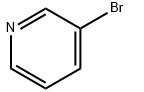
3-Pyridyl bromide #CAS626-55-1
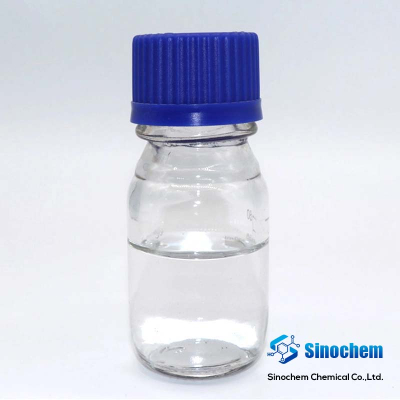
At room temperature, it is a transparent liquid with a color ranging from colorless to slightly yellowish. Its melting point (freezing point) is relatively low, approximately -27.4℃, while its boiling point is around 173℃. In terms of solubility, due to the structural characteristics of the pyridine ring, its solubility in water is relatively low, only showing a slightly soluble state; however, it has extremely strong organic affinity and can perfectly mix with most common organic solvents such as ethanol, ether, chloroform, acetone, ethyl acetate, and benzene in any proportion. In terms of chemical properties, it combines the dual activity of electron-deficient aromatic heterocycles and halogenated hydrocarbons: the nitrogen atom on the pyridine ring has lone pairs of electrons, thus having weak basicity and easily reacting with strong acids to form quaternary ammonium salts; at the same time, the carbon-bromine (C-Br) bond at the 3rd position is its core reaction site, which easily undergoes halogen-metal exchange reactions with n-butyl lithium or Grignard reagents under low-temperature conditions, generating active 3-pyridine-based metal intermediates; moreover, as an excellent electrophilic reagent, it can efficiently participate in various classic cross-coupling reactions such as Suzuki, Heck, and Sonogashira reactions under the catalysis of transition metals such as palladium and nickel.
Application Of 3-Pyridyl bromide
In industrial applications, 3-bromopyridine is mainly used as an efficient and crucial intermediate for fine chemicals, widely employed in constructing complex molecular structures containing pyridine rings. In the pharmaceutical industry, it serves as the fundamental framework for synthesizing various anti-tumor drugs, cardiovascular drugs, and neuroactive drugs. For instance, it can be utilized to synthesize targeted anti-cancer drugs, anti-colitis drugs, and serve as a key precursor for the synthesis of drugs treating Alzheimer's disease; in the pesticide industry, it is an important raw material for developing new, highly efficient and low-toxic insecticides and herbicides; meanwhile, with the advancement of photonic materials, it is also widely used in the electronics industry to synthesize high-performance fluorescent or phosphorescent dyes for organic light-emitting diodes (OLEDs), charge transport materials, and liquid crystal display components. Due to its significant industrial value, it is typically produced in large quantities through continuous production lines at specialized chemical plants through the halogenation reaction of pyridine, and supplied to downstream manufacturing enterprises in the form of high-purity chemical raw materials.
| 3-Pyridyl bromide Chemical Properties |
| Melting point | -27°C |
| Boiling point | 173 °C (lit.) |
| density | 1.64 g/mL at 25 °C (lit.) |
| vapor pressure | 1.64hPa at 25℃ |
| refractive index | n |
| Fp | 125 °F |
| storage temp. | Keep in dark place,Inert atmosphere,2-8°C |
| solubility | 31g/l |
| pka | 2.84(at 25℃) |
| form | Liquid |
| Specific Gravity | 1.617 |
| color | Clear colorless to yellow or slightly brown |
| Water Solubility | Soluble in water (31 g/L at 20°C). |
| BRN | 105880 |
| Henry's Law Constant | 8.3×10⁻¹ mol/(m3Pa) at 25℃, Ebert et al. (2023) |
| Dielectric constant | 9.8499999999999996 |
| InChI | 1S/C5H4BrN/c6-5-2-1-3-7-4-5/h1-4H |
| InChIKey | NYPYPOZNGOXYSU-UHFFFAOYSA-N |
| SMILES | Brc1cccnc1 |
| LogP | 1.694 |
| CAS DataBase Reference | 626-55-1(CAS DataBase Reference) |
| NIST Chemistry Reference | Pyridine, 3-bromo-(626-55-1) |
| EPA Substance Registry System | 3-Bromopyridine (626-55-1) |
| Safety Information |
| Hazard Codes | Xn,T,F,Xi |
| Risk Statements | 10-22-36/37/38-23/24/25-20/21/22 |
| Safety Statements | 26-45-38-36/37/39-28A-16 |
| RIDADR | UN 1993 3/PG 3 |
| WGK Germany | 3 |
| F | 8 |
| Hazard Note | Toxic/Flammable/Irritant |
| TSCA | TSCA listed |
| HazardClass | 6.1 |
| PackingGroup | III |
| HS Code | 29333999 |
| Storage Class | 3 - Flammable liquids |
| Hazard Classifications | Acute Tox. 4 Oral Eye Irrit. 2 Flam. Liq. 3 Skin Irrit. 2 STOT SE 3 |
Fact Factory and Equipment Show