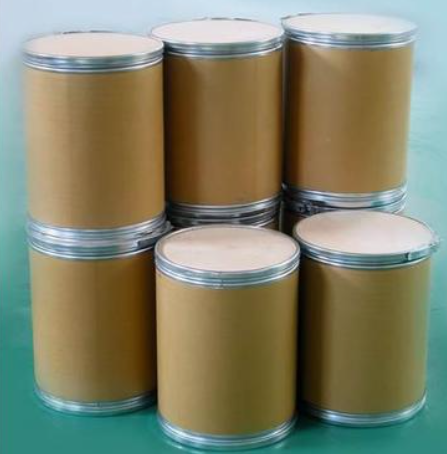
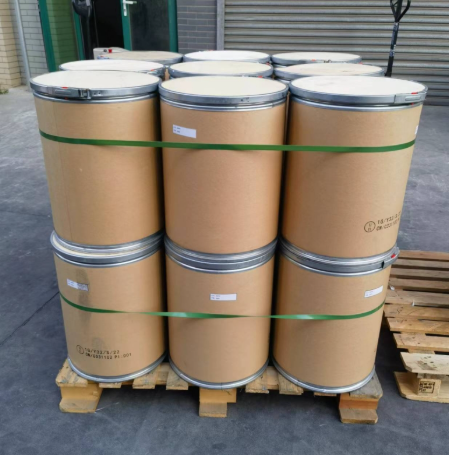
Xanthan gum #CAS11138-66-2
Xanthan gum is a high-molecular-weight polysaccharide composed of five sugar molecules as a unit, polymerized from these identical units. Each unit consists of two glucose molecules, two mannose molecules, and one glucuronic acid molecule. Its main chain consists of two glucose molecules linked by 1,4-glycosidic bonds, forming a structure similar to cellulose. Interspersed at the C3 of the glucose molecules are two mannose molecules and one glucuronic acid molecule forming side chains. These side chains contain pyruvate and carboxylic acid side groups. Due to the presence of acidic groups in its side chains, xanthan gum exhibits a polyanionic structure in aqueous solution, resulting in a tertiary structure: anionic side chains coil around the main chain to form a helical structure, with molecules forming double helices through hydrogen bonds. These double helices are further held together by weak non-covalent bonds, forming a regular "super-cohesive ribbon-like helical polymer." Its unique properties are related to its pyruvate content; generally, the pyruvate content in xanthan gum can be used to measure its performance.
Xanthan Gum Properties: 1. Typical Rheological Properties: As the shear rate increases, the viscosity decreases due to the disruption of the colloidal network, resulting in a thinner solution. However, the viscosity recovers once the shear force disappears, giving it excellent pumping and processing properties. Utilizing this property, adding xanthan gum to liquids requiring thickeners not only facilitates flow during transport but also allows the liquid to recover to the desired viscosity after settling, making it widely used in the beverage industry. 2. High Viscosity at Low Concentrations: Liquids containing 2%–3% xanthan gum have a viscosity as high as 3–7 Pa·s. Its high viscosity gives it broad application prospects but also creates challenges for post-processing in production. Adding monovalent salts such as NaCl and divalent salts such as Ca and Mg can slightly decrease the viscosity of low-concentration xanthan gum solutions (below 0.3%), while increasing the viscosity of higher concentration solutions. 3. Heat Resistance: The viscosity of xanthan gum remains almost unchanged over a fairly wide temperature range (-98–90℃). Even after being kept at 130℃ for 30 minutes and then cooled, the viscosity of the solution did not change significantly. After multiple freeze-thaw cycles, the viscosity of the solution remained unchanged. In the presence of salt, the solution exhibits good thermal stability; adding a small amount of electrolyte, such as 0.5% NaCl, at high temperatures can stabilize the viscosity. 4. Acid and Alkali Resistance: The viscosity of xanthan gum aqueous solutions is almost independent of pH. This unique property is not possessed by other thickeners such as carboxymethyl cellulose (CMC). If the concentration of inorganic acid in the glue solution is too high, the glue becomes unstable; at high temperatures, acid hydrolysis of polysaccharides will occur, thus causing a decrease in viscosity. A NaOH content greater than 12% can cause xanthan gum to gel and even precipitate; a sodium carbonate concentration exceeding 5% will also cause gelation. 5. Enzymatic Resistance: Due to the shielding effect of the side chains, the xanthan gum backbone has the unique ability to resist enzymatic hydrolysis. 6. Compatibility: Xanthan gum is miscible with most commonly used food thickener solutions, especially alginates, starch, carrageenan, and carob gum, where the viscosity of the solution increases additively. It exhibits good compatibility in aqueous solutions containing multiple salts. However, high-valence metal ions and high pH can make it unstable; adding a complexing agent can prevent incompatibility. 7. Solubility: Xanthan gum is readily soluble in water but insoluble in polar solvents such as alcohols and ketones. It dissolves easily in water over a very wide range of temperature, pH, and salt concentrations. Aqueous solutions can be prepared at room temperature, minimizing air ingress during stirring. Pre-mixing xanthan gum with dry substances such as salt, sugar, or monosodium glutamate, then moistening with a small amount of water, and finally adding water and stirring, results in a better-performing solution. It is soluble in many organic acid solutions and exhibits stable properties. 8. Dispersibility: A 1% xanthan gum solution has a supporting strength of 5 N/m², making it an excellent suspending agent and emulsifying stabilizer in food additives. 9. Water-retaining xanthan gum has excellent water-retaining and freshness-preserving properties for food.
Application of Xanthan gum
In foods, pharmaceuticals, and cosmetics as stabilizer and thickening agent. For rheology control in water-based systems. In oil and gas drilling and completion fluids.
xanthan gum (corn starch gum) serves as a texturizer, carrier agent, and gelling agent in cosmetic preparations. It also stabilizes and thickens formulations. This gum is produced through a fermentation of carbohydrate and Xanthomonas campestris.
Xanthan Gum is a gum obtained by microbial fermentation from the xanthomonas campestris organism. it is very stable to viscosity change over varying temperatures, ph, and salt concentrations. it is also very pseudoplastic which results in a decrease in viscosity with increasing shear. it reacts synergistically with guar gum and tara gum to provide an increase in viscosity and with carob gum to provide an increase in viscosity or gel formation. it is used in salad dressings, sauces, desserts, baked goods, and beverages at 0.05–0.50%.
Xanthan gum is widely used in oral and topical pharmaceutical formulations, cosmetics, and foods as a suspending and stabilizing agent. It is also used as a thickening and emulsifying agent. It is nontoxic, compatible with most other pharmaceutical ingredients, and has good stability and viscosity properties over a wide pH and temperature range. Xanthan gum gels show pseudoplastic behavior, the shear thinning being directly proportional to the shear rate. The viscosity returns to normal immediately on release of shear stress.
Xanthan gum has been used as a suspending agent for conventional, dry and sustained-release suspensions. When xanthan gum is mixed with certain inorganic suspending agents, such as magnesium aluminum silicate, or organic gums, synergistic rheological effects occur. In general, mixtures of xanthan gum and magnesium aluminum silicate in ratios between 1 : 2 and 1 : 9 produce the optimum properties. Similarly, optimum synergistic effects are obtained with xanthan gum : guar gum ratios between 3 : 7 and 1 : 9.
Although primarily used as a suspending agent, xanthan gum has also been used to prepare sustained-release matrix tablets. Controlled-release tablets of diltiazem hydrochloride prepared using xanthan gum have been reported to sustain the drug release in a predictable manner, and the drug release profiles of these tablets were not affected by pH and agitation rate. Xanthan gum has also been used to produce directly compressed matrices that display a high degree of swelling due to water uptake, and a small amount of erosion due to polymer relaxation. It has also been used in combination with chitosan, guar gum, galactomannan, and sodium alginate to prepare sustained-release matrix tablets. Xanthan gum has been used as a binder, and in combination with Konjac glucomannan is used as an excipient for controlled colonic drug delivery. Xanthan gum with boswellia (3 : 1) and guar gum (10 : 20) have shown the best release profiles for the colon-specific compression coated systems of 5- fluorouracil for the treatment of colorectal cancer. Xanthan gum has also been used with guar gum for the development of a floating drug delivery system.It has also has derivatized to sodium carboxymethyl xanthan gum and crosslinked with aluminum ions to prepare microparticles, as a carrier for protein delivery. Xanthan gum has been incorporated in an ophthalmic liquid dosage form, which interacts with mucin, thereby helping in the prolonged retention of the dosage form in the precorneal area. When added to liquid ophthalmics, xanthan gum delays the release of active substances, increasing the therapeutic activity of the pharmaceutical formulations.
Xanthan gum can be used to increase the bioadhesive strength in vaginal formulations. Xanthan gum alone or with carbopol 974P has been used as a mucoadhesive controlled-release excipient for buccal drug delivery. Modified xanthan films have been used as a matrix system for transdermal delivery of atenolol. Xanthan gum has also been used as a gelling agent for topical formulations incorporating solid lipid nanoparticles of vitamin A or microemulsion of ibuprofen. A combined polymer system consisting of xanthan gum, carboxy methylcellulose and a polyvinyl pyrolidone backboned polymer has been used for relieving the symptoms of xerostomia. Xanthan gum can also be used as an excipient for spray-drying and freeze-drying processes for better results. It has been successfully used alone or in combination with agar for microbial culture media.
Xanthan gum is also used as a hydrocolloid in the food industry, and in cosmetics it has been used as a thickening agent in shampoo. Polyphosphate with xanthum gum in soft drinks is suggested to be effective at reducing erosion of enamel.
| Xanthan gum Chemical Properties |
| Melting point | 64.43 °C |
| storage temp. | Hygroscopic, -20°C Freezer, Under inert atmosphere |
| solubility | Soluble in water giving a highly viscous solution, practically insoluble in organic solvents. |
| form | Solid |
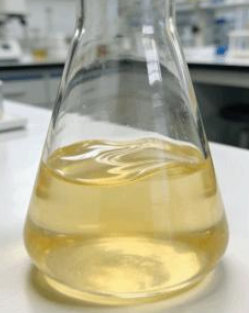
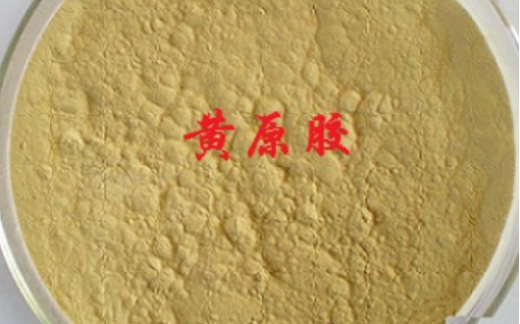
| color | Off-White to Pale Yellow |
| Odor | sl. organic odor, tasteless |
| biological source | Xanthomonas campestris |
| Merck | 14,10057 |
| Stability: | Stable. Combustible. Incompatible with strong oxidizing agents. |
| Cosmetics Ingredients Functions | EMULSION STABILISING VISCOSITY CONTROLLING SKIN CONDITIONING GEL FORMING BINDING SURFACTANT - CLEANSING SURFACTANT - EMULSIFYING |
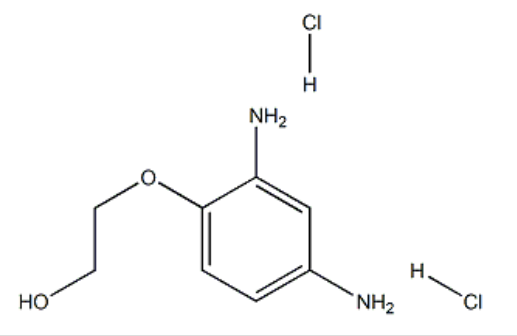
| InChI | InChI=1S/C8H12N2O2.2ClH/c9-6-1-2-8(7(10)5-6)12-4-3-11;;/h1-2,5,11H,3-4,9-10H2;2*1H |
| InChIKey | VXYWXJXCQSDNHX-UHFFFAOYSA-N |
| SMILES | C(O)COC1=CC=C(N)C=C1N.[H]Cl.[H]Cl |
| LogP | 3.926 (est) |
| CAS DataBase Reference | 11138-66-2(CAS DataBase Reference) |
| EPA Substance Registry System | Xanthan gum (11138-66-2) |
| Safety Information |
| Safety Statements | 24/25 |
| WGK Germany | 1 |
| TSCA | TSCA listed |
| HS Code | 32139000 |
| Storage Class | 11 - Combustible Solids |
Fact Factory and Equipment Show