Isobutylene #115-11-7
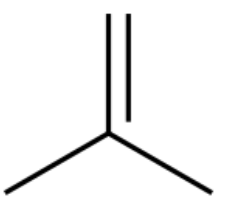
Isobutylene is a colorless gas with the chemical formula C4H8, and is one of the four isomers of butene. Its unique double-bond structure makes it highly reactive in chemical reactions. Isobutylene is a gas at room temperature, but it can be liquefied under pressure, facilitating storage and transportation. This substance has wide applications in the chemical industry and is a fundamental raw material for the synthesis of important materials such as rubber and plastics.
Colorless gas with a coal gas-like odor. The odor threshold concentration is 10 ppmv Nagata and Takeuchi (1990). This gas can be liquefied under pressure. The substance has low solubility in water, soluble in organic solvent, easy to polymerize. It is nonexplosive; however, it forms explosive mixtures with air. Containers holding isobutylene under pressure may explode if heated. The boiling point and freezing point of isobutylene are -6.9°C (19.6°F) and -141°C (-221°F), respectively. Isobutylene is extremely flammable. It is stable under recommended storage conditions and no decomposition may occur if stored and applied as directed.
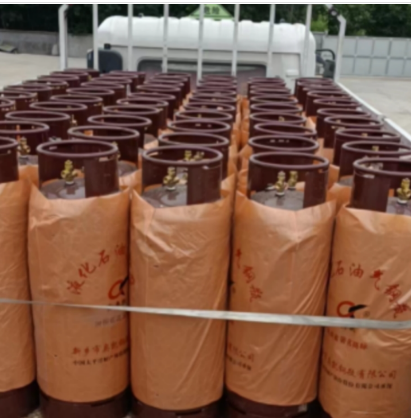
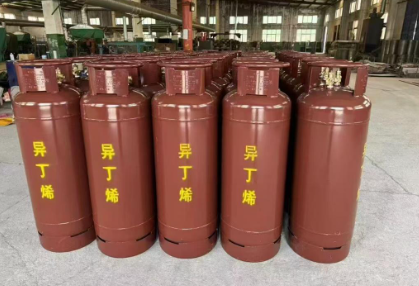
For transportation it may be stenched. It is shipped as a liquefied gas under its own vapor pressure. Contact with the liquid can cause frostbite. It is easily ignited. Its vapors are heavier than air and a flame can flash back to the source of leak very easily. The leak can either be a liquid or vapor leak. It can asphyxiate by the displacement of air. Under prolonged exposure to fire or heat the containers may rupture violently and rocket. It is used in the production of isooctane, a high octane aviation gasoline.
Application of Isobutylene
Isobutylene is a raw material and intermediate in many industrial organic synthesis processes.
Isobutylene can react with methanol or ethanol to produce the fuel additives methyl tert-butyl ether and ethyl tert-butyl ether, respectively; its alkylation can produce another more expensive fuel additive, isooctane. Its Friedel-Crafts reaction can be used to produce the antioxidants 2,6-di-tert-butyl-p-cresol (BHT) and butylated hydroxyanisole (BHA). It is also used in the production of 2-methylpropenal and tert-butyl chloride.
In the rubber industry, isobutylene is used to copolymerize with isoprene to produce butyl rubber; it is also one of the monomers of polybutene.
| Isobutylene Chemical Properties |
| Melting point | −140 °C |
| Boiling point | −6.9 °C(lit.) |
| density | 0.5879 |
| vapor density | 2 (vs air) |
| vapor pressure | 3278 mm Hg ( 37.7 °C) |
| refractive index | 1.3811 |
| Fp | -80 °C |
| form | clear liquid |
| color | Colorless to Almost colorless |
| Odor Threshold | 10ppm |
| Water Solubility | 263mg/L(25 ºC) |
| FreezingPoint | -140.34℃ |
| Merck | 14,5141 |
| BRN | 773645 |
| Henry's Law Constant | 0.20, 0.26, 0.33, and 0.41 at 30, 40, 50, and 60 °C, respectively (Leung et al., 1987:Zhang et al., 2002) |
| Stability: | Stable. Highly flammable - readily forms an explosive mixture with air. Incompatible with strong oxidizing agents. |
| InChI | 1S/C4H8/c1-4(2)3/h1H2,2-3H3 |
| InChIKey | VQTUBCCKSQIDNK-UHFFFAOYSA-N |
| SMILES | CC(C)=C |
| LogP | 2.35 at 20℃ |
| CAS DataBase Reference | 115-11-7(CAS DataBase Reference) |
| EPA Substance Registry System | Isobutene (115-11-7) |
| Safety Information |
| Hazard Codes | F+ |
| Risk Statements | 12 |
| Safety Statements | 9-16-33 |
| RIDADR | UN 1055 |
| WGK Germany | - |
| RTECS | UD0890000 |
| F | 4.5-31 |
| Autoignition Temperature | 869 °F |
| TSCA | TSCA listed |
| DOT Classification | 2.1 (Flammable gas) |
| HazardClass | 2.1 |
| HS Code | 29012330 |
| Storage Class | 2A - Gases |
| Hazard Classifications | Flam. Gas 1 Press. Gas Liquefied gas |
| Hazardous Substances Data | 115-11-7(Hazardous Substances Data) |
| Toxicity | LC50 (inhalation) for mice 415 g/m3/2-h, rats 620 g/m3/4-h (quoted, RTECS, 1985). |
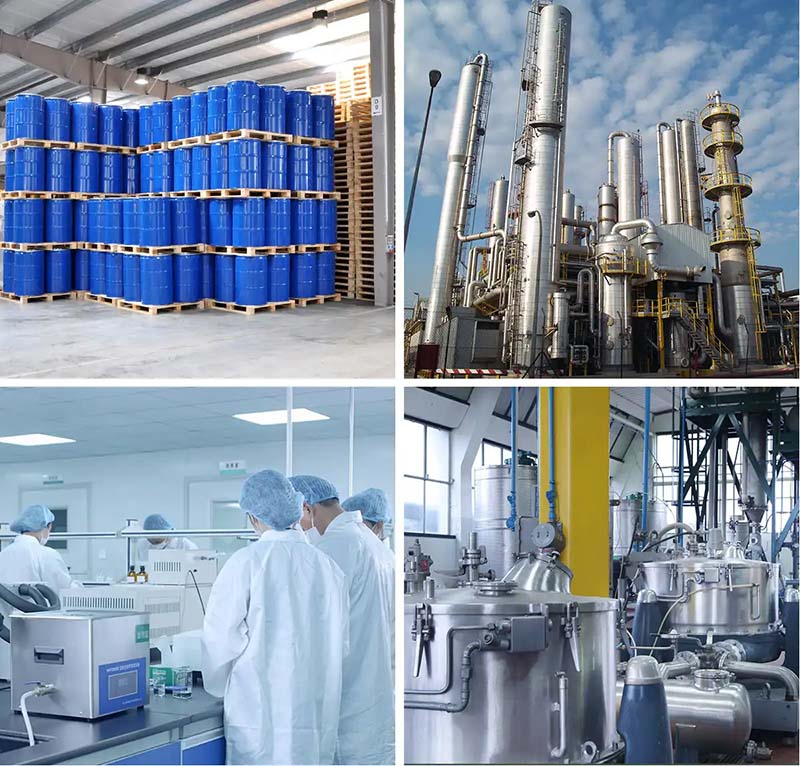
Fact Factory and Equipment Show