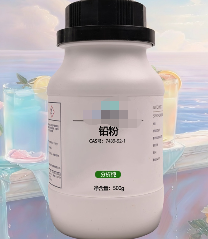
Lead #CAS7439-92-1
The metal is not attacked by hot water. But in the presence of free oxygen, lead(II) hydroxide is formed. The overall reaction is:
2Pb + 2H2O + O2 → 2Pb(OH)2
In hard water, however, the presence of small amounts of carbonate, sulfate, or silicate ions form a protective film on the metal surface, and prevent the occurrence of the above reaction and thus, corrosion of the metal.
Lead does not evolve hydrogen readily with acids. Nitric acid attacks the metal readily, forming lead nitrate and oxides of nitrogen:
3Pb + 8HNO3 → 3Pb(NO3)2 + 2NO + 4H2O
This reaction is faster in dilute nitric acid than strong acid. Hydrochloric acid has little effect on the metal. At ordinary temperatures, lead dissolves slowly in hydrochloric acid, forming a coating of lead(II) chloride, PbCl2 over the metal, which prevents further attack.
At ordinary temperatures, lead is not readily attacked by sulfuric acid. A coating of insoluble lead sulfate formed on the metal surface prevents any further reaction of the metal with the acid. The acid is, therefore, stored in specially designed lead containers. Also, the action of hot concentrated sulfuric acid is very low up to about 200°C. However, at temperatures near 260°C, both the concentrated sulfuric and hydrochloric acids dissolve lead completely. At ordinary temperatures, hydrofluoric acid also has little action on the metal. Formation of insoluble PbF2 prevents dissolution of lead in the acid.
Organic acids in the presence of oxygen react slowly with lead, forming their soluble salts. Thus, acetic acid in the presence of oxygen forms lead(II) acetate:
2Pb + 4CH3COOH + O2 → 2Pb(CH3COO)2 + 2H2O
Lead dissolves in alkalies forming plumbite ion, Pb(OH)42¯ with the evolution of hydrogen:
Pb + 2OH¯ + 2H2O → Pb(OH)42¯ + H2
Lead combines with fluorine, chlorine, and bromine, forming bivalent lead halides:
Pb + Cl2 → PbCl2
Fusion with sulfur at elevated temperatures yields lead sulfide, PbS.
The metal is oxidized to PbO when heated with sodium nitrate at elevated temperatures.
Pb + NaNO3 → PbO + NaNO2
Lead is widely used in storage batteries. Each cell consists of a spongy lead plate as cathode and lead dioxide as anode immersed in the electrolyte sulfuric acid. The overall chemical reaction in the cell during discharge is as follows: PbO2 + Pb + 2H2SO4 → 2PbSO4 + 2H2O
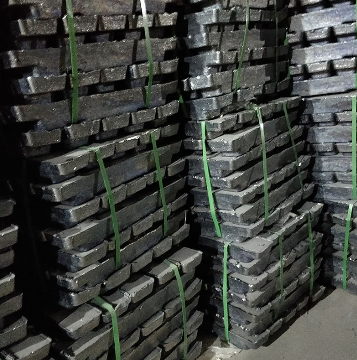
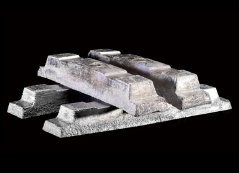
Silvery grey metal with bright luster; face-centered cubic crystals; very soft, malleable and ductile; easily cast, rolled and extruded; density 11.3 g/cm3; Moh’s hardness 1, Brinell hardness 4.0 (high purity metal); easily melted, melts at 327.46°C; vaporizes at 1,749°C; vapor pressure 1 torr at 970°C and 10 torr at 1160°C; poor conductor of electricity; electrical resistivity 20.65 microhm–cm at 20°C and of liquid melt 94.6 microhm–cm at its melting point; viscosity of molten metal 3.2 centipoise at its melting point and 2.32 centipoise at 400°C; surface tension 442 dynes/cm at 350°C; tensile strength 2,000 psi; thermal neutron absorption cross section 0.17 barn; standard electrode potential, Pb2+ + 2e– Pb –0.13V; very resistant to corrosion.
Lead is an acute and a chronic toxicant. Acute effects are ataxia, headache, vomiting, stupor, hallucination, tremors and convulsions. Chronic symptoms from occupational exposure include weight loss, anemia, kidney damage and memory loss. (Patnaik, P. 1999. A Comprehensive Guide to the Hazardous Properties of Chemical Substances, 2nd ed. New York: John Wiley & Sons.) Permanent brain damage has been noted among children. Lead bioaccumulates in bones and teeth. The metal is classified as an environmental priority pollutant by the US EPA.
The action level for lead in drinking water is 15μg/L. Its content in food and house paints is regulated in the USA by the Food and Drug Administration.
Application of Lead #CAS7439-92-1
Lead is one of the oldest metals known to civilization. The uses of some of its alloys and salts have been documented early in history. The element derived its symbol Pb from the Latin word plumbium. The metal is rarely found in nature in its native form; however, it is found in several minerals, such as galena (PbS), anglesite (PbSO4), minium (Pb3O4) and cerussite (PbCO3). Its concentration in the earth’s crust is 12.5 mg/kg and in sea water 0.03mg/L.
Lead has numerous applications as metal, alloys and compounds. The major applications of the metal and its alloys such as solder are as materials of construction for pipe lines, plumbing fixtures, wires, ammunition, containers for corrosive acids and shield against short-wavelength radiation. Another major application is in storage batteries in which both the metal and its dioxide are used. Several lead compounds, such as lead chromate (chrome yellow), lead sulfate (white lead), lead tetroxide (red lead), and the basic carbonate are used in paints.
Lead has been known to humankind sinceancient times. It is a major component ofmany alloys, such as bronze and solder. Itis used for tank linings, piping, and buildingconstruction; in the manufacture of pigmentsfor paints, tetraethyllead, and many organicand inorganic compounds; in storage batteries;and in ceramics. Lead levels in manysoils have been range from 5 to 25 mg/kgand in groundwaters from 1 to 50 μg/L.These concentrations may vary significantly.
Construction material for tank linings, piping, and other equipment handling corrosive gases and liqs used in the manufacture of sulfuric acid, petroleum refining, halogenation, sulfonation, extraction, condensation; for x-ray and atomic radiation protection; manufacture of tetraethyllead, pigments for paints, and other organic and inorganic lead Compounds; bearing metal and alloys; storage batteries; in ceramics, plastics, and electronic devices; in building construction; in solder and other lead alloys; in the metallurgy of steel and other metals.
Lead has many uses and is an important commercial commodity. One of the most commonuses is in the acid-lead electrical storage batteries used in automobiles. Much of the leadin these devices can be recycled and used again.
In the past, tetraethyl lead was added to gasoline to slow its burning rate in order to preventengine “knock” and increase performance. This caused serious and harmful pollution, and leadhas since been eliminated as a gasoline additive in most countries. Most exterior (and someinterior) house paints once contained high levels of lead as well. Today, the amount of lead inpaint is controlled, with not more than 0.05% allowed in the paint material.
Lead is used to make a number of important alloys. One is solder, an alloy of 1/2 lead and1/2 tin. Solder is a soft, low-melting metal that, when melted, is used to join two or moreother metals-particularly electrical components and pipes.
Babbitt metal is another alloy of lead that is used in the manufacture of wheel bearingsthat reduces friction. Lead is an ingredient in several types of glass, such as lead crystal andflint glass.
TV screens are coated with lead to absorb any radiation projected by the mechanism, andover 500,000 tons of lead is used in consumer electronics (computers, phones, games, and soon). Much of it ends up in solid waste dumps.
Many lead compounds are poisonous; thus, their uses in insecticides and house paints havebeen limited as other less toxic substances have been substituted. For example, lead arsenate[Pb3(AsO4], which is very poisonous, has been replaced in insecticides by less harmful substances.
In worldwide metal use, lead ranks behind only iron, copper, aluminum, and zinc (Howe 1981). Its largest use is in lead-acid storage batteries for motor vehicles and general industry. Lead metal also is commonly used for ammunition, cable covering, piping, brass and bronze, bearing metals for machinery, and sheet lead (ATSDR 1999).
All of the major soluble lead compounds have industrial uses. Lead acetate is used as a water repellent, for mildew protection, and as a mordant for cotton dyes. Lead acetate trihydrate is used in varnishes, chrome pigments, and as an analytical reagent, and lead chloride is used in asbestos clutch or brake linings, as a catalyst, and as a flame retardant. Lead nitrate is used in the manufacture of matches and explosives, as a heat stabilizer in nylon, and as a coating on paper for photothermography. Lead subacetate is used in sugar analysis and for clarifying solutions of organic substances (HSDB 2009).
The insoluble lead compounds also have a variety of uses. Lead azide and lead styphnate both are used in munitions manufacture. Lead carbonate, lead fluoride, lead fluoborate, and lead naphthenate are used as catalysts, with additional uses in the electronic and optical industries (lead fluoride), in coatings for thermographic copying (lead carbonate), as a curing agent for epoxy resins (lead fluoborate), and as a varnish drier (lead naphthenate). Lead phosphate and lead stearate both are used as stabilizers in the plastics industry. Lead iodide and lead sulfate are used in photography; lead iodide is also used in thermoelectric materials, and lead sulfate with zinc in galvanic batteries. Lead oxide and lead sulfide are used in ceramics; lead oxide is also used as a vulcanizing agent in rubber and plastics, and lead sulfide as a humidity sensor in rockets. Lead chromate is used as a pigment in paints, rubber, and plastics; lead tetraoxide is used in plasters, ointments, glazes, and varnishes; and lead thiocyanate is used in the manufacture of safety matches and cartridges. Lead arsenate formerly was used as an insecticide and herbicide, but no current uses were found.
Organic lead (including tetraethyl lead and tetramethyl lead) was widely used in the United States as an anti-knock additive in motorvehicle fuels until the U.S. Environmental Protection Agency initiated a phase-out of leaded gasoline in the early 1970s. By 1988, the total lead used in gasoline had been reduced to 1% of the 1970 level; in 1996, the use of lead in fuel for on-road motor vehicles was totally banned. Despite the legislated end to use of lead as a gasoline additive and reductions in some other uses of lead, overall U.S. lead consumption continued to grow until 1999, mainly because of increased production of lead-acid batteries (ATSDR 1999), but has since been on a general decline (USGS 2009, 2010, Guberman 2010).
| Lead Chemical Properties |
| Melting point | 327.4 °C (lit.) |
| Boiling point | 1740 °C (lit.) |
| density | 1.00 g/mL at 20 °C |
| refractive index | 2.881 (632.8 nm) |
| storage temp. | Store at +5°C to +30°C. |
| solubility | H2O: soluble |
| form | wire |
| color | Olive-green or red to brown |
| Specific Gravity | 11.288 |
| Odor | Odorless gas |
| PH | 3.8 (20°C in H2O) |
| Flame Color | Blue-white |
| resistivity | 20.65 μΩ-cm |
| Water Solubility | reacts with hot conc HNO3, boiling conc HCl, H2SO4 [MER06] |
| Electrical Conductivity | 4.8× 10⁶S/m |
| Thermal Conductivity | 35 W/(m·K) |
| Merck | 13,5414 |
| Exposure limits | TLV-TWA 0.15 mg/m3 as Pb (ACGIH and MSHA), 0.05 mg (Pb)/m3 (OSHA); 10-h TWA 0.1 mg(inorganic lead)/m3 (NIOSH). |
| Stability: | Stable. Incompatible with strong oxidizing agents, potassium, sodium. |
| InChI | 1S/Pb |
| InChIKey | WABPQHHGFIMREM-UHFFFAOYSA-N |
| SMILES | [Pb] |
| Hardness, Brinell | 4.2, Cast |
| Hardness, Vickers | 5.0 |
| Modulus of Elasticity | 14.0 GPa |
| Poissons Ratio | 0.42 |
| Shear Modulus | 4.90 GPa, calculated |
| CAS DataBase Reference | 7439-92-1(CAS DataBase Reference) |
| IARC | 2B (Vol. 23, Sup 7) 1987 |
| EPA Substance Registry System | Lead (7439-92-1) |
| Safety Information |
| Hazard Codes | T,Xi,Xn,N |
| Risk Statements | 61-33-40-48/20-62-36/38-20/22-51/53-50/53-48/20/22-52/53-34-23/24/25 |
| Safety Statements | 53-45-61-36/37-36-26-60-36/37/39 |
| RIDADR | UN 3082 9/PG 3 |
| OEB | D |
| OEL | TWA: (8-hour) 0.050 mg/m3 [*Note: The REL also applies to other lead compounds (as Pb) -- see Appendix C.] |
| WGK Germany | 3 |
| RTECS | OF7525000 |
| TSCA | TSCA listed |
| HazardClass | 8 |
| PackingGroup | III |
| HS Code | 78011000 |
| Storage Class | 6.1C - Combustible acute toxic Cat.3 toxic compounds or compounds which causing chronic effects |
| Hazard Classifications | Aquatic Acute 1 Aquatic Chronic 1 Lact. Repr. 1A STOT RE 1 Oral |
| Hazardous Substances Data | 7439-92-1(Hazardous Substances Data) |
| Toxicity | LDLO oral (pigeon) 160 mg/kg PEL (OSHA) 0.05 mg/m3 PEL (action level) 0.03 mg/m3 TLV-TWA (ACGIH) 0.05 mg/m3 (PEL and TLV apply to lead and inorganic lead compounds) |
| IDLA | 100 mg Pb/m3 |
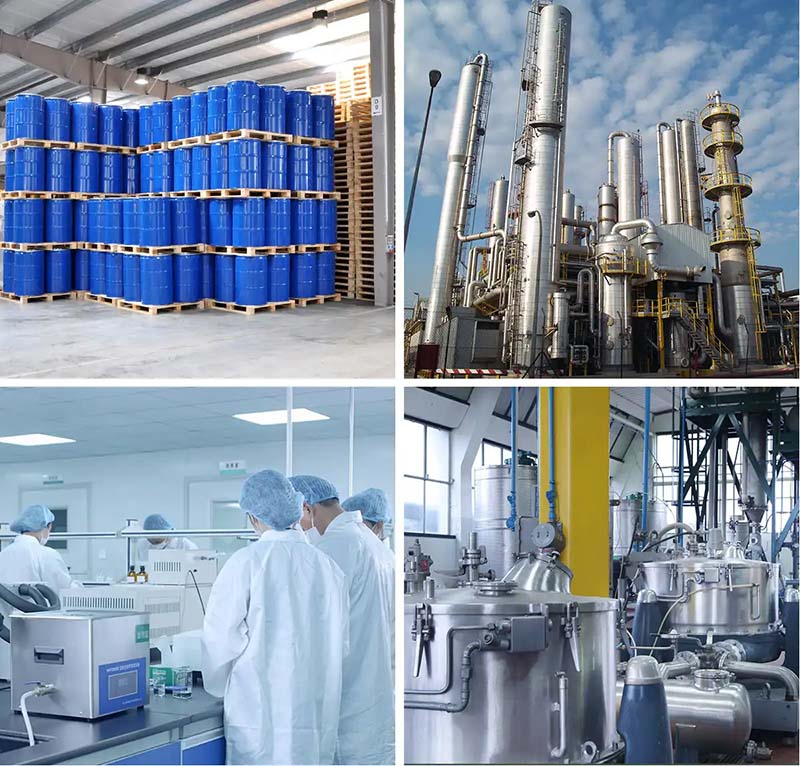
Fact Factory and Equipment Show