Polyvinylpyrrolidone #CAS9003-39-8
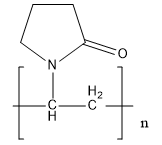
Polyvinyl pyrrolidone (PVP) is a water soluble polyamide. Commercially available PVP is divided into four viscosity grades according to its press K value (Fikentscher K value): K-15, K-30, K-60, K-90, with the average molecular weight being 10,000, 40000,160000, and 360000, respectively. K value or molecular weight is an important factor which decides the various properties of PVP.
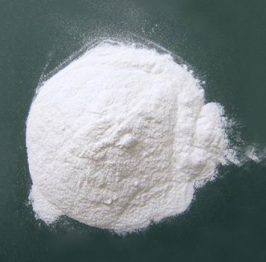
Polyvinyl pyrrolidone (PVP) is dissolved in water, chlorinated solvents, alcohol, amine, nitro-paraffin and low molecular weight fatty acids, and is mutually soluble with most inorganic salts and a variety of resin; insoluble in acetone and ether. PVP used for the matrix of dropping pill matrix is odorless, tasteless, white to pale yellow waxy solid with the relative density being 1.062, and its 5% aqueous solution pH being 3 to 7. PVP is hygroscopic and of good thermal stability, and can be dissolved in various kinds of organic solvents, and has high melting point. Adding certain natural or synthetic polymers or organic compounds can effectively adjust the PVP’s hygroscopicity and softness. PVP is not prone to have chemical reaction. Under normal storage conditions, dry PVP is quite stable. PVP has excellent physical inertia and biocompatibility and has not stimulation to skin, eyes no stimulation with no allergic reactions and being non-toxic.
Water and methanol is the preferred solvent of PVP. pH value has little effect on the viscosity of the aqueous solution of PVP, for example.
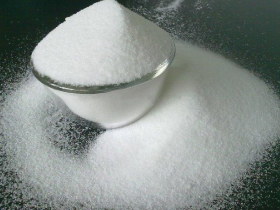
It is the cross-linked homopolymer of pure vinylpyrrolidone. It is hygroscopic and free-flowing white or off-white powder. It has a slight foul smell. It is insoluble in common solvents such as water, ethanol and ether. So its molecule weight range can’t be measured. However, PVP has ability to form complex with various kinds of substances (such as “Hu” class substance which can lead to the discoloration of a variety of wines and beverages discoloration). Also it is easily to be removed after filtration because of its insolubility.
Application Of Polyvinylpyrrolidone
Clarifying agent; pigment stabilizer; colloidal stabilizer; It is mainly used for beer clarifying and quality stabilizing (reference amount 8~20g/100L, maintained for 24h and remove it by filtration), and can also be applied in combination with enzymes (protease) and protein adsorbents. It is also used to clarify the wine and as a stabilizer to prevent discoloration (reference amount 24~72g/100L).
Clarifying agents; stabilizers; thickeners agent; tablet fillers; dispersants; PVP of molecular weight 360,000 are often used as the clarifying agent of beer, vinegar, and grape wine.
Used as the fixing liquid for gas chromatography.
It is used as a colloidal stabilizer and clarifying agent for beer clarification. Apply proper amount according the demands of production.
It can be used for pharmacy, aquaculture, and livestock disinfectant for the sterilization of the skin and mucous.
PolyFilterTM molecule has an amide bond for absorbing the hydroxyl groups located in polyphenol molecule to form hydrogen bonds, and therefore, can be used as the stabilizer of beer, fruit wine/grape wine, and drinking wine to extend their shelf life and improve the transparency, color and taste. The products have two specifications: disposable type and regeneration type. Disposable products are suitable for application by SMEs; renewable products demand the purchase of special filtration equipment; but since it is recyclable, it is suitable for large breweries for recycle application.
In daily cosmetics, PVP and its copolymer has good dispersion property and filming property, and thus being able to be used as a setting lotion, hair spray and styling mousse, as opacifiers for hair care agents, as the stabilizer of shampoo foam, as wave styling agent and as the dispersants and affinity agents in hair dye. Adding PVP to cream, sunscreen, and hair removal agent can enhance wetting and lubricating effect. Taking advantage of the excellent properties of PVP such as surface activity, film-forming and non-irritating to the skin, no allergic reactions, etc., has broad prospects in its application in hair care and skin care products.
Polyvinylpyrrolidone is used as an adhesive in glue sticks; an emulsifier and a disintegrant for solution polymerization; an additive to Doro's RNA extraction buffer; as a liquid-phase dispersion enhancing agent in diffusion-ordered spectroscopy (DOSY) NMR and as a thickening agent in tooth whitening gels. It finds use in personal care products like shampoos and toothpastes, in ink for inkjet printers as well as in contact lens solutions. It is used as a food additive and in the wine industry as a fining agent for white wine. It is used as a capping agent to synthesize silver nanowires through a polyol process.
Polyvinylpyrrolidone has been used:
to perform intracytoplasmic sperm injection procedure
in the preparation of endophyte coating agent mixture, to coat creeping bentgrass seed
as a component of prehybridization solution
suitable for gene delivery
| Polyvinylpyrrolidone Chemical Properties |
| Melting point | >300 °C |
| Boiling point | 90-93 °C |
| density | 1,69 g/cm3 |
| Tg | 175 |
| bulk density | 330kg/m3 |
| refractive index | (25) 1.5300 |
| refractive index | 1.5300 |
| storage temp. | 2-8°C |
| solubility | H2O: soluble100mg/mL |
| form | powder |
| color | White to yellow-white |
| PH | 3.0-5.0 |
| biological source | synthetic (oragnic) |
| Water Solubility | Soluble in water. |
| Sensitive | Hygroscopic |
| Merck | 14,7697 |
| Stability: | Stable. Incompatible with strong oxidizing agents. Light sensitive. Hygroscopic. |
| Cosmetics Ingredients Functions | EMULSION STABILISING ANTISTATIC BINDING VISCOSITY CONTROLLING HAIR FIXING FILM FORMING |
| InChI | InChI=1S/C8H15NO/c1-3-7(2)9-6-4-5-8(9)10/h7H,3-6H2,1-2H3 |
| InChIKey | FAAHNQAYWKTLFD-UHFFFAOYSA-N |
| SMILES | N1(C(C)CC)C(=O)CCC1 |
| IARC | 3 (Vol. 19, Sup 7, 71) 1987 |
| EPA Substance Registry System | Polyvinylpyrrolidone (9003-39-8) |
| Safety Information |
| Safety Statements | 22-24/25 |
| WGK Germany | 1 |
| RTECS | TR8370000 |
| Autoignition Temperature | 440 °C |
| TSCA | TSCA listed |
| HS Code | 39059990 |
| Storage Class | 11 - Combustible Solids |
| Hazardous Substances Data | 9003-39-8(Hazardous Substances Data) |
| Toxicity | LD50 orally in Rabbit: > 2000 mg/kg |
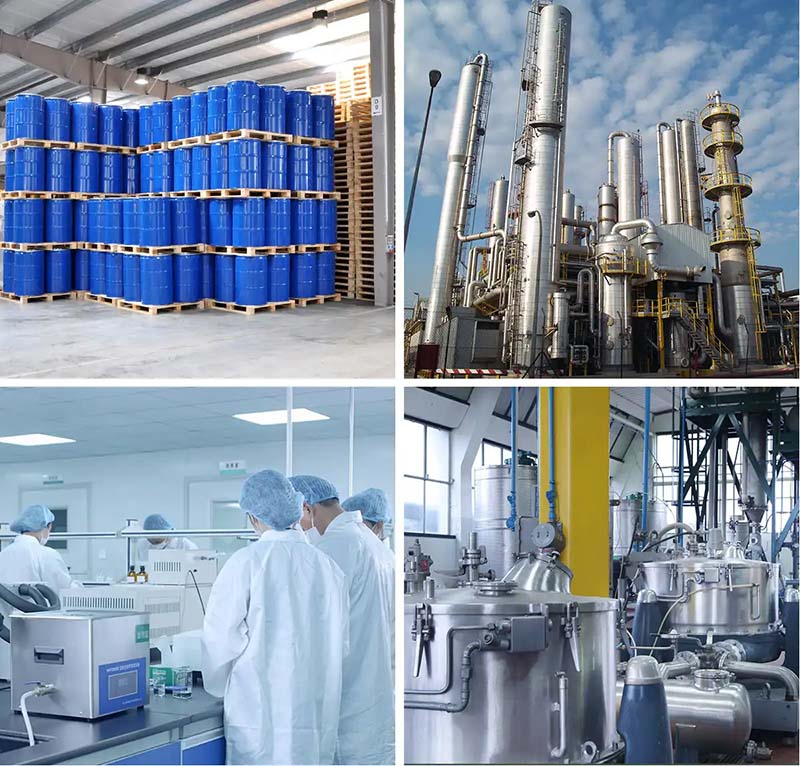
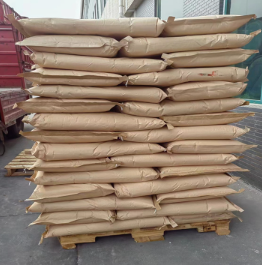
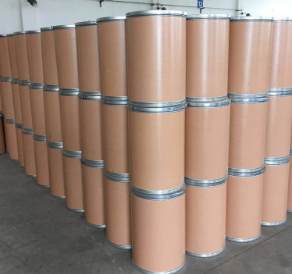
Fact Factory and Equipment Show