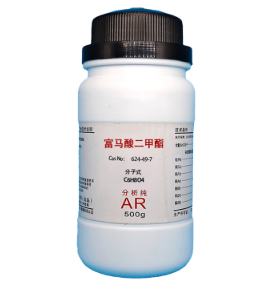
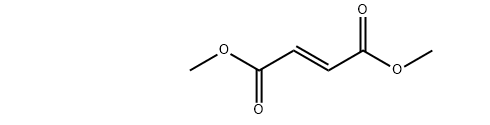
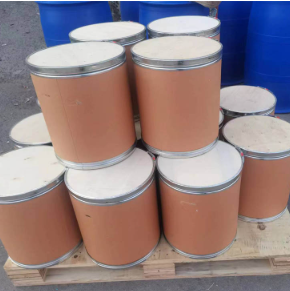
Dimethyl fumarate #CAS624-49-7
Dimethyl fumarate, also known as (E)-2-butenedioic acid dimethyl ester, trans-butenedioic acid dimethyl ester, or allomaleic acid dimethyl ester, is commonly called antifungal preservative "Mold Killer No. 1," abbreviated as DMF. It is a white crystalline powder or crystalline crystalline compound at room temperature. It is soluble in ethyl acetate, chloroform, acetone, and alcohols, slightly soluble in ether, and slightly soluble in water. DMF is toxic. Due to its corrosive and allergenic properties, clinical trials have shown that DMF can cause corrosive damage to the intestines and internal organs and induce allergies when inhaled through the esophagus; furthermore, contact with the skin can cause contact dermatitis with painful symptoms including itching, irritation, redness, and burning; posing a significant threat to human health, especially to the growth and development of children. Dimethyl fumarate was once widely used in food, beverages, feed, traditional Chinese medicine, cosmetics, fish, meat, vegetables, and fruits for antifungal, antiseptic, insect-proofing, and preservation. It is now classified as a non-edible substance and is prohibited from use in food (including flour products).
Application of Dimethyl fumarate
Dimethyl fumarate (DMF) is characterized by its high efficiency and broad-spectrum antibacterial properties, exhibiting a special antifungal effect against molds. It also possesses insecticidal activity and has contact and fumigation effects, and was once widely used in food, beverages, feed, traditional Chinese medicine, cosmetics, fish, meat, vegetables, and fruits for mold prevention, preservation, insect control, and freshness maintenance. However, due to its corrosive and allergenic properties, DMF is now classified as a non-edible substance and is prohibited from use in food (including flour products). Domestic research indicates that DMF has good antifungal capabilities, and its mold-preventing effect on feed is superior to acidic preservatives such as propionate, sorbic acid, and benzoic acid.
| Dimethyl fumarate Chemical Properties |
| Melting point | 102-106 °C (lit.) |
| Boiling point | 192-193 °C (lit.) |
| density | 1,37 g/cm3 |
| vapor pressure | 5 hPa (25 °C) |
| refractive index | 1.4062 (estimate) |
| Fp | 192-193°C |
| storage temp. | Store below +30°C. |
| solubility | 1.6g/l |
| form | Liquid |
| color | Clear colorless to faintly yellow |
| PH | 4.0-6.0 (10g/l, H2O, 20℃)suspension |
| Water Solubility | Soluble in water (1.6 mg/ml at 20°C), methanol (30-36 mg/ml), ethanol (10 mg/ml at 25°C), DMSO (29 mg/ml at 25°C), and DMF (~12 mg/ml). |
| Merck | 14,4287 |
| BRN | 774590 |
| Henry's Law Constant | 1.4×101 mol/(m3Pa) at 25℃, HSDB (2015) |
| Stability: | Stable. Incompatible with acids, bases, oxidizing agents, reducing agents. |
| InChI | 1S/C6H8O4/c1-9-5(7)3-4-6(8)10-2/h3-4H,1-2H3/b4-3+ |
| InChIKey | LDCRTTXIJACKKU-ONEGZZNKSA-N |
| SMILES | [H]\C(=C(\[H])C(=O)OC)C(=O)OC |
| CAS DataBase Reference | 624-49-7(CAS DataBase Reference) |
| NIST Chemistry Reference | 2-Butenedioic acid (E)-, dimethyl ester(624-49-7) |
| EPA Substance Registry System | 2-Butenedioic acid (2E)-, 1,4-dimethyl ester (624-49-7) |
| Safety Information |
| Hazard Codes | Xn |
| Risk Statements | 21-38-41-43-36/37/38-36/38 |
| Safety Statements | 26-36/37/39-36/37 |
| RIDADR | UN 3077 9 / PGIII |
| WGK Germany | 1 |
| RTECS | EM6125000 |
| TSCA | TSCA listed |
| HazardClass | 9 |
| HS Code | 29171990 |
| Storage Class | 11 - Combustible Solids |
| Hazard Classifications | Acute Tox. 4 Dermal Aquatic Chronic 2 Skin Irrit. 2 Skin Sens. 1 STOT SE 3 |
| Hazardous Substances Data | 624-49-7(Hazardous Substances Data) |
| Toxicity | LD50 orally in Rabbit: 2240 mg/kg LD50 dermal Rabbit 1250 mg/kg |