Fumaric acid #CAS110-17-8
Fumaric acid #CAS110-17-8
Fumaric acid is an important kind of organic chemical raw materials as well as the intermediate of fine chemical products. Meanwhile, it is also an important kind of derivatives of maleic anhydride, being widely used in food, coatings, resins and plasticizers. In the food industry, fumaric acid, used as souring agent, can be applied to soft drinks, western-style wine, cold drinks, fruit juice concentrate, canned fruit, pickles and ice cream. As an acidic substance used as solid beverage gas production agent, it has excellent bubble durability with delicate product organization.
Fumaric acid has been used as a food acidulant since 1946. As a food additive, it is used as an acidity regulator and can be denoted by the E number E297. Chemically it is an unsaturated dicarbonic acid and is part of the citric acid cycle.
Fumaric acid is a common food additive included in many processed foods to keep them stable and to add tartness. The substance has a more sour flavor than citric acid, another common food additive. Fumaric acid occurs naturally in fumitory, bolete mushrooms, lichen and Iceland moss. As an additive, fumaric acid is produced synthetically, mainly from malic acid from apples. Fumaric acid as an additive is regulated under the Codex Alimentarius General Standard for Food Additives (GSFA), a collection of internationally recognized standards.The U.S. Food and Drug Administration considers it safe.
Application of Fumaric acid
🍜 Main Uses in Food
Fumaric acid is primarily used as an acidity regulator and sourdough agent. It is permitted for use in many foods, with strict maximum usage limits.
It can be used in chewing gum, bread, pastries, biscuits, fresh wet dough products (such as noodles and dumpling wrappers), fruit and vegetable juices, carbonated beverages, cured meat products, sausages, and other foods, in appropriate amounts as needed for production.
Besides being a sourdough agent, its acidity also plays a role in inhibiting bacteria and preserving food to some extent. In some regions, it is also permitted for use in winemaking to control malolactic fermentation.
🏭 Other Industrial and Pharmaceutical Uses
Chemical Raw Material: It is an important raw material for manufacturing unsaturated polyester resins, alkyd resins, and adhesives.
Pharmaceutical Field: In the pharmaceutical industry, it can be used to produce the antidote dimercaptosuccinic acid and ferrous fumarate (an iron supplement used to treat iron deficiency anemia).
Treatment of psoriasis: In Germany, fumarate is the first-line oral treatment for severe psoriasis.
Production Processes of Fumaric acid
Chemical Synthesis (Mainstream): Using petroleum-based benzene or n-butane as raw materials, the mixture is first oxidized to maleic anhydride, then hydrolyzed and heated (isomerized) to obtain fumaric acid. Advantages include mature technology and high yield; disadvantages include reliance on petroleum resources.
Biofermentation (Green Direction): Utilizing microorganisms such as Rhizopus to convert glucose or biomass such as straw into fumaric acid. Advantages include renewable raw materials, but current production costs and efficiency are not as high as the chemical method.
Enzyme Catalysis (Specific Applications): Using specific enzymes to directly convert L-malic acid to fumaric acid. Product purity is high, but raw material costs are high; used for specific product production.
| Fumaric acid Chemical Properties |
| Melting point | 298-300 °C (subl.) (lit.) |
| Boiling point | 137.07°C (rough estimate) |
| density | 1.62 |
| vapor pressure | 1.7 mm Hg ( 165 °C) |
| refractive index | 1.5260 (estimate) |
| FEMA | 2488 | FUMARIC ACID |
| Fp | 230 °C |
| storage temp. | Store below +30°C. |
| solubility | 95% ethanol: soluble0.46g/10 mL, clear, colorless |
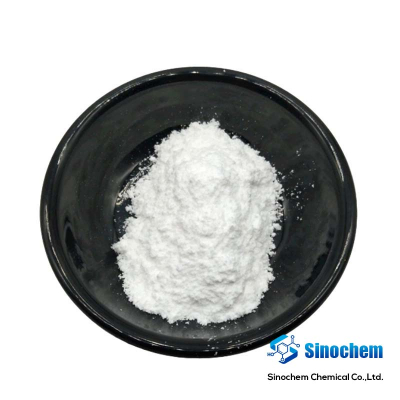
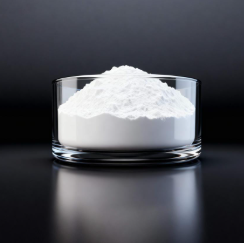
| form | Fine Crystalline Powder |
| pka | 3.02, 4.38(at 25℃) |
| color | White |
| PH | 3.19(1 mM solution);2.57(10 mM solution);2.03(100 mM solution); |
| Odor | odorless |
| Odor Type | odorless |
| biological source | synthetic |
| explosive limit | 40% |
| Water Solubility | 0.63 g/100 mL (25 ºC) |
| Merck | 14,4287 |
| JECFA Number | 618 |
| BRN | 605763 |
| Stability: | Stable at room temperature. Decomposes at around 230 C. Incompatible with strong oxidizing agents, bases, reducing agents. Combustible. |
| Cosmetics Ingredients Functions | BUFFERING |
| Cosmetic Ingredient Review (CIR) | Fumaric acid (110-17-8) |
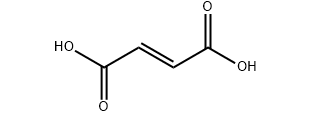
| InChI | 1S/C4H4O4/c5-3(6)1-2-4(7)8/h1-2H,(H,5,6)(H,7,8)/b2-1+ |
| InChIKey | VZCYOOQTPOCHFL-OWOJBTEDSA-N |
| SMILES | OC(=O)\C=C\C(O)=O |
| LogP | -4.02 at 20℃ |
| CAS DataBase Reference | 110-17-8(CAS DataBase Reference) |
| NIST Chemistry Reference | Fumaric acid(110-17-8) |
| EPA Substance Registry System | Fumaric acid (110-17-8) |
| Safety Information |
| Hazard Codes | Xi |
| Risk Statements | 36 |
| Safety Statements | 26 |
| RIDADR | UN 9126 |
| WGK Germany | 1 |
| RTECS | LS9625000 |
| Autoignition Temperature | 375 °C |
| TSCA | TSCA listed |
| HS Code | 29171900 |
| Storage Class | 11 - Combustible Solids |
| Hazard Classifications | Eye Irrit. 2 |
| Hazardous Substances Data | 110-17-8(Hazardous Substances Data) |
| Toxicity | LD50 orally in Rabbit: 9300 mg/kg LD50 dermal Rabbit 20000 mg/kg |
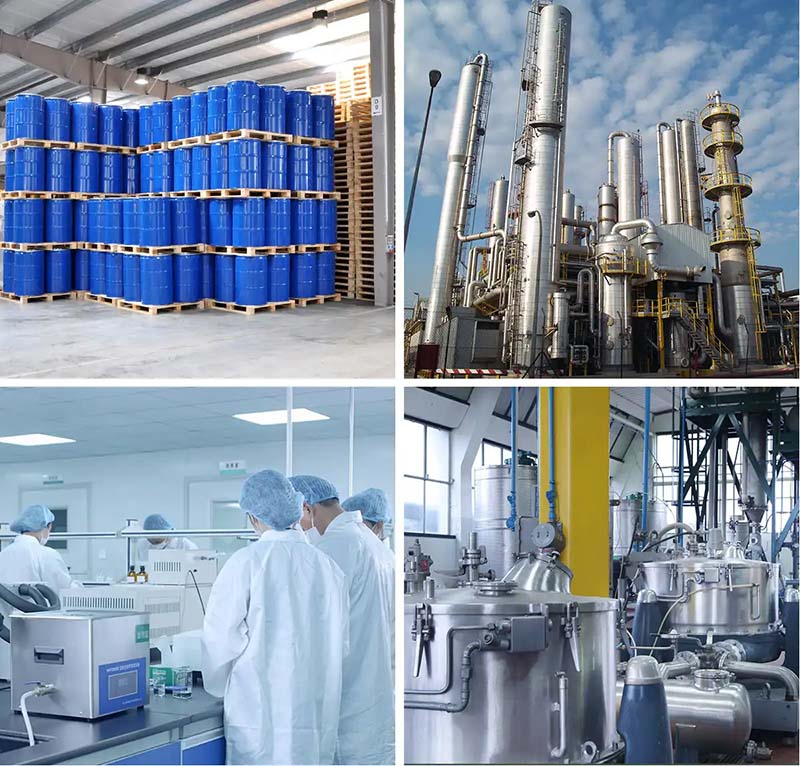
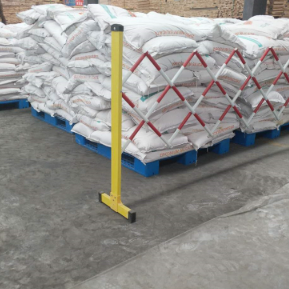
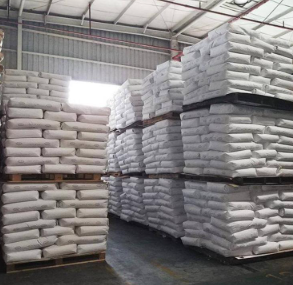
Fact Factory and Equipment Show