κ-Carrageenan #CAS11114-20-8
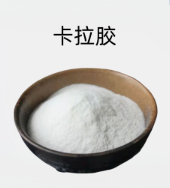
The word carrageenan originates from Karakin, a seaside town in Ireland. Carrageenan is found in the cell walls of many red algae, such as *Carrageenan*, *Euphorbia tirucalli*, *Cynodon dactylon*, *Salix matsudana*, and *Ginkgo biloba*. Also known as carrageenan gum or staghorn gum, carrageenan is a high-molecular-weight hydrophilic polysaccharide extracted from red algae. It has extremely high economic value and is one of the world's three major seaweed gum industrial products (agar, carrageenan, and alginate). Carrageenan is a food additive; food-grade carrageenan is a white to pale yellowish-brown, wrinkled, slightly glossy, translucent sheet or powder, odorless and tasteless, with a sticky texture. The gel formed by carrageenan is thermoreversible; that is, it melts into a solution when heated, and when the solution cools, it forms a gel again. The use of carrageenan originated hundreds of years ago with a type of seaweed found along the southern coast of Ireland, commonly known as Irish Moss (now called Chondrus crispus). Locals would collect it, add sugar to milk, boil it, let it cool, and consume it after it solidified. In the early 18th century, the Irish processed this seaweed into powder and introduced it to the United States. Later, companies began commercial production, selling it under the name seamossfarina, and it was widely used in milk and various foods. The United States began factory-based carrageenan extraction in the 19th century, and the carrageenan industry truly developed in the US by the 1840s. In my country, carrageenan production began on Hainan Island in 1973.
Application of κ-Carrageenan
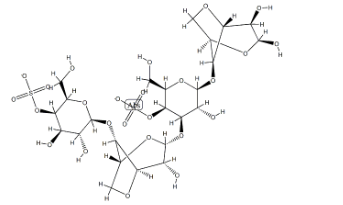
κ-Carrageenan is a sulfated linear polysaccharide of D-galactose and 3,6-anhydro-D-galactose extracted from certain red seaweeds of the Rhodophyceae class. κ-Carrageenan is used in the food industry as thickening, gelling and protein-suspending agents, and by the pharmaceutical industry in pills and tablets.
The carrageenans are sulphate gums found in members of the Rhodophyceae. They consist of mixtures of polysaccharides which are mainly composed of D-galactose units linked 1~3 and 1~4. A high proportion ofthe units are substituted with sulphate half-ester groups. The carrageenans are useful stabilisers in foods.
κ-Carrageenan is a sulfated linear polysaccharide of D-galactose and 3,6-anhydro-D-galactose extracted from certain red seaweeds of the Rhodophyceae class. κ-Carrageenan is used in the food industry as thickening, gelling and protein-suspending agents, and by the pharmaceutical industry in pills and tablets.
| κ-Carrageenan Chemical Properties |
| solubility | H2O: 5 mg/mL hot, soluble |
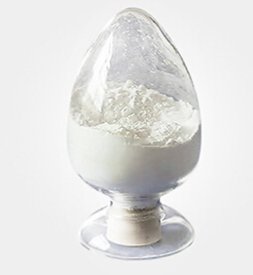
| form | Solid |
| color | White to almost white to yellow to brownish |
| biological source | plant |
| Water Solubility | H2O: soluble 5mg/mL (hot) |
| Merck | 14,1864 |
| Cosmetic Ingredient Review (CIR) | κ-Carrageenan (11114-20-8) |
| InChIKey | ZNOZWUKQPJXOIG-XSBHQQIPSA-L |
| Safety Information |
| WGK Germany | 2 |
| RTECS | FI0704000 |
| F | 3 |
| HS Code | 13023990 |
| Storage Class | 11 - Combustible Solids |
| Toxicity | rabbit,LDLo,intravenous,3mg/kg (3mg/kg),BLOOD: CHANGE IN CLOTTING FACTORS,Journal of Pharmacy and Pharmacology. Vol. 17, Pg. 647, 1965. |
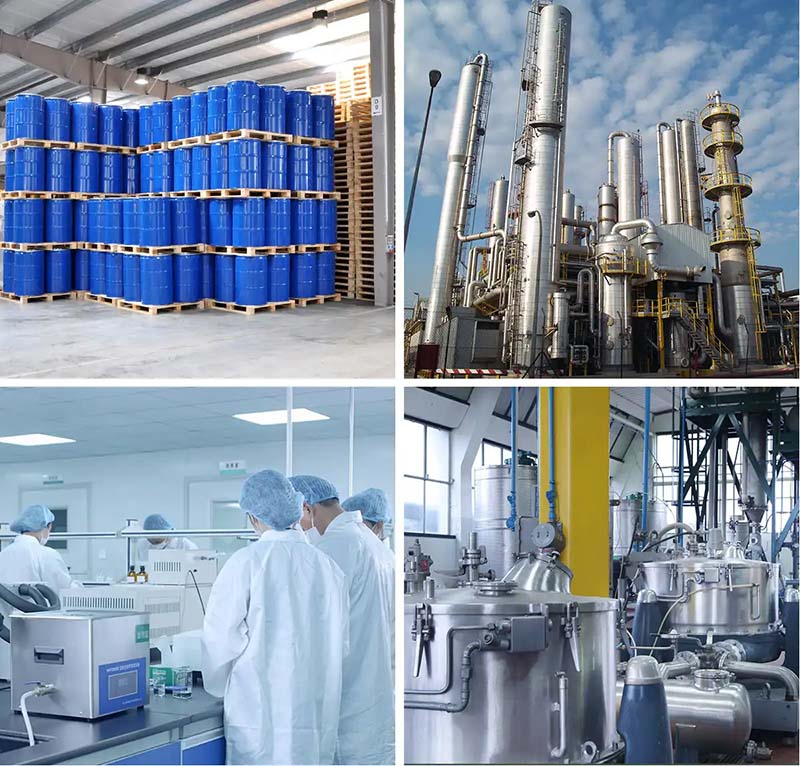
Fact Factory and Equipment Show