
Glutaraldehyde #CAS111-30-8
Glutaraldehyde #CAS111-30-8
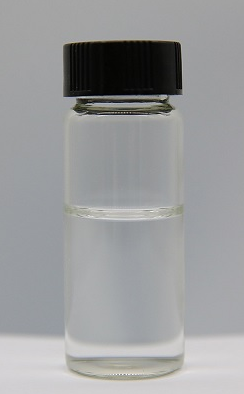
Glutaraldehyde is a colorless liquid with a pungent odor, which readily changes to a glossy polymer. The Odor Threshold is 0.04 ppm (NY) and 0.2 ppm (NJ). It is miscible in water and organic solvents. Glutaraldehyde may be incompatible with strong oxidizers and strong bases. It should be noted that alkaline solutions containing glutaraldehyde may react with alcohol, ketones, amines, hydrazines, and proteins.Polymerizes in the presence of water.GLUTARALDEHYDE may discolor on exposure to air. Pentanedial polymerizes on heating. Pentanedial is incompatible with strong oxidizing agents. Pentanedial polymerizes in the presence of water.Glutaraldehyde is an effective protein crosslinker and finds application in techniques like enzyme immobilisation microscopy, histochemistry and cytochemistry. It exists in different forms under acidic or neutral conditions. It is a biocide widely used as a disinfectant in hospitals and industries and is toxic to aquatic organisms. Its allergic nature leads to hypersensitivity reactions. Contact of glutaraldehyde vapors in endoscopy contributes to Colitis.Water contact forms a polymer solution. A strong reducing agent. Incompatible with strong acids; caustics, ammonia, amines, and strong oxidizers. Note: Alkaline solutions of glutaraldehyde (i.e., activated glutar aldehyde) react with alcohol, ketones, amines, hydrazines, and proteins.The chemical action lies in the fact that the highly reactive aldehyde groups at both ends of the molecule can undergo efficient alkylation and nucleophilic addition reactions with biological macromolecules and the surfaces of materials. In the fields of biology and medical disinfection, it can rapidly react with the proteins, enzymes, and DNA molecules within microorganisms such as bacteria, viruses, and fungi, as well as the primary amino groups (-NH₂), sulfhydryl groups (-SH), and hydroxyl groups (-OH) within them, spontaneously undergoing dehydration condensation. Through cross-chain self-polymerization, it establishes strong covalent bond hetero-linkages (i.e., protein cross-linking) between molecules, thereby causing the cell walls of microorganisms to become rigid, disrupting the permeability of the cell membranes, causing the core enzymes to lose activity, and hindering nucleic acid replication. This results in a broad-spectrum and thorough sterilization effect. At the same time, in the fields of materials and industry, this unique dual-aldehyde cross-linking property is also widely applied in the tanning of collagen in the leather industry, the rapid chemical fixation of biological specimens in microscopes, and the preparation of immobilized enzymes, by changing the spatial structure of macromolecules to significantly enhance their mechanical strength and chemical stability.
Application Of Glutaraldehyde
As broad-spectrum antimicrobial cold sterilant/disinfectant for hospital equipment; as tanning agent for leather; as tissue fixative; as cross-linking agent for proteins; as preservative in cosmetics; as therapeutic agent for warts, hyperhidrosis, and dermal mycotic infections; in X ray processing solutions and film emulsion; as a disinfectant in the beauty industry.glutaral (glutardialdehyde) is a broad-spectrum preservative that can cause skin irritation. This is an amino acid occurring in green sugar beets.Glutaraldehyde (Symbol GTA; glutaric dialdehyde, 1,5-pentanedial, glutaral) is commonly used in the medical industry in cold sterilization and in the X-ray development process. It can also be encountered in the leather industry as a tanning ingredient and in mortuary workers. There are no reports which indicate that glutaraldehyde is a naturally occurring compound. Cidex and Acusol, 2% buffered solutions, use this aldehyde as an active ingredient. Sodium bicarbonate is required to activate the solution, which then has a shelf life of 1–2 weeks. Despite health hazards involved with its use, glutaraldehyde is one of the most effective biocides used. It is particularly effective against bacteria and viruses, including the human immunodeficiency virus.Glutaraldehyde is used to disinfect medical and dental equipment. Glutaraldehyde is also used for industrial water treatment and as a preservative.Glutaraldehyde is used as a cold sterilizingdisinfectant, as fixatives for tissues, in tanning,and in cross-linking proteins.
| Glutaraldehyde Chemical Properties |
| Melting point | -15 °C |
| Boiling point | 100 °C |
| density | 1.058 g/mL at 20 °C |
| vapor density | 1.05 (vs air) |
| vapor pressure | 15 mmHg ( 20 °C) |
| refractive index | n |
| Fp | 100°C |
| storage temp. | Store below +30°C. |
| solubility | Chloroform (Slightly), DMSO (Slightly), Ethyl Acetate (Slightly), Methanol (Slightly) |
| form | Solution |
| color | Clear to slight haze |
| Specific Gravity | 1.06 |
| Odor | pungent aldehyde odor |
| PH | >3.0 (H2O, 20°C) |
| biological source | synthetic |
| Water Solubility | miscible |
| Merck | 14,4472 |
| BRN | 605390 |
| Henry's Law Constant | 3.0×10² mol/(m3Pa) at 25℃, Olson (1998) |
| Exposure limits | ACGIH TLV-CEILING:0.05 ppm (0.2 mg/m3),Activated or Unactivated |
| Stability: | Light Sensitive |
| Cosmetics Ingredients Functions | FRAGRANCE PRESERVATIVE |
| Cosmetic Ingredient Review (CIR) | Glutaraldehyde (111-30-8) |
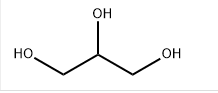
| InChI | 1S/C5H8O2/c6-4-2-1-3-5-7/h4-5H,1-3H2 |
| InChIKey | SXRSQZLOMIGNAQ-UHFFFAOYSA-N |
| SMILES | [H]C(CCCC([H])=O)=O |
| LogP | -0.180 (est) |
| CAS DataBase Reference | 111-30-8(CAS DataBase Reference) |
| NIST Chemistry Reference | Glutaral(111-30-8) |
| EPA Substance Registry System | Glutaraldehyde (111-30-8) |
| Safety Information |
| Hazard Codes | T,N,Xn |
| Risk Statements | 36/37/38-42/43-34-23-22-50-23/25-41-37/38-20/22 |
| Safety Statements | 23-26-36/37-45-36/37/39-61 |
| RIDADR | UN 2922 8/PG 2 |
| OEL | Ceiling: 0.2 ppm (0.8 mg/m3) (Aldehydes) |
| WGK Germany | 3 |
| RTECS | MA2450000 |
| F | 8-10-23 |
| Autoignition Temperature | 395°C |
| TSCA | TSCA listed |
| HazardClass | 8 |
| PackingGroup | II |
| HS Code | 29121900 |
| Storage Class | 6.1C - Combustible acute toxic Cat.3 toxic compounds or compounds which causing chronic effects |
| Hazard Classifications | Acute Tox. 4 Inhalation Acute Tox. 4 Oral Aquatic Chronic 3 Eye Dam. 1 Repr. 1B Resp. Sens. 1 Skin Corr. 1B Skin Sens. 1 STOT SE 3 |
| Hazardous Substances Data | 111-30-8(Hazardous Substances Data) |
| Toxicity | LD50 of 25% soln orally in rats: 2.38 ml/kg; by skin penetration in rabbits: 2.56 ml/kg (Smyth) |
Fact Factory and Equipment Show