Terephthalic acid #CAS100-21-0
Terephthalic acid #CAS100-21-0
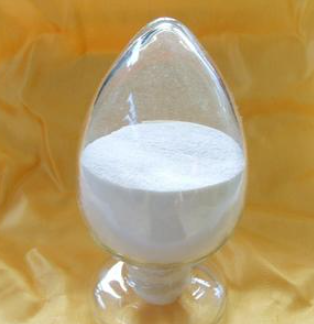
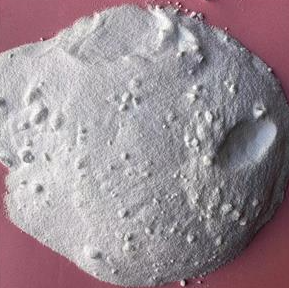
White powder.
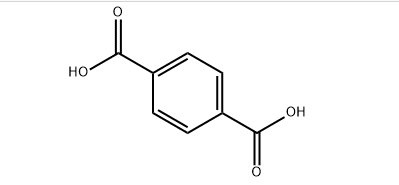
Terephthalic acid is the organic compound with formula C6H4(COOH)2. This colourless solid is a commodity chemical, used principally as a precursor to the polyester PET, used to make clothing and plastic bottles. Several million tones are produced annually. It is one of three isomeric phthalic acids.
Terephthalic acid came to prominence through the work of Winfield and Dickson in Britain around 1940. Earlier work by Carothers and coworkers in the United States established the feasibility of producing high molecular weight linear polyesters by reacting diacids with diols, but they used aliphatic diacids and diols. These made polyesters which were unsuitable to be spun into fibers. Winfield and Dickson found that symmetrical aromatic diacids yield high-melting, crystalline, and fiberforming materials; poly(ethylene terephthalate) (PET) has since become the largest volume synthetic fiber.
ChEBI: Terephthalic acid is a benzenedicarboxylic acid carrying carboxy groups at positions 1 and 4. One of three possible isomers of benzenedicarboxylic acid, the others being phthalic and isophthalic acids. It is a conjugate acid of a terephthalate(1-).
erephthalic acid is produced by oxidation of p-xylene by oxygen in air.
This reaction proceeds through a p-toluic acid intermediate which is then oxidized to terephthalic acid. In p-toluic acid, deactivation of the methyl by the electron withdrawing carboxylic acid group makes the methyl one tenth as reactive as xylene itself, making the second oxidation significantly more difficult . The commercial process utilizes acetic acid as solvent and a catalyst composed of cobalt and manganese salts, with a bromide promoter.
Benzoic acid, phthalic acid and other benzene-carboxylic acids in the form of alkali-metal salts, comprise the chargestock. In a first step, the alkali-metal salts (usually potassium) are converted to terephthalates when heated to a temperature exceeding 350 °C (662 °F). The dried potassium salts (of benzoic acid or o- or isophthalic acid) are heated in anhydrous form to approximately 420 °C (788 °F) in an inert atmosphere (CO2) and in the presence of a catalyst (usually cadmium benzoate, phthalate, oxide, or carbonate). The corresponding zinc compounds also have been used as catalysts. In a following step, the reaction products are dissolved in H2O and the terephthalic acid precipitated out with dilute H2SO4. The yield of terephthalic acid ranges from 95 to 98%.
The PTA production process can be divided into two parts: the oxidation unit and the hydrogenation refining unit. The raw material p-xylene is dissolved in acetic acid and undergoes air oxidation under the action of a catalyst to form crude p-phenylenediamine. Then, it is successively crystallized, filtered, and dried to obtain crude product; the crude p-phenylenediamine is hydrogenated to remove impurities, and then crystallized, centrifugally separated, and dried to obtain PTA finished product.
The purification method of crude p-phenylenediamine: including the following steps: drying the crude p-phenylenediamine, ball milling, screening to make the particle size reach 1-5 μm, immersing in water at a temperature of 60-100°C, stirring, clarification, then skimming water, and finally centrifugal separation, drying at 80-105°C to obtain pure p-phenylenediamine. The said crude p-phenylenediamine is the precipitate obtained from the alkaline reduction wastewater after acid precipitation, and the dry basis weight content of impurities is 15%-18%.
The main patent manufacturers of the PTA process are BP-Amoco, Dupont-ICI, and Mitsui Oil Chemical, etc. After many years of development, the technologies of these three companies are largely similar with their own characteristics, and their levels are comparable. The total production capacity of PTA devices using the BP-Amoco process worldwide is 7176,000 tons/a, the Dupont-ICI process is 3495,000 tons/a, and the Mitsui Oil Chemical process is 1025,000 tons/a. 4-C6H4(COOH)2. Colorless crystal. Sublimates above 300°C. Has extremely low solubility in water, and dissolves in dimethyl sulfoxide, dimethylformamide, and hexamethylphosphoric triamide. Due to its low solubility and high melting point, purification is difficult.
Phenylbenzene diamine is produced industrially by oxidizing p-xylene with nitric acid or by oxidizing it under the catalysis of cobalt salts. Using potassium benzoate or potassium o-toluenesulfonate, a rearrangement reaction can also be carried out under the presence of cadmium or zinc catalysts and carbon dioxide to produce phenylbenzene diamine.
Application of Terephthalic acid
erephthalic acid (TPA) is a benzenepolycarboxylic acid with potential anti-hemorrhagic properties. It is a high-tonnage chemical, widely used in the production of synthetic materials, notably polyester fibers (poly-(ethylene terephthalate)).
Virtually the entire world's supply of terephthalic acid and dimethyl terephthalate are consumed as precursors to polyethylene terephthalate (PET). World production in 1970 was around 1.75 million tones. By 2006, global purified terephthalic acid (PTA) demand had exceeded 30 million tonnes.
There is a smaller, but nevertheless significant, demand for terephthalic acid in the production of poly butylene terephthalate and several other engineering polymers.
The application of terephthalic acid is relatively concentrated. Over 90% of the terephthalic acid in the world is used for the production of polyethylene terephthalate. Another important application of terephthalic acid is in the production of plasticizers, which include two types: The first type is terephthalic acid dioctyl ester (DOTP), which is the product of the esterification reaction between terephthalic acid and industrial octanol (2-ethylhexanol). It is a high flash point and high specific resistance rate high-quality plasticizer, especially suitable for the production of cables with high heat resistance and insulation requirements; The second type is polyester plasticizers, which are the products of the esterification and condensation reaction between terephthalic acid and polyols (such as diethylene glycol, triethylene glycol, glycerol, propylene glycol, butanediol, etc.). Its molecular weight is generally between 1000 and 4000 (as a plasticizer, the relative molecular mass of the polyester is much smaller than that used in fibers and plastic packaging).
| Terephthalic acid Chemical Properties |
| Melting point | >300 °C (lit.) |
| Boiling point | 214.32°C (rough estimate) |
| density | 1.58 g/cm3 at 25 °C |
| vapor pressure | <0.01 mm Hg ( 20 °C) |
| refractive index | 1.5100 (estimate) |
| Fp | 260°C |
| storage temp. | Sealed in dry,Room Temperature |
| solubility | 15mg/l (experimental) |
| form | Crystalline Powder |
| pka | 3.51(at 25℃) |
| color | White |
| PH | 3.36(1 mM solution);2.79(10 mM solution);2.26(100 mM solution) |
| Water Solubility | slightly soluble in water (0,017 g/L at 25°C) |
| Merck | 14,9162 |
| BRN | 1909333 |
| Henry's Law Constant | 2.5×10⁷ mol/(m3Pa) at 25℃, HSDB (2015) |
| Exposure limits | PC-TWA:8 mg/m3; PC-STEL:15 mg/m3 |
| Dielectric constant | 1.5(Ambient) |
| Stability: | Stable. Combustible. Incompatible with strong oxidizing agents. |
| InChI | 1S/C8H6O4/c9-7(10)5-1-2-6(4-3-5)8(11)12/h1-4H,(H,9,10)(H,11,12) |
| InChIKey | KKEYFWRCBNTPAC-UHFFFAOYSA-N |
| SMILES | OC(=O)c1ccc(cc1)C(O)=O |
| LogP | 2 at 25℃ |
| CAS DataBase Reference | 100-21-0(CAS DataBase Reference) |
| EPA Substance Registry System | Terephthalic acid (100-21-0) |
| Safety Information |
| Hazard Codes | Xi |
| Risk Statements | 36/37/38 |
| Safety Statements | 26-36 |
| WGK Germany | 3 |
| RTECS | WZ0875000 |
| Autoignition Temperature | 925 °F |
| TSCA | TSCA listed |
| HS Code | 2917 36 00 |
| Storage Class | 11 - Combustible Solids |
| Hazardous Substances Data | 100-21-0(Hazardous Substances Data) |
| Toxicity | LD50 orally in Rabbit: > 6400 mg/kg |
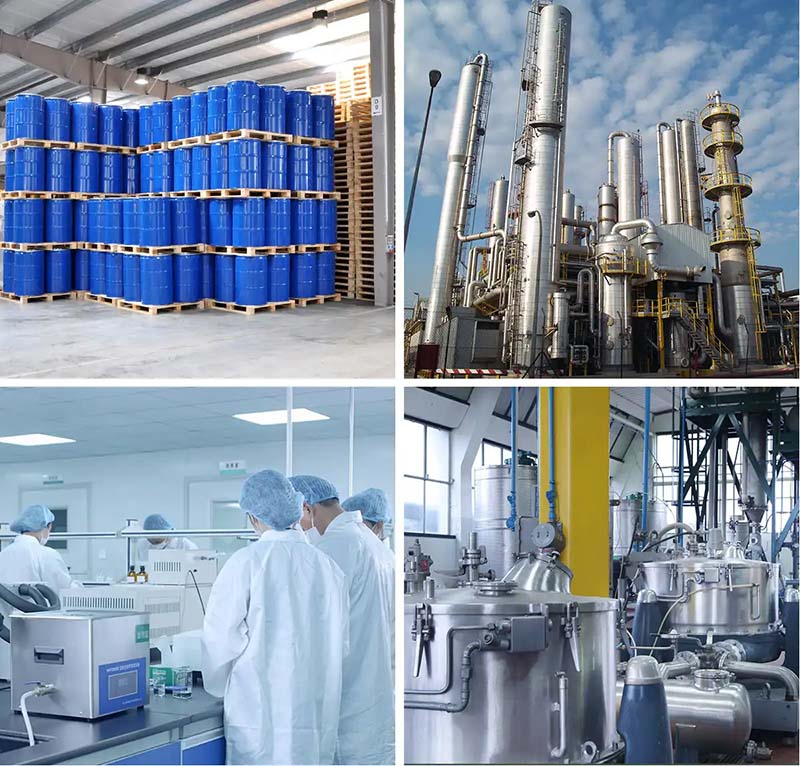
Fact Factory and Equipment Show