Zirconium dioxide #CAS1314-23-4
CAS Number:1314-23-4
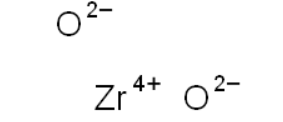
Chemical Formula:ZrO2
Synonyms:
Zirconium(IV) oxide, Spectrographic Grade, 99.96% min (metals basis)
Zirconium(IV) oxide, 99.7% (metals basis excluding Hf), Hf <75ppm;Zirconium(IV) oxide, 99+% (metals basis excluding Hf), HfO2 2%
Zirconium(IV) oxide, 99+% (metals basis excluding Hf), HfO2 2%
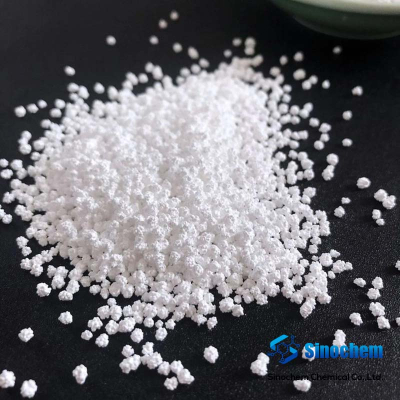
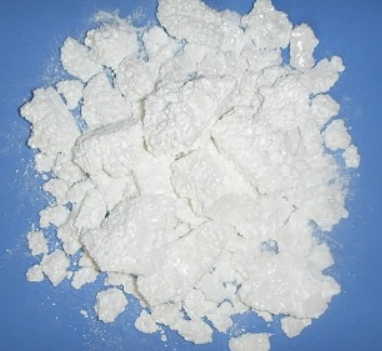
Appearance:White Solid
MOQ (Minimum Order Quantity): 1 FCL (Full Container Load)
Zirconium dioxide #CAS1314-23-4
Zirconium dioxide (chemical formula: ZrO2) is the main oxide of zirconium. Under normal conditions, it is a white, odorless, and tasteless crystal, sparingly soluble in water, hydrochloric acid, and dilute sulfuric acid. It usually contains a small amount of hafnium dioxide. While chemically inert, its high melting point, high resistivity, high refractive index, and low coefficient of thermal expansion make it an important refractory material, ceramic insulating material, and ceramic opacifier. It is also a major raw material for artificial drills. Its band gap is approximately 5-7 eV.
Zirconium dioxide (ZrO2) as an abrasive is used to make grinding wheels and special sandpaper. It is also used in ceramic glazes, in enamels, and for lining furnaces and hightemperature molds. It resists corrosion at high temperatures, making it ideal for crucibles and other types of laboratory ware. ZrO2 is used as a "getter" to remove the last trace of air when producing vacuum tubes.
Zirconium oxide (ZrO2) is the most common compound of zirconium found in nature. It has many uses, including the production of heat-resistant fabrics and high-temperature electrodes and tools, as well as in the treatment of skin diseases. The mineral baddeleyite (known as zirconia or ZrO2) is the natural form of zirconium oxide and is used to produce metallic zirconium by the use of the Kroll process. The Kroll process is used to produce titanium metal as well as zirconium. The metals, in the form of metallic tetrachlorides, are reduced with magnesium metal and then heated to “red-hot” under normal pressure in the presence of a blanket of inert gas such as helium or argon.
Zirconium dioxide (ZrO₂) is a white crystalline solid found in natural zirconium ore. It has a melting point of approximately 2700℃, a boiling point of approximately 4300℃, and a density of 5.89 g/cm³. Zirconium dioxide obtained by calcining zirconium dioxide hydrate or volatile oxyacid zirconium salts is a white powder, insoluble in water. Zirconium dioxide obtained by light calcination is relatively easily dissolved by inorganic acids. Zirconium dioxide obtained by strong heating is only soluble in concentrated sulfuric acid and hydrofluoric acid. Zirconium dioxide that has undergone melt recrystallization reacts only with hydrofluoric acid. Zirconium dioxide is an amphoteric oxide; it can form zirconates by eutectic reaction with alkalis, but zirconates readily hydrolyze in water to form ZrO₂·xH₂O, which precipitates out. Zirconium dioxide reacts with carbon and chlorine at high temperatures, or with carbon tetrachloride, to produce zirconium tetrachloride and zirconium oxychloride, which hydrolyze back to zirconium dioxide. It reacts with carbon in an electric arc to form zirconium carbide. Zirconium dioxide emits a strong white light when heated and was once used as filaments and mesh covers for gasoline lamps. Molten zirconium dioxide is very hard and has a very low coefficient of thermal expansion, so enamel made from it will not crack due to sudden temperature changes. Zirconium dioxide can also be used to make high-temperature crucibles, refractory vessels, and furnace linings. Zirconium dioxide doped with magnesium oxide can be used to manufacture high-temperature glass.
Application of Zirconium dioxide
Zirconium dioxide exists in nature as a rare monoclinic form. High-melting-point cubic zirconia is also a crystalline form of zirconia, occurring in small amounts naturally
as isometric zirconium titanate ((Zr,Ti,Ca)O2), but is mostly synthetically produced as a diamond substitute. Zirconia also has a tetragonal crystalline form.
The transformation temperatures between these three forms are greatly affected by impurities and are therefore difficult to determine precisely,but can be roughly divided into the following stages: monoclinic crystals at room temperature, tetragonal crystals at 1170℃, and cubic crystals above 2370℃.
Zirconium oxide is obtained by calcining zirconia compounds.
| Zirconium dioxide Chemical Properties |
| Melting point | 2700 °C(lit.) |
| Boiling point | 5000 °C(lit.) |
| density | 5.89 g/mL at 25 °C(lit.) |
| Fp | 5000°C |
| storage temp. | Store at room temperature |
| solubility | insoluble |
| form | powder |
| color | White |
| Specific Gravity | 5.89 |
| PH | 4-5 |
| Resistivity | 2.3 × 10*10 (ρ/μΩ.cm) |
| Water Solubility | insoluble |
| Thermal Conductivity | 1.849 W/(m·K) |
| Specific Heat Capacity | Cp(crystal): 0.46 J/(g·K), at 25℃ |
| Crystal Structure | Monoclinic; Tetragonal; Cubic |
| Merck | 14,10180 |
| crystal system | Monoclinic |
| Space group | P21/c |
| Lattice constant | a/nmb/nmc/nmα/oβ/oγ/oV/nm30.515050.520310.531549099.194900.1406 |
| Dielectric constant | 12.5(0.0℃) |
| Exposure limits | ACGIH: TWA 5 mg/m3; STEL 10 mg/m3 NIOSH: IDLH 25 mg/m3; TWA 5 mg/m3; STEL 10 mg/m3 |
| Stability: | Stable. |
| Cosmetics Ingredients Functions | OPACIFYING |
| InChI | 1S/2O.Zr |
| InChIKey | RVTZCBVAJQQJTK-UHFFFAOYSA-N |
| SMILES | O=[Zr]=O |
| CAS DataBase Reference | 1314-23-4(CAS DataBase Reference) |
| NIST Chemistry Reference | Zirconium dioxide(1314-23-4) |
| EPA Substance Registry System | Zirconium oxide (1314-23-4) |
| Safety Information |
| Hazard Codes | Xi |
| Risk Statements | 36/37/38 |
| Safety Statements | 26-36/37-39-36 |
| WGK Germany | nwg |
| TSCA | TSCA listed |
| HS Code | 28256000 |
| Storage Class | 11 - Combustible Solids |
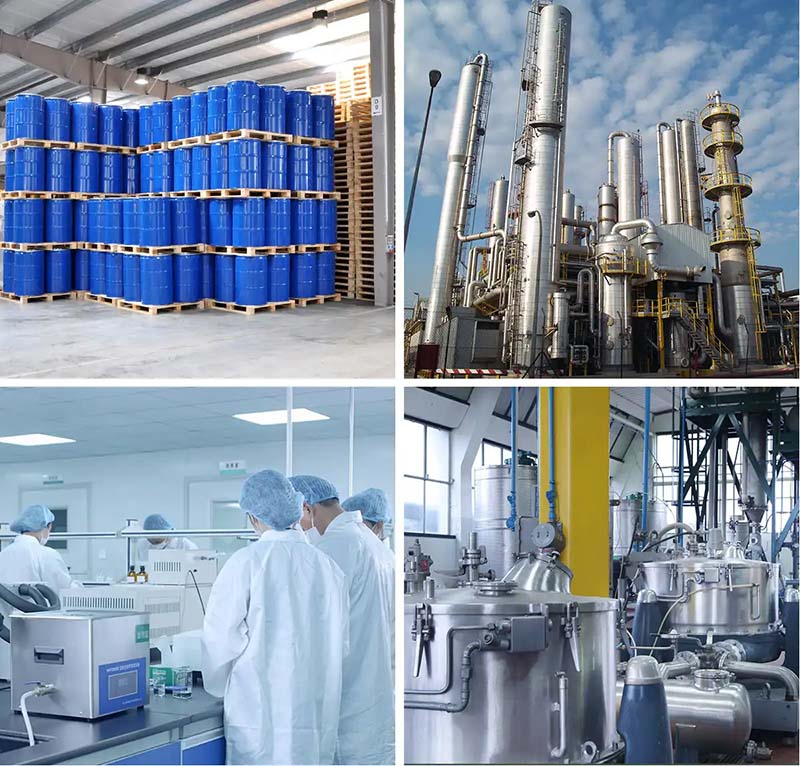
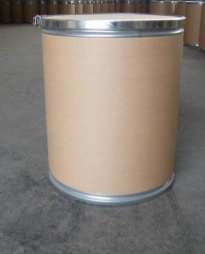
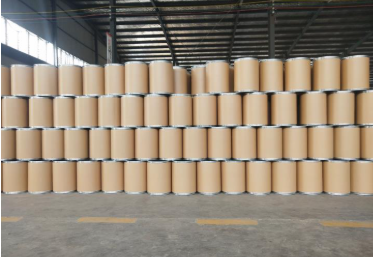
Fact Factory and Equipment Show