Ammonium chloride #CAS12125-02-9
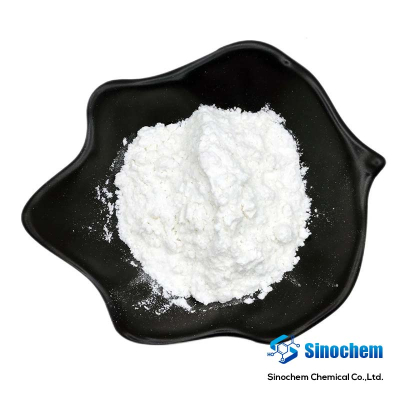
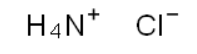
Ammonium chloride (referred to as "chloramine", also known as halogen sand, chemical formula: NH4Cl) is colorless cubic crystal or white crystalline powder. It tastes salty and slightly bitter and belongs to acid salt. Its relative density is 1.527. It is soluble in water, ethanol and liquid ammonia but insoluble in acetone and ether. The aqueous solution is weakly acidic, and its acidity is enhanced while heating. When heated to 100 ° C, it begins to significantly volatilize, and when heated to 337.8 ° C, it will dissociate into ammonia and hydrogen chloride, which, on cold exposure, will re-combine to produce small particles of ammonium chloride and white smoke that is not easy to sink and very difficult to be dissolved in water. When heated to 350 ° C ,it will sublimate and when 520 ° C, it will boil. Its moisture absorption is small, and in the wet rainy weather can absorb moisture to cake. For the ferrous metals and other metals, it is corrosive, which, in particular, has greater corrosion of copper but no corrosion of pig iron. Ammonium chloride can be obtained from the neutralization reaction of ammonia and hydrogen chloride or ammonia and hydrochloric acid (reaction equation: NH3 + HCl → NH4Cl). When heated, it will decompose into hydrogen chloride and ammonia reaction (equation: NH4Cl → NH3 + HCl) and the reaction is only to the right if the container is open system.
Ammonium chloride NH4Cl (also called sal ammoniac) is a colourless crystal or white granular powder that dissolves easily in water.It is odourless and has a salty and bitter taste. It sublimes on heating to form ammonia and hydrogen chloride (gas). It is commonly used in the baked goods industry, as a functional salt and as a dough improver for yeasts.It gives the dough good elasticity,extensibility, and machinability, producing breads with good quality characteristics in terms of volume,colour, aroma, texture,and elasticity.Ammonium chloride is considered safe in small amounts. The Us Food and Drug Administration (FDA) granted ammonium hydroxide status as a GRAS, or Generally Recognized as Safe, substance in 1974 and it is also recognised as a food additive in the EU.
Application of Ammonium chloride
Ammonium chloride (NH4Cl) is an ammonium salt of hydrochloric acid. It appears as colorless cubic crystals or white crystalline powder, odorless, Fwith a salty, cool, and slightly bitter taste, and is hygroscopic.
Ammonium chloride is readily soluble in water and liquid ammonia, and slightly soluble in alcohol; however, it is insoluble in acetone and ether. Its aqueous solution is weakly acidic, and the acidity increases with heating. Powdered ammonium chloride is highly hygroscopic, with a hygroscopic point generally around 76%. When the relative humidity in the air exceeds this point, ammonium chloride absorbs moisture and easily clumps. It begins to volatilize at 100℃ and sublimates and dissociates into ammonia and hydrogen chloride gas at 337.8℃. Upon cooling, these gases recombine to form a white, smoky ammonium chloride that is difficult to settle and is extremely difficult to dissolve in water Due to the coordination properties of ammonium ions, ammonium chloride solutions are corrosive to metals, especially copper. As a traditional Chinese medicine, sal ammoniac is mainly composed of ammonium chloride gas that has been condensed from volcanic eruptions.
| Ammonium chloride Chemical Properties |
| Melting point | 340 °C (subl.) (lit.) |
| Boiling point | 100 °C750 mm Hg |
| density | 1.52 |
| bulk density | 600-900kg/m3 |
| vapor density | 1.9 (vs air) |
| vapor pressure | 1 mm Hg ( 160.4 °C) |
| refractive index | 1.642 |
| FEMA | 4494 | AMMONIA (ALSO INCLUDES AMMONIUM CHLORIDE) |
| storage temp. | Store at +5°C to +30°C. |
| solubility | H2O: 1 M at 20 °C, clear, colorless |
| pka | 9.25[at 20 ℃] |
| form | Solid |
| Specific Gravity | 1.53 |
| color | White |
| PH | 4.7 (200g/l, H2O, 25℃)(External MSDS) |
| Odor | odorless |
| Odor Type | ammoniacal |
| Water Solubility | soluble |
| Thermal Conductivity | 2.51 W/(m·K) |
| Specific Heat Capacity | Cp(crystal): 1.57 J/(g·K), at 25℃ |
| λmax | λ: 260 nm Amax: ≤0.021 λ: 280 nm Amax: ≤0.019 |
| Sensitive | Hygroscopic |
| Merck | 14,509 |
| BRN | 4371014 |
| Dielectric constant | 7(0.0℃) |
| Exposure limits | PC-TWA:10 mg/m3; PC-STEL:20 mg/m3 |
| Stability: | Stable. Incompatible with strong acids, strong bases. |
| Cosmetics Ingredients Functions | BUFFERING VISCOSITY CONTROLLING FRAGRANCE |
| InChI | 1S/ClH.H3N/h1H;1H3 |
| InChIKey | NLXLAEXVIDQMFP-UHFFFAOYSA-N |
| SMILES | N.Cl |
| CAS DataBase Reference | 12125-02-9(CAS DataBase Reference) |
| NIST Chemistry Reference | Ammonium chloride(12125-02-9) |
| EPA Substance Registry System | Ammonium chloride (12125-02-9) |
| Safety Information |
| Hazard Codes | Xn |
| Risk Statements | 22-36-41-37/38 |
| Safety Statements | 22-36-26 |
| RIDADR | UN 3077 9 / PGIII |
| OEB | B |
| OEL | TWA: 10 mg/m3, STEL: 20 mg/m3 |
| WGK Germany | 1 |
| RTECS | BP4550000 |
| Autoignition Temperature | >400 °C |
| TSCA | TSCA listed |
| HazardClass | 9 |
| PackingGroup | III |
| HS Code | 28271000 |
| Storage Class | 13 - Non Combustible Solids |
| Hazard Classifications | Acute Tox. 4 Oral Eye Irrit. 2 |
| Hazardous Substances Data | 12125-02-9(Hazardous Substances Data) |
| Toxicity | LD50 in rats (mg/kg): 30 i.m. (Boyd, Seymour); LD50 in rats (mg/kg): 1650 orally (Smeets) |
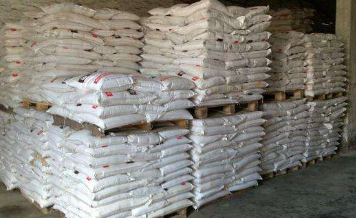
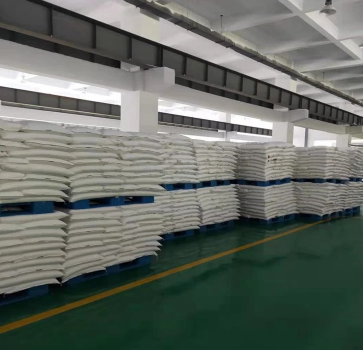
Fact Factory and Equipment Show