Adipic acid #CAS124-04-9
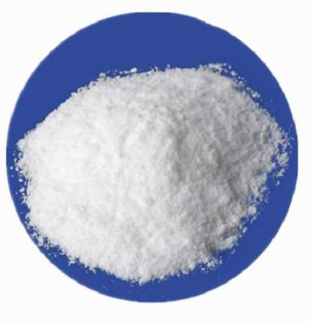
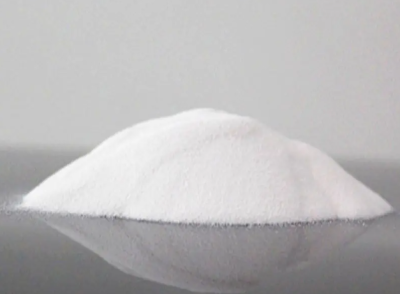
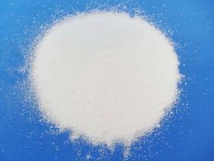
Adipic acid is a crystalline powder with practically no odor. It has the lowest acidity of any of the acids commonly used in foods and has excellent buffering capacity in the range of pH 2.5 to 3.0. Like succinic and fumaric acid, adipic acid is practically nonhygroscopic. Its addition to foods imparts a smooth, tart taste. In grape-flavored products, it adds a lingering supplementary flavor and gives an excellent set to food powders containing gelatin. As a result, adipic acid has found a wide number of uses as an accidulant in dry powdered food mixtures, especially in those products having delicate flavors and where addition of tang to the flavor is undesirable.
Its aqueous solutions have the lowest acidity of any of the common food acids. For concentrations from 0.5 to 2.4 g/100 mL, the pH of its solution varies less than half a unit. Hence, it can be used as a buffering agent to maintain acidities within the range of 2.5 to 3.0. This is highly desirable in certain foods, yet the pH is low enough to inhibit the browning of most fruits and other foodstuffs.
Adipic acid mainly exhibits the chemical properties of a di-carboxylic acid , with a very weak acidity . It can react with strong bases to form carboxylate salts, and with alcohols and amines to form ester and amide compounds. It can also generate acid halides and acid anhydrides. Adipic acid can be reduced to alcohols and can react with hydrogen peroxide to form peroxo acids. Under light exposure, it can react with chlorine to form a mixture of halogenated acids .
The main industrial production method of adipic acid is the two-step oxidation of cyclohexane, which involves first oxidizing cyclohexane to a mixture of cyclohexanone and cyclohexanol (referred to as K-A oil), and then oxidizing the K-A oil to produce adipic acid. Adipic acid plays an important role in organic synthesis, plasticizers, and lubricants manufacturing. For example, it can be used to prepare adipic anhydride, which can be further converted into adipic acid, and together with adipic acid, adipic acid is used to produce polyamide 66. Adipic acid can also be hydrogenated to produce adipic acid glycol and further be used to produce polyurethane foam plastics .
The adipic acid powder can form an explosive mixture with air. When the concentration reaches a certain level, it will explode upon encountering a spark. It decomposes under high heat and releases irritating smoke . Adipic acid is slightly toxic and has a stimulating effect on the eyes, skin mucosa, and upper respiratory tract .
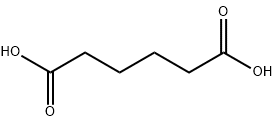
Adipic acid is the organic compound with the formula (CH2)4(COOH)2. From the industrial perspective, it is the most important dicarboxylic acid: About 2.5 billion kilograms of this white crystalline powder are produced annually, mainly as a precursor for the production of nylon. Adipic acid otherwise rarely occurs in nature.
Adipic acid is a straight-chain dicarboxylic acid that exists as a white crystalline compound at standard temperature and pressure. Adipic acid is one of the most important industrial chemicals and typically ranks in the top 10 in terms of volume used annually by the chemical industry.
Application of Adipic acid
Adipic acid’s main use is in the production of 6,6 nylon. It is also used in resins, plasticizers, lubricants, polyurethanes, and food additives.
Adipic Acid is an acidulant and flavoring agent. it is characterized as stable, nonhygroscopic, and slightly soluble, with a water solubility of 1.9 g/100 ml at 20°c. it has a ph of 2.86 at 0.6% usage level at 25°c. it is used in powdered drinks, beverages, gelatin desserts, loz- enges, and canned vegetables. it is also used as a leavening acidulant in baking powder. it can be used as a buffering agent to maintain acidities within a range of ph 2.5–3.0. it is occasionally used in edi- ble oils to prevent rancidity.
Adipic Acid is an acidulant and flavoring agent. it is characterized as stable, nonhygroscopic, and slightly soluble, with a water solubility of 1.9 g/100 ml at 20°c. it has a ph of 2.86 at 0.6% usage level at 25°c. it is used in powdered drinks, beverages, gelatin desserts, loz- enges, and canned vegetables. it is also used as a leavening acidulant in baking powder. it can be used as a buffering agent to maintain acidities within a range of ph 2.5–3.0. it is occasionally used in edi- ble oils to prevent rancidity.
| Adipic acid Chemical Properties |
| Melting point | 151-154 °C(lit.) |
| Boiling point | 265 °C100 mm Hg(lit.) |
| density | 1,36 g/cm3 |
| bulk density | 700kg/m3 |
| vapor density | 5 (vs air) |
| vapor pressure | 1 mm Hg ( 159.5 °C) |
| FEMA | 2011 | ADIPIC ACID |
| refractive index | 1.4880 |
| Fp | 385 °F |
| storage temp. | Store below +30°C. |
| solubility | methanol: 0.1 g/mL, clear, colorless |
| pka | 4.43(at 25℃) |
| form | Solid |
| color | White |
| PH | 3.74(1 mM solution);3.22(10 mM solution);2.71(100 mM solution); |
| Odor | wh. monoclinic prisms, pract. odorless |
| biological source | synthetic |
| Water Solubility | 1.44 g/100 mL (15 ºC) |
| Merck | 14,162 |
| JECFA Number | 623 |
| BRN | 1209788 |
| Henry's Law Constant | 6.6×10⁷ mol/(m3Pa) at 25℃, Burkholder et al. (2019) |
| Dielectric constant | 1.8(Ambient) |
| Stability: | Stable. Substances to be avoided include ammonia, strong oxidizing agents. |
| Major Application | flavors and fragrances |
| Cosmetics Ingredients Functions | FRAGRANCE BUFFERING |
| Cosmetic Ingredient Review (CIR) | Adipic acid (124-04-9) |
| InChI | 1S/C6H10O4/c7-5(8)3-1-2-4-6(9)10/h1-4H2,(H,7,8)(H,9,10) |
| InChIKey | WNLRTRBMVRJNCN-UHFFFAOYSA-N |
| SMILES | OC(=O)CCCCC(O)=O |
| LogP | 0.09 at 25℃ |
| CAS DataBase Reference | 124-04-9(CAS DataBase Reference) |
| NIST Chemistry Reference | Hexanedioic acid(124-04-9) |
| EPA Substance Registry System | Adipic acid (124-04-9) |
| Safety Information |
| Hazard Codes | Xi |
| Risk Statements | 36-41 |
| Safety Statements | 26-39-24/25 |
| RIDADR | UN3077 |
| WGK Germany | 1 |
| RTECS | AU8400000 |
| Autoignition Temperature | 788 °F |
| TSCA | TSCA listed |
| HazardClass | 9 |
| HS Code | 29171210 |
| Storage Class | 11 - Combustible Solids |
| Hazard Classifications | Eye Dam. 1 |
| Hazardous Substances Data | 124-04-9(Hazardous Substances Data) |
| Toxicity | LD50 orally in Rabbit: 5700 mg/kg LD50 dermal Rabbit > 7940 mg/kg |
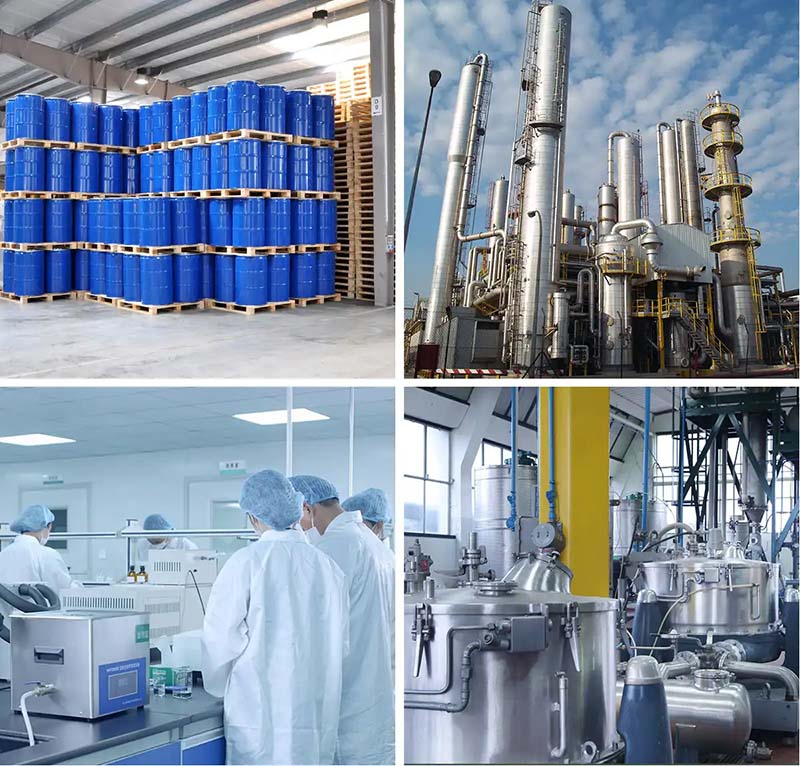
Fact Factory and Equipment Show