Titanium tetraisopropanolate #CAS546-68-9
Titanium tetraisopropanolate #CAS546-68-9
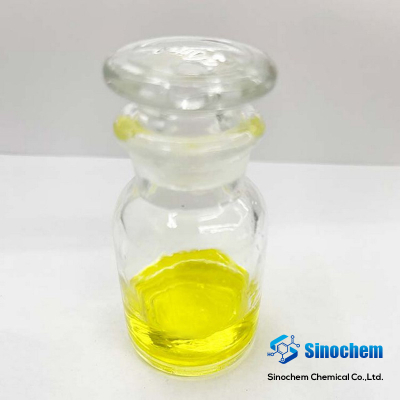
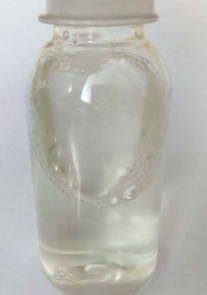
Tetraisopropyl titanate appears as a water-white to pale-yellow liquid with an odor like isopropyl alcohol. About the same density as water. Vapors heavier than air.
Highly flammable. Fumes in air. Soluble in water. Decomposes rapidly in water to form flammable isopropyl alcohol.
Metal alkyls, such as TETRAISOPROPYL TITANATE, are reducing agents and react rapidly and dangerously with oxygen and with other oxidizing agents, even weak ones. Thus, they are likely to ignite on contact with alcohols.
It can rapidly undergo coordination or ligand exchange reactions with ligands containing electron-donating groups such as hydroxyl, carboxyl, and amino groups. The most significant chemical characteristic of this compound is its high susceptibility to hydrolysis. When exposed to a small amount of moisture in the air, it will instantly undergo irreversible nucleophilic attack, by removing isopropanol and simultaneously constructing a three-dimensional "titanium-oxygen-titanium" cross-linking network, ultimately converting quantitatively into titanium dioxide solid. Therefore, in organic reactions, it is an excellent in-situ high-efficiency dehydration agent and condensation promoter. In organic synthesis, it is widely used as an indispensable co-catalyst and auxiliary reagent, being extensively employed in the classic Sharpless asymmetric epoxidation reaction to precisely construct chiral transition states. At the same time, it is also an excellent homogeneous catalyst for tranesterification, esterification, and polyurethane/polyester resin synthesis. Moreover, due to its extremely fast hydrolysis rate and flammability, it must be drawn from a sealed syringe under strict anhydrous and airtight conditions, filled with inert gases (high-purity nitrogen or argon), and stored away from open flames and strong oxidants. It is a highly reactive high-valent metal alcohol salt and coordination catalyst that possesses both strong Lewis acidity and extreme water-oxygen sensitivity.
Application Of Titanium tetraisopropanolate
Titanium(IV) isopropoxide is used as a precursor for the preparation of titanium and barium-strontium-titanate thin films. It is useful to make porous titanosilicates and potential ion-exchange materials for cleanup of radioactive wastes. It is an active component of Sharpless epoxidation as well as involved in the synthesis of chiral epoxides. In Kulinkovich reaction, it is involved as a catalyst in the preparation of cyclopropanes.
Catalyst especially for asymmetric induction in organic syntheses; in preparation of nanosized TiO2. Complexing agent in sol-gel process.
It is used as an efficient catalyst for tranesterification and polymerization reactions of polymer materials, a surface coating and cross-linking modifier, as well as a core precursor for advanced nanomaterials manufacturing. In the plastic and synthetic resin industry, it is a key tranesterification and condensation catalyst for manufacturing polyesters (such as PET, PBT) and polyurethanes, which can significantly increase the reaction rate and reduce side reactions, and is used as a highly active catalyst in the production of ester plasticizers and special coatings; at the same time, by taking advantage of its extreme water-oxygen sensitivity, it is widely used for thermal decomposition coating treatment on the surfaces of industrial glass, metals, photovoltaic silicon wafers, etc., generating a thin ultra-thin titanium dioxide film through in-situ hydrolysis with extremely strong adhesion, which is used as an anti-reflective layer, anti-fog and anti-scratch coating, and bonding promoter; in the manufacturing of rubber, ink and adhesives, it is used as a cross-linking agent, which can quickly cross-link with polymers containing hydroxyl or carboxyl groups to enhance the heat resistance and mechanical strength of the material. In addition, it is also an indispensable basic starting material for the industrial sol-gel method (Sol-Gel) for preparing high-purity nanoscale titanium dioxide powder, photocatalytic materials and semiconductor films.
| Titanium tetraisopropanolate Chemical Properties |
| Melting point | 14-17 °C(lit.) |
| Boiling point | 232 °C(lit.) |
| density | 0.96 g/mL at 20 °C(lit.) |
| vapor pressure | 60.2hPa at 25℃ |
| refractive index | n |
| Fp | 72 °F |
| storage temp. | Flammables area |
| solubility | Soluble in anhydrous ethanol, ether, benzene and chloroform. |
| form | Liquid |
| color | Colorless to pale yellow |
| Specific Gravity | 0.955 |
| Water Solubility | HYDROLYSIS |
| FreezingPoint | 14.8℃ |
| Sensitive | Moisture Sensitive |
| Hydrolytic Sensitivity | 7: reacts slowly with moisture/water |
| Merck | 14,9480 |
| BRN | 3679474 |
| Stability: | Stable, but decomposes in the presence of moisture. Incompatible with aqueous solutions, strong acids, strong oxidizing agents. Flammable. |
| InChI | 1S/4C3H7O.Ti/c4*1-3(2)4;/h4*3H,1-2H3;/q4*-1;+4 |
| InChIKey | VXUYXOFXAQZZMF-UHFFFAOYSA-N |
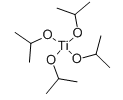
| SMILES | CC(C)O[Ti](OC(C)C)(OC(C)C)OC(C)C |
| LogP | 0.05 |
| CAS DataBase Reference | 546-68-9(CAS DataBase Reference) |
| EPA Substance Registry System | 2-Propanol, titanium(4+) salt (546-68-9) |
| Safety Information |
| Hazard Codes | Xi,F |
| Risk Statements | 10-36-36/37/38-11-67 |
| Safety Statements | 16-26-36/37/39-7/9 |
| RIDADR | UN 2413 3/PG 3 |
| WGK Germany | 2 |
| RTECS | NT8060000 |
| F | 21 |
| TSCA | TSCA listed |
| HazardClass | 3 |
| PackingGroup | III |
| HS Code | 29051900 |
| Storage Class | 3 - Flammable liquids |
| Hazard Classifications | Eye Irrit. 2 Flam. Liq. 3 STOT SE 3 |
| Hazardous Substances Data | 546-68-9(Hazardous Substances Data) |
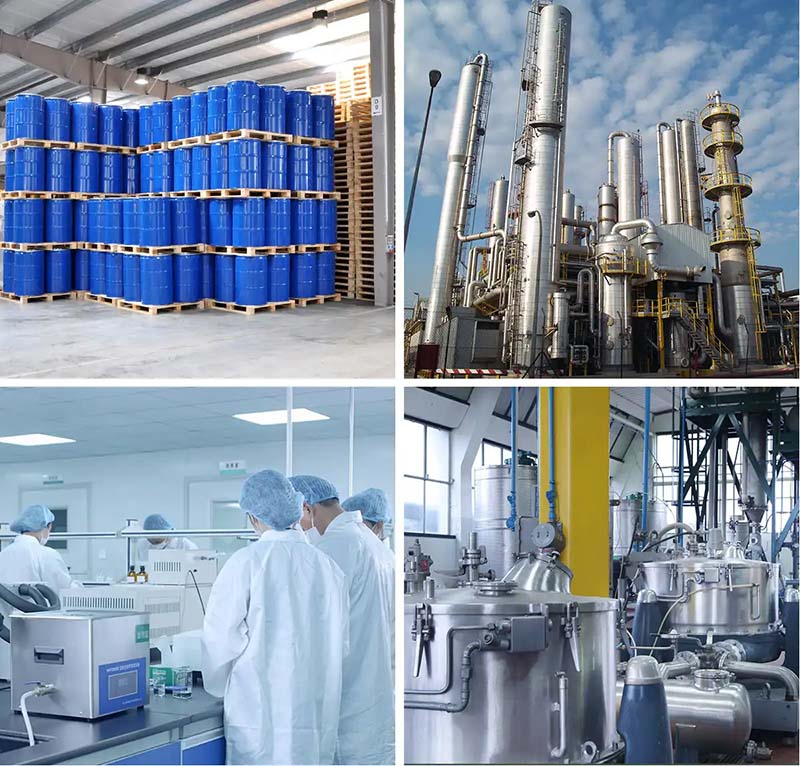
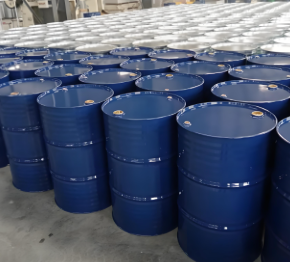
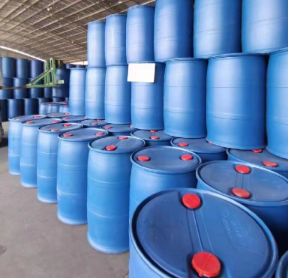
Fact Factory and Equipment Show