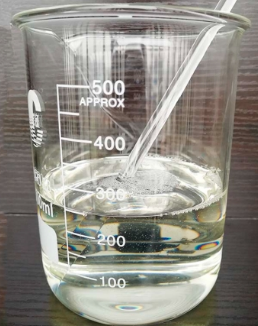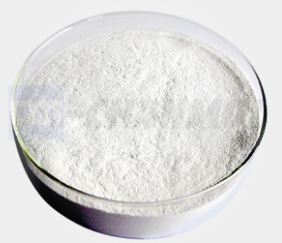
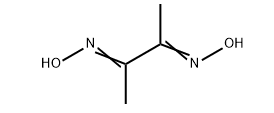
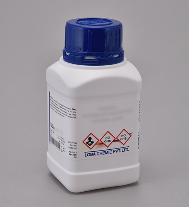
Dimethylglyoxime #CAS95-45-4
Product Details
| Dimethylglyoxime Usage And Synthesis |
| Chemical Properties | Dimethylglyoxime is a white crystalline powder. Soluble in alcohol, ether, acetone and pyridine. Solubility in water 0.5g/l, insoluble in tolerate chloroform, toluene, xylene. It is one of the first selective organic reagents applied in analytical chemistry. It is an extraordinary sensitive and specific reagent for nickel. under appropriate conditions dimethylglyoxime is specific for nickel(II) and palladium(II), but it also forms coloured water-soluble complexes with iron(II), cobalt(II) and copper(II). |
| Uses | Dimethylglyoxime is used as nickel-specific complexing reagent; determination of palladium. |
| Uses | Detection and determination of Ni and its separation from Co and many other metals. Forms a scarlet red ppt with Ni even in dil solutions. Separation of Pd from Sn, Au, Rh, and Ir, also to detect Bi with which it forms a bright yellow color and ppt. |
| Uses | Dimethylglyoxime is specific for nickel(II) ions in ammoniacal solution if alkali tartrate is employed as masking agent to keep in solution the possibly interfering hydrolysing salts. |
| Application | Dimethylglyoxime is a chelate ligand that can be used as an antimicrobial agent. The compound binds to metals, such as iron and copper, which are found in wastewater and industrial effluents. It can also chelate metal ions that are present in the water supply. This property makes it an effective agent for removing heavy metals from water. Dimethylglyoxime has been shown to react with various metal ions by means of Langmuir adsorption isotherms and fluorescence spectrometry. When this reaction occurs, the compound forms a complex with the metal ion. The model system is a solution of it with sodium citrate and tetramethylammonium chloride (TMA). The reaction mechanism involves protonation and deprotonation of the ligand, which occurs when the pH is changed from acidic to basic conditions. |
| Reactions | Nickel cation reacts with dimethylglyoxime forms an insoluble red precipitate of nickel dimethylglyoxime. Ni2+ + 2C4H8N2O2 → Ni(C4H7N2O2)2↓(red precipitate) + 2H+ Dimethylglyoxime reacts with ferrous sulphate and ammonium hydroxide forms a complex compound of iron and ammonium sulphate and water is formed. FeSO4 + 2NH4OH + 2C4H8N2O2 → Fe(C4H7N2O2)2 + (NH4)2SO4 + 2H2O |
| General Description | Dimethylglyoxime (DMG) is a complexing ligand. Dimethylglyoxime forms a number of mixed ligand complexes with N-acetylglycine with metals such as VO(IV), Ni(II), Zn(II), Pd(II), Cd(II) and Pb(II). It is a useful reagent for the spectrophotometric determination of Co(II), Fe(II), Ni(II), Pd(II) and Re(VII). |
| Safety Profile | Poison by ingestion. Mutation data reported. When heated to decomposition it emits toxic fumes of NOx. |
| Purification Methods | Crystallise it from EtOH (10mL/g) or aqueous EtOH. [Beilstein 1 III 3105.] TOXIC. |
| Dimethylglyoxime Chemical Properties |
| Melting point | 240-241 °C(lit.) |
| Boiling point | 217.15°C (rough estimate) |
| density | 1.2829 (rough estimate) |
| bulk density | 620kg/m3 |
| refractive index | 1.4880 (estimate) |
| storage temp. | Sealed in dry,Room Temperature |
| solubility | Soluble in alcohol, acetone, ether |
| pka | pK1:10.60 (25°C) |
| form | Powder |
| color | White to off-white |
| Odor | Odorless |
| Water Solubility | INSOLUBLE |
| Merck | 14,3246 |
| BRN | 506731 |
| Stability: | Stable. Incompatible with strong oxidizing agents. |
| InChI | 1S/C4H8N2O2/c1-3(5-7)4(2)6-8/h7-8H,1-2H3/b5-3+,6-4+ |
| InChIKey | JGUQDUKBUKFFRO-GGWOSOGESA-N |
| SMILES | CC(=N/O)\C(C)=N\O |
| CAS DataBase Reference | 95-45-4(CAS DataBase Reference) |
| NIST Chemistry Reference | 2,3-Butanedione, dioxime(95-45-4) |
| EPA Substance Registry System | 2,3-Butanedione, dioxime (95-45-4) |
| Safety Information |
| Hazard Codes | Xn,T,F |
| Risk Statements | 22-20/21/22-25-11 |
| Safety Statements | 22-24/25-36-45 |
| RIDADR | UN 2926 6.1(4.1) / PGIII |
| WGK Germany | 3 |
| RTECS | EK2975000 |
| F | 10 |
| Hazard Note | Harmful |
| TSCA | TSCA listed |
| HazardClass | 4.1 |
| PackingGroup | III |
| HS Code | 29280090 |
| Storage Class | 4.1B - Flammable solid hazardous materials |
| Hazard Classifications | Flam. Sol. 2 |
Fact Factory and Equipment Show
Leave your messages