2-Methyl-1-propanol #CAS78-83-1
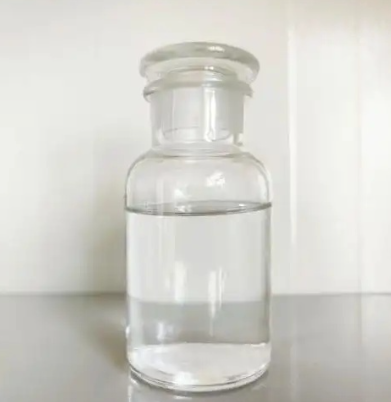
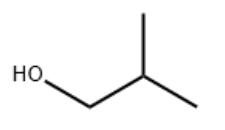
Isobutanol, also known as isopropyl methanol or 2-methylpropanol, has the molecular formula C4H10O and a molecular weight of 74.12. It is a colorless liquid with a characteristic odor and is one of the main components of the aroma of fresh tea leaves, black tea, and green tea. Its boiling point is 107.66℃. Its relative density is 0.8016 (20/4℃). Its refractive index is 1.395 (Chemicalbook 9). Its flash point is 37℃. It is miscible with alcohols and ethers and slightly soluble in water. Its vapor can form an explosive mixture with air, with an explosion limit of 2.4% (by volume). It can form an addition compound with calcium chloride (CaCl2·3C4H10O). It is classified as low toxicity, with an LD50 of 2.46 g/kg (rat, oral).
Preparation methods: It is obtained by further distillation of the byproducts of methanol synthesis, or by fractionation from crude fusel oil. Industrially, cobalt carbonyl is used as a catalyst to react a mixture of propylene, carbon monoxide, and hydrogen at 110–140 °C and 2.0265 × 10⁷–3.03 × 10⁷ Pa to produce butyraldehyde and isobutyraldehyde. These are then catalytically hydrogenated and separated to obtain isobutanol. Uses: It is used in the manufacture of petroleum additives, antioxidants, plasticizers, synthetic rubber, artificial musk, fruit oils, and synthetic pharmaceuticals. It is also used as a solvent and chemical reagent.
Application of 2-Methyl-1-propanol
(1) For analysis reagents, chromatography reagents, solvents and extraction agent.
(2) As raw materials for the organic synthesis, and also act as a superior solvent.
(3) Isobutanol is raw materials for organic synthesis. It mainly used in the synthesis of isobutyronitrile, an intermediate for diazinon.
(4) As raw materials of organic synthesis, isobutanol is used in the manufacture of petroleum additives, antioxidants, 2, 6-butylated hydroxytoluene, isobutyl acetate (paint solvents), plasticizers, synthetic rubber, artificial musk, fruit oil and synthetic drugs. It can also be used to purify strontium, barium and lithium salts and other chemical reagents and used as a superior solvent.
(5) Extraction solvent. Food flavors listed in GB 2760-96.
Isobutanol is commonly used to produce isobutyl acetate for lacquers, isobutylphthalate for plasticizers, and as a solvent for plastics, textiles, oils, and perfumes. It is also used in the production of fruit flavoring esters and as a solvent in paint and varnish removers.
Isobutyl Alcohol is a reagent used in organic reactions. It is used in the synthesis of new fluorinating reagents. It is also used in the lipase-catalyzed production of biodiesel as an energy source.
| 2-Methyl-1-propanol Chemical Properties |
| Melting point | -108 °C (lit.) |
| Boiling point | 108 °C (lit.) 108 °C |
| density | 0.803 g/mL at 25 °C (lit.) |
| vapor density | 2.55 (vs air) |
| vapor pressure | 8 mm Hg ( 20 °C) |
| refractive index | n |
| FEMA | 2179 | ISOBUTYL ALCOHOL |
| Fp | 82 °F |
| storage temp. | Store at +5°C to +30°C. |
| solubility | water: miscible70g/L at 20°C; miscible with alcohol and oils. |
| form | Solid |
| pka | >14 (Schwarzenbach et al., 1993) |
| color | APHA: ≤10 |
| Relative polarity | 0.552 |
| PH | 7 (80g/l, H2O, 20℃) |
| Odor | Slightly suffocating; nonresidual alcoholi |
| Odor Threshold | 0.011ppm |
| Odor Type | ethereal |
| biological source | synthetic |
| explosive limit | 1.5-12%(V) |
| Water Solubility | 95 g/L (20 ºC) |
| Thermal Conductivity | 0.134 W/(m·K) |
| λmax | λ: 260 nm Amax: 0.10 λ: 280 nm Amax: 0.06 |
| Merck | 14,5131 |
| JECFA Number | 251 |
| BRN | 1730878 |
| Henry's Law Constant | 20.0 at 30.00 °C, 72.2 at 50.00 °C, 133 at 60.00 °C, 216 at 70.00 °C, 330 at 80.00 °C (headspace- GC, Hovorka et al., 2002) |
| Exposure limits | TWA 300 mg/m3 (100 ppm) NIOSH, 150 mg/m3 (50 ppm) (ACGIH); IDLH 8000 ppm. |
| Dielectric constant | 31.7(-80℃) |
| Stability: | Stable. Flammable. Incompatible with strong oxidizing agents, aluminium. |
| Cosmetics Ingredients Functions | PERFUMING |
| InChI | 1S/C4H10O/c1-4(2)3-5/h4-5H,3H2,1-2H3 |
| InChIKey | ZXEKIIBDNHEJCQ-UHFFFAOYSA-N |
| SMILES | CC(C)CO |
| LogP | 1 at 25℃ |
| Surface tension | 22.92mN/m at 293.15K |
| CAS DataBase Reference | 78-83-1(CAS DataBase Reference) |
| NIST Chemistry Reference | 1-Propanol, 2-methyl-(78-83-1) |
| EPA Substance Registry System | Isobutanol (78-83-1) |
| Safety Information |
| Hazard Codes | Xi |
| Risk Statements | 10-37/38-41-67 |
| Safety Statements | 13-26-37/39-46-7/9 |
| OEB | A |
| OEL | TWA: 50 ppm (150 mg/m3) |
| RIDADR | UN 1212 |
| WGK Germany | 1 |
| RTECS | NP9625000 |
| Autoignition Temperature | 801 °F |
| TSCA | TSCA listed |
| HazardClass | 3 |
| PackingGroup | III |
| HS Code | 29051990 |
| Storage Class | 3 - Flammable liquids |
| Hazard Classifications | Eye Dam. 1 Flam. Liq. 3 Skin Irrit. 2 STOT SE 3 |
| Hazardous Substances Data | 78-83-1(Hazardous Substances Data) |
| Toxicity | LD50 orally in rats: 2.46 g/kg (Smyth) |
| IDLA | 1,600 ppm |
Fact Factory and Equipment Show