Lithium hydroxide monohydrate #CAS1310-66-3
Lithium hydroxide monohydrate #CAS1310-66-3
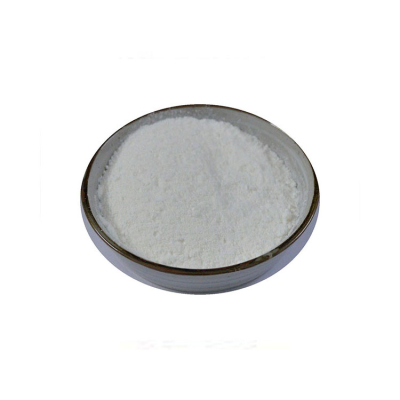
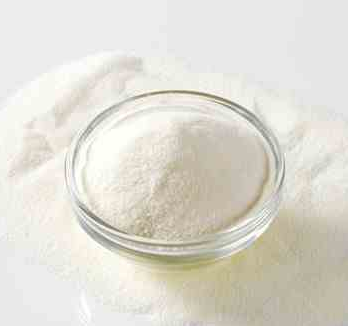
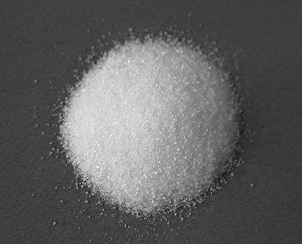
Both lithium hydroxide and lithium hydroxide monohydrate are colorless crystalline solids at ordinary temperatures. Both are strong bases and should be handled with caution in order to avoid caustic burns. Evaporation of a solution of lithium hydroxide under normal conditions of temperature and pressure results in precipitation of the monohydrate which may be readily dehydrated by heating in a vacuum or under cover of an inert gas.
Lithium hydroxide absorbs water from the air and forms lithium hydroxide monohydrate except under dry atmospheric conditions. Two equilibrium vapor pressures for the conversion of lithium hydroxide monohydrate to anhydrous lithium hydroxide are 4 torr at 25°C and 12 torr at 40°C.
Both anhydrous and lithium hydroxide monohydrate absorb carbon dioxide from the air to form lithium carbonate.
The solubility of lithium hydroxide in water is lower than that of the other alkali metal hydroxides. However, lithium hydroxide is a strong base and reacts completely with both weak and strong acids in aqueous solutions
The lithium hydroxide was used as the carbon dioxide absorbents in the submarine and the inflatable source of army ballon at 1944.
At 1950, 6Li,the isotope of Li, is used as a raw material for producting the thermonuclear weapons like hydrogen bomb. From that time the United States atomic energy industry began to use a large quantity of lithium hydroxide which lead to amazing development of the lithium industry.
Lithium and its compounds are widely used in the military industry and civilian industry due to its unique chemical and physical properties. Aluminum industry is the largest client of lithium. Adding lithium carbonate to the aluminium electrolysis can reduce the electrolyte’s melting point and increase the current efficiency of aluminum electrolyser resulting in the improment of the aluminum production by about 10% and the power consumption reduced by 8 to 14%; in addition, it can also inhibit the discharge of the harmful fluorine by 22% to 38%. In the United States and Europe, the amount of lithium carbonate consumed by the aluminum industry can take 40% of the total amount of lithium.
Application of Lithium hydroxide monohydrate
A principal use of lithium hydroxide monohydrate is as a starting material for numerous other lithium chemicals such as lithium fluoride, lithium chloride, lithium bromide and lithium iodide. Since these materials are prepared in aqueous solutions, there is no particular advantage in using the anhydrous hydroxide for the preparation. Other salts of weak and strong acids may be prepared using lithium hydroxide as a starting material. The preparation of anhydrous lithium hydroxide has already been described.
A major use of lithium hydroxide monohydrate is in the preparation of lithium salts of fatty acids (lithium soaps) which, with mineral oil and other additives, are used to make lithium-based greases3 6 . Such greases are superior to those based on other metal ions. Lithium greases are good lubricants at high temperatures and are particularly good at low temperatures. They also resist the deteriorating effect of water satisfactorily due to the low water solubility of lithium soaps.
Both lithium hydroxide and lithium hydroxide monohydrate absorb carbon dioxide readily. Anhydrous lithium hydroxide is used effectively as a carbon dioxide absorbent in life support systems in underwater and aerospace applications.
Lithium hydroxide monohydrate is used for the production of lithium greases, lithium soaps, lithium stearate and lithium salts. It finds application as a carbon dioxide adsorbent in breathing gas purification systems for spacecrafts, submarines and rebreathers; as a storage-battery electrolyte; as a heat transfer medium and as a catalyst for polymerization reaction. It is also used in ceramics and some portland cement formulations.
| Lithium hydroxide monohydrate Chemical Properties |
| Melting point | 462 °C |
| Boiling point | 920 °C |
| density | 1.51 |
| storage temp. | Store at room temperature. |
| solubility | H2O: 1 M at 20 °C, clear, colorless |
| form | Solid |
| color | White to cream or yellow |
| Specific Gravity | 1.51 |
| Odor | Odorless |
| PH Range | 14 |
| PH | ~12 (25℃, 1M in H2O) |
| Water Solubility | 109 g/L (20 ºC) |
| Sensitive | Air Sensitive & Hygroscopic |
| λmax | λ: 260 nm Amax: 0.02 λ: 280 nm Amax: 0.02 |
| Merck | 14,5534 |
| Stability: | Stable. Incompatible with moisture. strong acids, carbon dioxide. Absorbs carbon dioxide from the air. |
| Major Application | battery precursors catalysts material synthesis precursor |
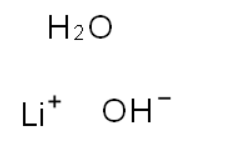
| InChI | 1S/Li.2H2O/h;2*1H2/q+1;;/p-1 |
| InChIKey | WMFOQBRAJBCJND-UHFFFAOYSA-M |
| SMILES | [Li+].O.[OH-] |
| CAS DataBase Reference | 1310-66-3(CAS DataBase Reference) |
| NIST Chemistry Reference | LiOH(1310-66-3) |
| EPA Substance Registry System | Lithium hydroxide (Li(OH)), monohydrate (1310-66-3) |
| Safety Information |
| Hazard Codes | C |
| Risk Statements | 22-35-20/22-34-52 |
| Safety Statements | 26-36/37/39-45-22-27 |
| RIDADR | UN 2680 8/PG 2 |
| WGK Germany | 2 |
| RTECS | OJ6307080 |
| F | 3-9-34 |
| TSCA | Yes |
| HazardClass | 8 |
| PackingGroup | II |
| HS Code | 28252000 |
| Storage Class | 8A - Combustible corrosive hazardous materials |
| Hazard Classifications | Acute Tox. 4 Oral Eye Dam. 1 Skin Corr. 1B |
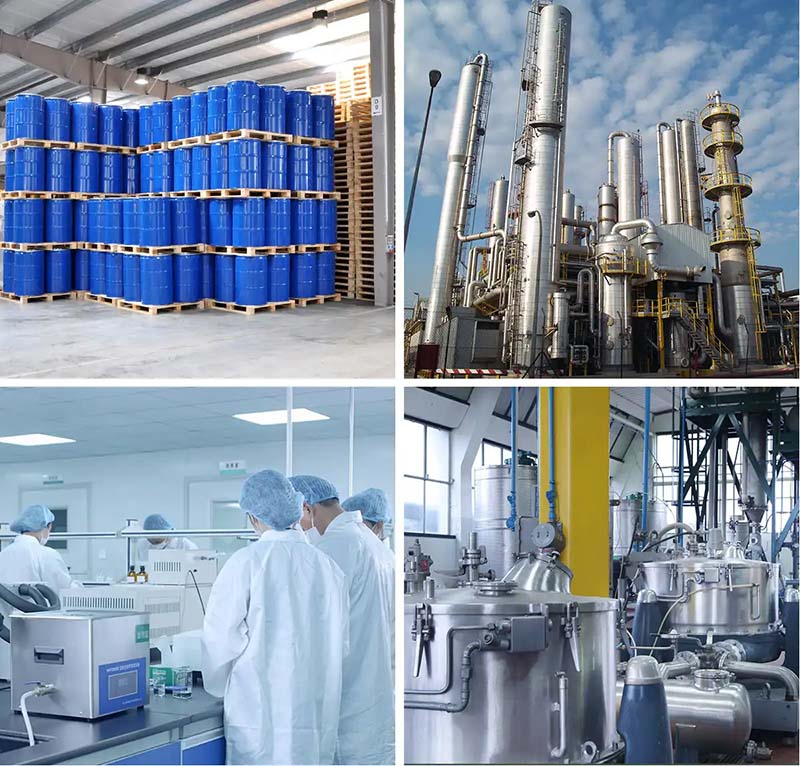
Fact Factory and Equipment Show