Isobutyraldehyde #78-84-2
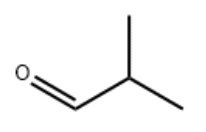
Isobutyraldehyde, IUPAC system name 2-methylpropionaldehyde, is an aldehyde and an organic compound with the molecular formula (CH3)2CHCHO. It is an isomer of n-butyraldehyde (butyraldehyde). It is industrially prepared by a side reaction of propylene hydroformylation. Isobutyraldehyde has an odor similar to wet grains or straw. Although it has alpha hydrogen atoms, it can also undergo the Cannizaro reaction.
Isobutyraldehyde, also known as 2-Methylpropanal, is an organic compound belonging to the family of aldehydes, which can be found in alcoholic beverages, tea, breads, cooked pork, spearmint oil as well as fresh fruits, such as apple, banana, cherry, etc. It is manufactured by the hydroformylation of propene, usually obtained as a side-product. It can be applied as a source for producing other chemicals, including isobutyl alcohol, neopentyl glycol as well as isobutanoic acid production and used to produce amino acids such as valine and leucine. Besides, isobutyraldehyde commonly serves as an intermediate in the field of chemical industry for manufacture of pharmaceuticals (such as Vitamin B5), crop protection products, pesticides, synthetic resins, antioxidants, vulcanisation accelerators, textile auxiliaries, perfumery and flavors.
Isobutyraldehyde has a characteristic sharp, pungent odor. Industrially, it is mainly hydrogenated to produce isobutanol. The addition reaction of isobutyraldehyde and formaldehyde produces hydroxytrimethylacetaldehyde, which is then hydrogenated to form neopentyl glycol, which is used as a raw material for varnishes, resins, fibers and lubricants.
Application of Isobutyraldehyde
Isobutyraldehyde is used in the synthesisof cellulose esters, resins, and plasticizers;in the preparation of pantothenic acid andvaline; and in flavors.
In the synthesis of pantothenic acid, valine, leucine, cellulose esters, perfumes, flavors, plasticizers, resins, gasoline additives.
Isobutyraldehyde is used as an intermediate in the preparation of isobutanol, methacrolein, hydroxypivaldehyde and neopentyl glycol. It is actively involved in the Cannizaro reaction. It is also used as an intermediate to prepare pharmaceuticals, agrochemicals, vitamins, antioxidants, rubber accelerators, textile auxiliaries, perfumery and flavors.
| Isobutyraldehyde Chemical Properties |
| Melting point | -65 °C (lit.) |
| Boiling point | 63 °C (lit.) |
| density | 0.79 g/mL at 25 °C (lit.) |
| vapor density | 2.5 (vs air) |
| vapor pressure | 66 mm Hg ( 4.4 °C) |
| refractive index | n |
| FEMA | 2220 | ISOBUTYRALDEHYDE |
| Fp | −40 °F |
| storage temp. | Store below +30°C. |
| solubility | water: soluble11g/100mL at 20°C(lit.) |
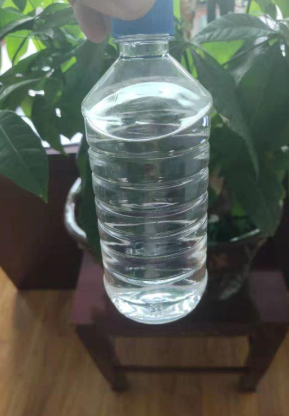
| form | Liquid |
| color | Clear |
| Odor | Pungent. |
| Odor Threshold | 0.00035ppm |
| Odor Type | aldehydic |
| biological source | synthetic |
| explosive limit | 1.6-11.0%(V) |
| Water Solubility | 75 g/L (20 ºC) |
| Sensitive | Air Sensitive |
| Merck | 14,5154 |
| JECFA Number | 252 |
| BRN | 605330 |
| Henry's Law Constant | 5.1×10⁻² mol/(m3Pa) at 25℃, Burkholder et al. (2019) |
| Stability: | Stable. Refrigerate. Highly flammable. Incompatible with strong oxidizing agents, strong bases, strong acids, strong reducing agents. |
| Cosmetics Ingredients Functions | NAIL CONDITIONING PERFUMING |
| InChI | 1S/C4H8O/c1-4(2)3-5/h3-4H,1-2H3 |
| InChIKey | AMIMRNSIRUDHCM-UHFFFAOYSA-N |
| SMILES | [H]C(=O)C(C)C |
| LogP | 0.77 at 25℃ |
| CAS DataBase Reference | 78-84-2(CAS DataBase Reference) |
| NIST Chemistry Reference | Propanal, 2-methyl-(78-84-2) |
| EPA Substance Registry System | Isobutyraldehyde (78-84-2) |
| Safety Information |
| Hazard Codes | F,Xn,Xi |
| Risk Statements | 11-22-36 |
| Safety Statements | 16-36/37-9-33-29-26 |
| RIDADR | UN 2045 (ISOBUTYRALDEHYDE (ISOBUTYL ALDEHYDE)) |
| WGK Germany | 1 |
| RTECS | NQ4025000 |
| F | 9-13-23 |
| Autoignition Temperature | 384 °F |
| TSCA | TSCA listed |
| HS Code | 2912 19 00 |
| HazardClass | 3 |
| PackingGroup | II |
| Storage Class | 3 - Flammable liquids |
| Hazard Classifications | Eye Irrit. 2 Flam. Liq. 2 |
| Hazardous Substances Data | 78-84-2(Hazardous Substances Data) |
| Toxicity | LD50 orally in rats: 3.7 g/kg (Smyth) |
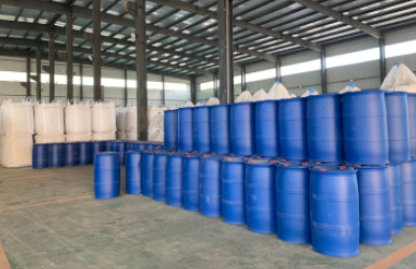
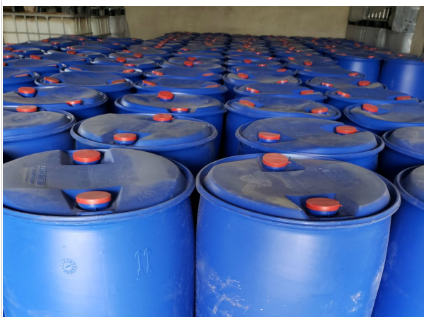
Fact Factory and Equipment Show