Pyridine #CAS110-86-1
CAS Number:110-86-1
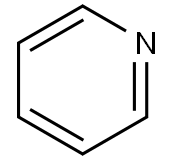
Chemical Formula:C5H5N
Synonyms:
FEMA 2932
FEMA 2966
azabenzene
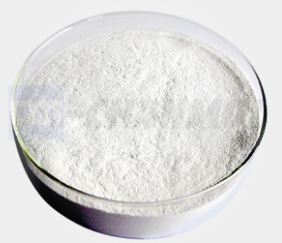
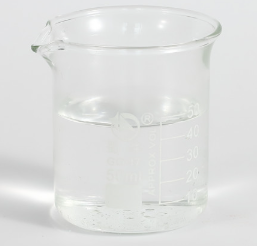
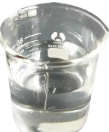
Appearance:colourless flammable liquid
MOQ (Minimum Order Quantity): 1 FCL (Full Container Load)
Pyridine #CAS110-86-1
Pyridine, is a slightly yellow or colorless liquid; hygroscopic; unpleasant odor; burning taste; slightly alkaline in reaction; soluble in water, alcohol, ether, benzene, and fatty oils; specific gravity, 0.978; autoignition temperature, 482 °C. Pyridine, a tertiary amine, is a somewhat stronger base than aniline and readily forms quaternary ammonium salts.Pyridine is a weak base (pKa= 5.25); a 0.2 M solution has a pH of 8.5 . Its carbon atoms are deactivated towards electrophilic substitution. This is especially true in acidic media, where salts form at the nitrogen. It does, however, readily undergo nucleophilic substitution, preferentially at the C-2 and also at the C-4 position. Being a tertiary amine, pyridine reacts with alkylating agents to form quaternary salts. Because of its reduced capacity to donate electrons, it is more resistant to oxidation than benzene. Oxidation with peroxy acids forms pyridine N-oxide which is then capable of undergoing electrophilic substitution . Pyridine reacts violently with a number of compounds, including nitric acid, sulfuric acid, maleic anhydride, perchromate, beta-propiolactone and chlorosulfonic acid. Thermal decomposition can liberate cyanides . Both the pyridinium ion and pyridine itself are readily reduced to the commercially important compound, piperidine.
Application Of Pyridine
Pyridine, as one of the important nitrogen-containing heterocyclic compounds, has been widely applied in fields such as photocatalysis and photoelectronic devices. In medicinal chemistry, pyridine is also commonly used as the parent structure of drugs. Currently, the deuterium substitution reactions of pyridine mainly involve metal catalysts such as Pd, Rh, Ir, Ru, and Ni, where hydrogen is exchanged at the α-position (HIE), while HIE at other positions is rarely involved. Many derivatives of pyridine, some of which are important drugs, some are important components of vitamins or enzymes. For example, the amide of pyridine-3-carboxylic acid (i.e., nicotinamide) forms an important dinucleotide with adenine (see purines), ribose, and phosphate in coenzyme I. The derivative of pyridine, isoniazid, is an oral anti-tuberculosis drug. 2-Methyl-5-ethynylpyridine is an important raw material for synthetic rubber. Besides being used as a solvent, pyridine can also be used as a denaturant, a color-fixing agent, and an initiator for the synthesis of a series of products, including drugs, disinfectants, dyes, food seasonings, adhesives, explosives, etc.It is used as an organic solvent, an analytical reagent, and also in the organic synthesis industry, chromatographic analysis, extraction and separation of pyridine and its homologues as raw materials. It is also the raw material for herbicides, insecticides, medicines, rubber additives, textile additives, and is permitted for use as edible flavoring agents as stipulated in GB2760--1996. It can also be used for moisture determination, as a mutagenic agent for bacterial strains, an alcohol denaturant, a Chemicalbook solvent for acylation reactions, a catalyst, etc. It can be used for the determination and measurement of antimony, arsenic, aluminum, bismuth, cadmium, cerium, chlorates, chromates, cyanates, chromium, cobalt, copper, cyanide, gold, dichromates, halogens, lanthanum, lead, lithium, manganese, mercury, germanium, nickel, perchlorates, per sulfurates, platinum, phosphorus, rhenium, praseodymium, silicon, silver, sulfur, thallium, tellurium, thiocyanates, thorium, thiosulfates, titanium, uranium, vanadium, zinc, and zirconium.
| Pyridine Chemical Properties |
| Melting point | -42 °C (lit.) |
| Boiling point | 115 °C (lit.) |
| density | 0.978 g/mL at 25 °C (lit.) |
| vapor density | 2.72 (vs air) |
| vapor pressure | 23.8 mm Hg ( 25 °C) |
| refractive index | n |
| FEMA | 2966 | PYRIDINE |
| Fp | 68 °F |
| storage temp. | Store at +5°C to +30°C. |
| solubility | H2O: in accordance |
| pka | 5.25(at 25℃) |
| form | Liquid |
| color | colorless |
| Odor | Nauseating odor detectable at 0.23 to 1.9 ppm (mean = 0.66 ppm) |
| Relative polarity | 0.302 |
| PH | 8.81 (H2O, 20℃) |
| explosive limit | 12.4% |
| Odor Threshold | 0.063ppm |
| Odor Type | fishy |
| biological source | synthetic |
| Water Solubility | Miscible |
| FreezingPoint | -42℃ |
| Thermal Conductivity | 0.162 W/(m·K) at 25 ℃ |
| Specific Heat Capacity | Cp(liquid): 1.68 J/(g·K), at 25℃ |
| λmax | λ: 305 nm Amax: 1.00 λ: 315 nm Amax: 0.15 λ: 335 nm Amax: 0.02 λ: 350-400 nm Amax: 0.01 |
| Merck | 14,7970 |
| BRN | 103233 |
| Henry's Law Constant | 18.4 at 30 °C (headspace-GC, Chaintreau et al., 1995) |
| Exposure limits | ACGIH:TLV-TWA 1 ppm (3.1 mg/m3) OSHA:PEL-TWA 5 ppm (15 mg/m3) NIOSH:REL-TWA 5 ppm |
| Dielectric constant | 12.5(20℃) |
| Stability: | Stable. Flammable. Incompatible with strong oxidizing agents, strong acids. |
| InChI | 1S/C5H5N/c1-2-4-6-5-3-1/h1-5H |
| InChIKey | JUJWROOIHBZHMG-UHFFFAOYSA-N |
| SMILES | C1=CN=CC=C1 |
| LogP | 0.64 at 20℃ |
| Surface tension | 38mN/m at 20°C |
| CAS DataBase Reference | 110-86-1(CAS DataBase Reference) |
| NIST Chemistry Reference | Pyridine(110-86-1) |
| IARC | 2B (Vol. 77, 119) 2019 |
| EPA Substance Registry System | Pyridine (110-86-1) |
| Safety Information |
| Hazard Codes | T,N,F,Xn |
| Risk Statements | 11-20/21/22-39/23/24/25-23/24/25-52-36/38 |
| Safety Statements | 36/37/39-38-45-61-28A-26-28-24/25-22-36/37-16-7 |
| OEB | A |
| OEL | TWA: 5 ppm (15 mg/m3) |
| RIDADR | UN 1282 |
| WGK Germany | 2 |
| RTECS | UR8400000 |
| F | 3-10 |
| Autoignition Temperature | 482 °C |
| Hazard Note | Highly Flammable/Harmful |
| TSCA | TSCA listed |
| HS Code | 2933 31 00 |
| HazardClass | 3 |
| PackingGroup | II |
| Storage Class | 3 - Flammable liquids |
| Hazard Classifications | Acute Tox. 4 Dermal Acute Tox. 4 Inhalation Acute Tox. 4 Oral Eye Irrit. 2 Flam. Liq. 2 Skin Irrit. 2 |
| Hazardous Substances Data | 110-86-1(Hazardous Substances Data) |
| Toxicity | LD50 orally in rats: 1.58 g/kg (Smyth) |
| IDLH | 1,000 ppm |
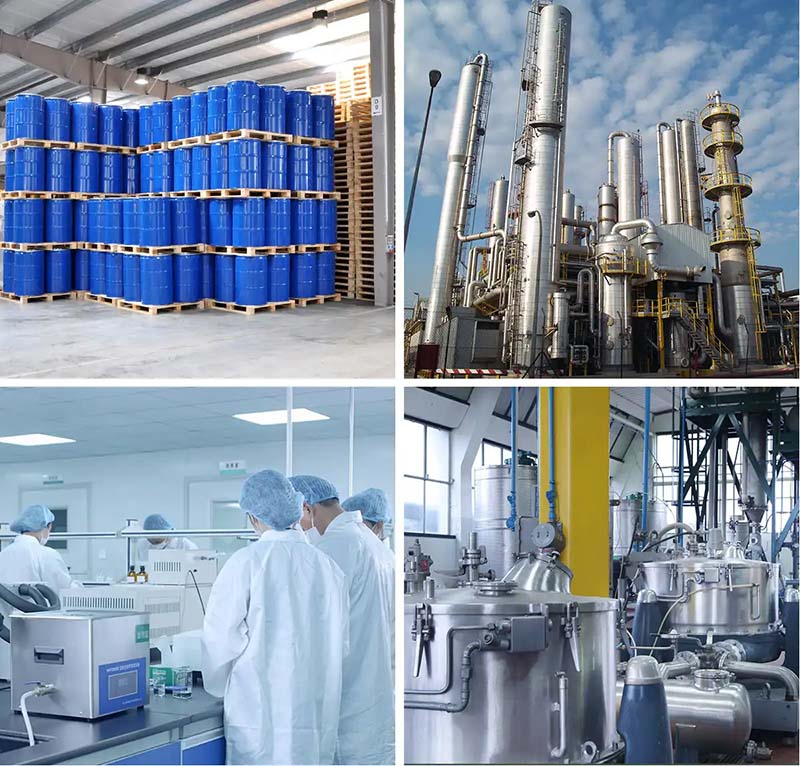
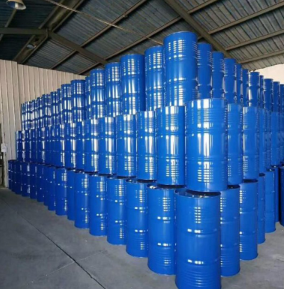
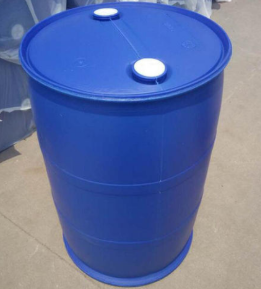
Fact Factory and Equipment Show