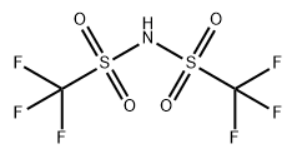
Trifluoromethanesulfonimide #CAS82113-65-3
CAS Number:15396-00-6
Chemical Formula:C7H15NO4Si
Synonyms:
N,N-Bis(trifluoromethylsulfonyl)amine
BISTRIFLUOROMETHANESULFONIMIDE SOL., ~0. 5 M IN DICHLOROM
bis(Trifluoromethanesulphonyl)imide
Appearance:
Melting point 52-56℃, presents two forms at room temperature depending on temperature:
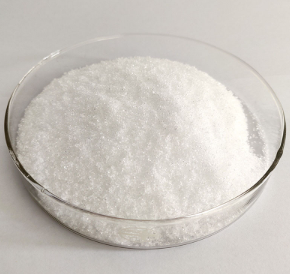
Below 50℃: White to off-white crystalline powder or lumps
Above 55℃: Colorless to pale yellow transparent oily liquid
Highly hygroscopic, soluble in water, acetonitrile, methanol, acetone and most organic solvents; One of the strongest known organic Brønsted acids (pKa=-10.4)
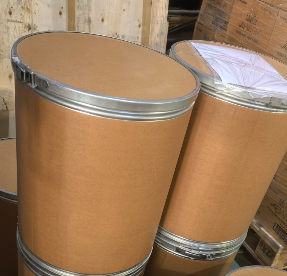
MOQ (Minimum Order Quantity): 1 FCL (Full Container Load)
Trifluoromethanesulfonimide #CAS82113-65-3
Organic superacid, sulfonamide compound, electrophilic fluorinating reagent, ionic liquid precursor, organic synthesis catalyst, lithium battery electrolyte raw material, pharmaceutical intermediate
UN3261, Class8 Corrosive Solid, Packing Group Ⅱ; GHS hazards: H314 Causes severe skin burns and eye damage, H302 Harmful if swallowed, H412 Harmful to aquatic life with long lasting effects
HS Code:2935009090, other sulfonamides and their derivatives
Bis(trifluoromethane)sulfonimide (TFSI, Tf2N) is utilized as anion species to form 1-ethyl-3-methylimidazolium molten salts. It undergoes acid-base complexation with rod-like poly(2,5-pyridine) to afford highly-ordered lamellar self-assemblies in the hydrated films.
Application of Trifluoromethanesulfonimide
Trifluoromethanesulfonimide is a strong acid, used in the preparation of highly efficient Lewis acid catalysts.
1,1,1-Trifluoro-N-((trifluoromethyl)sulfonyl)methanesulfonamide is commonly used as a strong acid to prepare Lewis Acid catalysts. It can also be used to improve efficiency of graphene/silicon Schottky solar cells by chemical doping and as a solvent for recycling battery electrodes.
Trifluoromethanesulfonimide may be used as a catalyst for the preparation of 1-substituted-1H-1,2,3,4-tetrazoles.
Trifluoromethanesulfonimide may be used in the following studies:
As catalyst during the polymerization of octamethylcyclotetrasiloxane in the presence of hexamethyldisiloxane.
As efficient catalyst in the synthesis of various non-reducing disaccharides, via ketopyranosylation of 2,3,4,6-tetra-O-benzyl-1-C-methyl-D-hexopyranoses.
Starting material for preparing the N-fluoro derivative, a reactive fluorinating agent.
As a component of solid polymer electrolytes.
| Trifluoromethanesulfonimide Chemical Properties |
| Melting point | 52-56 °C |
| Boiling point | 90-91 °C(lit.) |
| density | 1.36 |
| storage temp. | 2-8°C |
| solubility | 800g/l Risk of violent reaction. |
| form | Crystals |
| pka | -10.42±0.40(Predicted) |
| color | Colorless to brownish |
| PH | 0.8 (100g/l, H2O, 20℃)Risk of violent reaction. |
| BRN | 4754101 |
| Stability: | Stable. Incompatible with strong oxidizing agents. Reacts violently with water. |
| InChI | 1S/C2HF6NO4S2/c3-1(4,5)14(10,11)9-15(12,13)2(6,7)8/h9H |
| InChIKey | ZXMGHDIOOHOAAE-UHFFFAOYSA-N |
| SMILES | FC(F)(F)S(=O)(=O)NS(=O)(=O)C(F)(F)F |
| LogP | -0.771 at 25.5℃ and pH6.7 |
| CAS DataBase Reference | 82113-65-3(CAS DataBase Reference) |
| EPA Substance Registry System | Methanesulfonamide, 1,1,1-trifluoro-N-[(trifluoromethyl)sulfonyl]- (82113-65-3) |
| Safety Information |
| Hazard Codes | C |
| Risk Statements | 34-40-14-67-37 |
| Safety Statements | 26-36/37/39-45-8 |
| RIDADR | UN 3265 8/PG 2 |
| WGK Germany | 3 |
| F | 3-10-21 |
| Hazard Note | Corrosive |
| TSCA | TSCA listed |
| HazardClass | 8 |
| PackingGroup | I |
| HS Code | 29350090 |
| Storage Class | 6.1D - Non-combustible acute toxic Cat.3 toxic hazardous materials or hazardous materials causing chronic effects |
| Hazard Classifications | Acute Tox. 3 Oral Aquatic Chronic 3 Eye Dam. 1 |
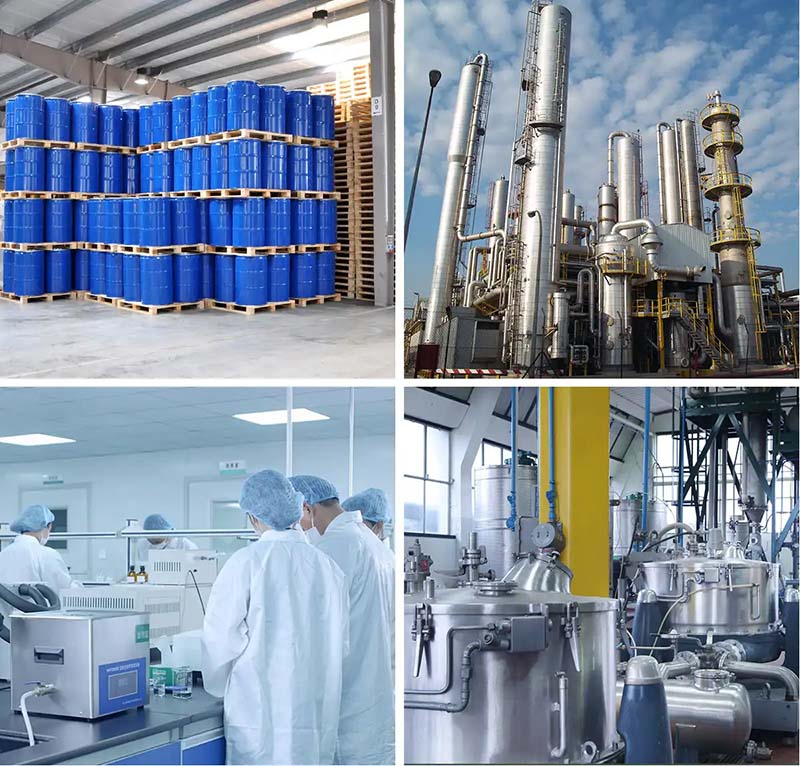
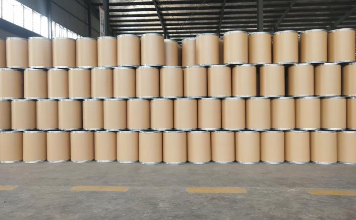
Fact Factory and Equipment Show